Art Deco is often remembered as a style of towers, polished metal, stepped silhouettes, and sharp geometry. That picture is real, but it leaves out one of the style’s most persuasive tools: sculpture. Figures, reliefs, doors, animals, lettering, and small decorative details gave many Art Deco buildings a subject as well as a silhouette. They did not merely decorate a finished wall. They helped a visitor understand what a building stood for before stepping inside.
Art Deco sculpture makes architecture speak
Art Deco sculpture is easiest to understand when it is seen in its intended setting. A freestanding statue can be walked around and considered as an independent object. Architectural sculpture has a different job. It must work at the speed of a sidewalk, from the distance of a street, at the threshold of a door, or from far below a tower. Its placement is part of its meaning.
That is why the style can be both highly symbolic and immediately legible. A figure may represent knowledge, industry, justice, or the natural world. Yet it also has to give a large stone facade a focal point, break down the scale of a civic building, or turn an ordinary doorway into an arrival. Art Deco often reduces forms to their clearest outlines so they remain readable in changing light and from changing distances.
Lee Lawrie’s career is especially useful for seeing this relationship. The U.S. Commission of Fine Arts profile of Lawrie places him among the major American sculptors of his era, but his work becomes most vivid when viewed in the buildings it was made to serve. The archive’s catalog of works follows that range through capitols, libraries, memorials, churches, and commercial buildings.
1. Start by asking what the building needs you to notice
The first question is not, “What does this figure mean?” Start one step earlier: “What does it make me notice?” A work high on a tower is trying to establish a landmark. A relief above a main entrance is asking you to look up before you cross the threshold. A bronze door, grille, or elevator surround works at hand and eye level, where a visitor can slow down and notice a pattern.
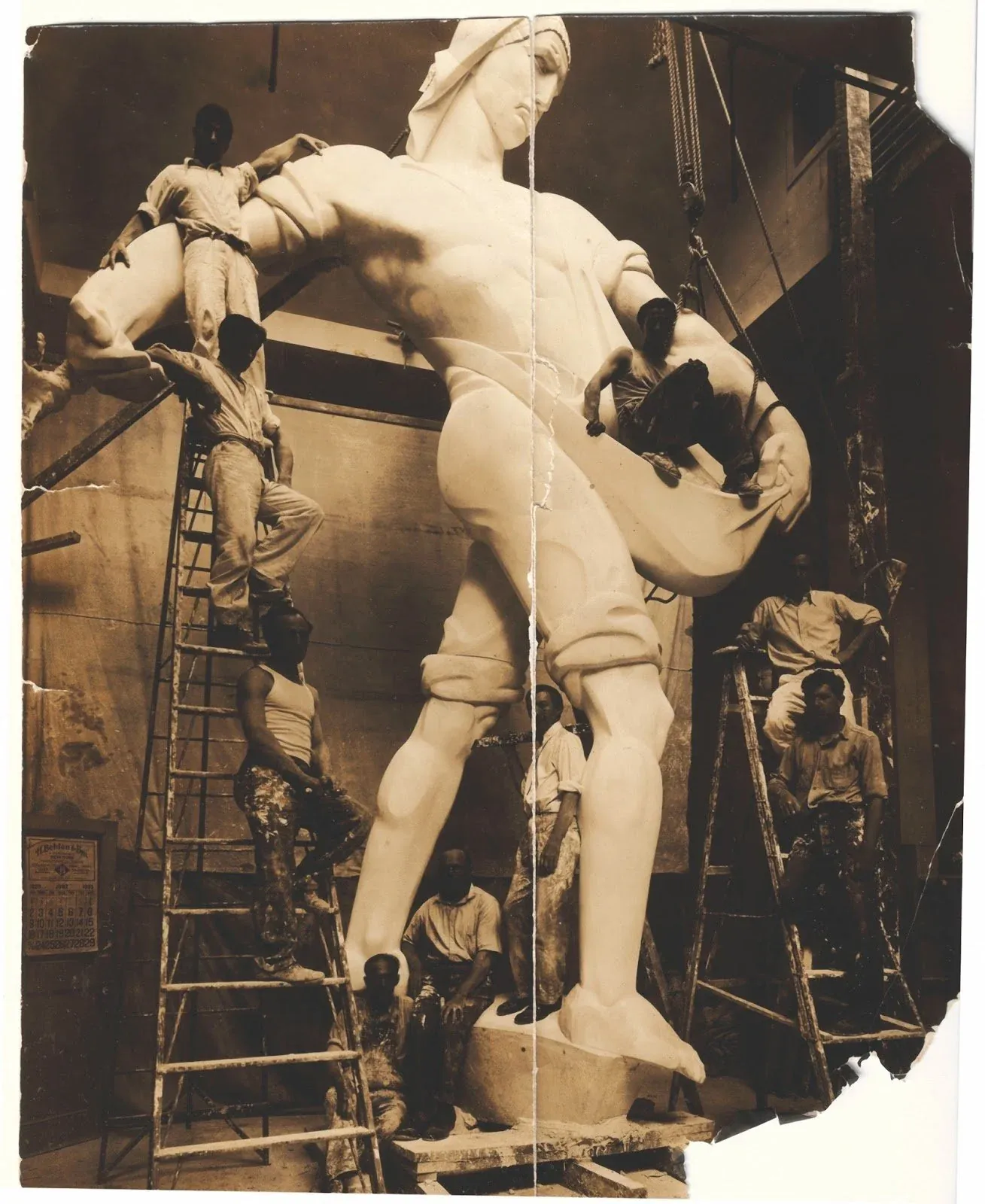
The Nebraska State Capitol offers all of these scales at once. The Sower crowns the tower and can be recognized from a long distance, while the building’s interior carries smaller carvings, ornament, and symbolic motifs. The Capitol’s own guide to panels and sculptures shows how its imagery continues from major exterior statements into rooms and passages. That continuity is central to Art Deco at its best: the big idea does not end at the front door.
When you visit any Art Deco building, take a moment from across the street before going close. Then repeat the move in reverse. Step up to the entrance and look for what only becomes visible at a shorter distance. The comparison makes it clear that the sculpture was designed for a sequence of views, not one perfect photograph.
2. Look for a public idea, not just a decorative motif
Art Deco sculpture frequently uses subjects with a public purpose. A library may turn writing, memory, language, and learning into figures and ornament. A capitol may use agriculture, law, labor, and local history. A commercial building may suggest trade, transport, technology, or the exchange of ideas. These themes are not hidden codes intended only for specialists. They give an institution a recognizable face.
At the John Adams Building of the Library of Congress, sculpture and ornament make the building’s purpose visible before a reader reaches the stacks. The Library’s guide to the John Adams Building describes the artistic program around its entrances and interior. Lawrie’s work there is a good reminder that a library can announce intellectual ambition through images as clearly as through a sign.
The archive’s John Adams Building collection and Legendary Scribes page make this easier to see in detail. Faces, books, animals, lettering, and architectural frames work together. None of them needs to carry the whole message alone. Their power comes from repetition and placement, which is one reason a slow walk around an Art Deco building can be more rewarding than a quick glance at its best-known feature.
3. Notice how geometry gives a figure its force
Art Deco sculpture is not always abstract, but it is usually selective. Curves may be stretched into a deliberate arc. Drapery may become a series of controlled folds. Muscles, hair, wings, sunbursts, and clouds can be simplified until they read as a pattern from far away. That editing is what lets a figure keep its presence when it has to share space with a large facade, a busy street, or a surrounding skyline.
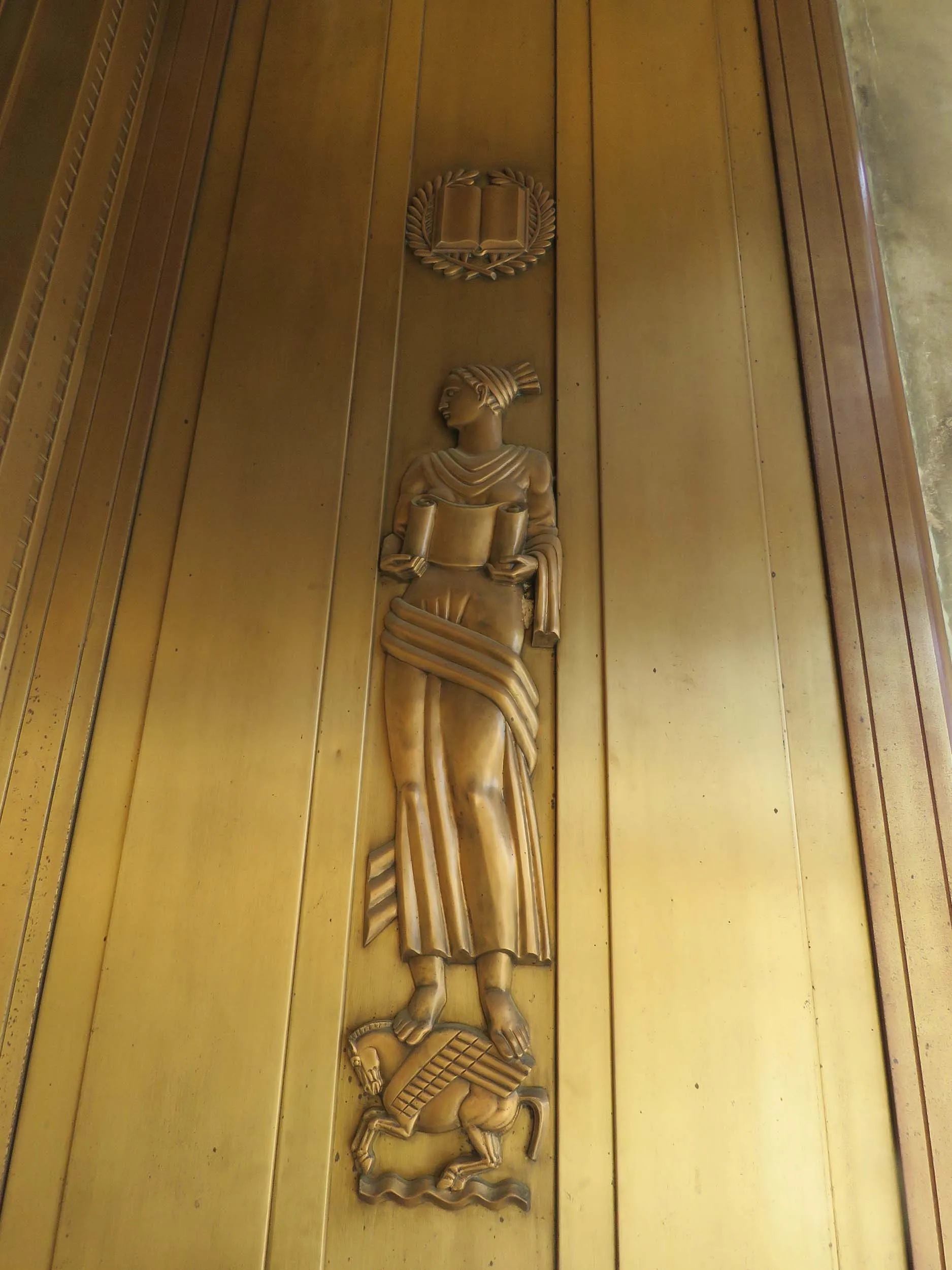
Atlas at Rockefeller Center is a familiar example. The figure’s body, the armillary sphere, and the dark vertical mass of the International Building form one memorable silhouette. Its force does not depend on tiny detail alone. The simplified body and circular rings can be read quickly from Fifth Avenue, then reward a closer look. The archive’s Atlas guide follows that change of scale from the corner view to the sculpture’s celestial details.
Geometry can do the same work in a relief. Wisdom Creating the Universe, above the entrance to 30 Rockefeller Plaza, uses a monumental figure, radiating lines, inscription, and the doorway below to make one public composition. Rockefeller Center’s public-art guide places the work within a larger collection, while the archive’s Wisdom guide looks closely at the way this one relief changes the experience of an entrance.
4. Give the small details the same attention as the landmark
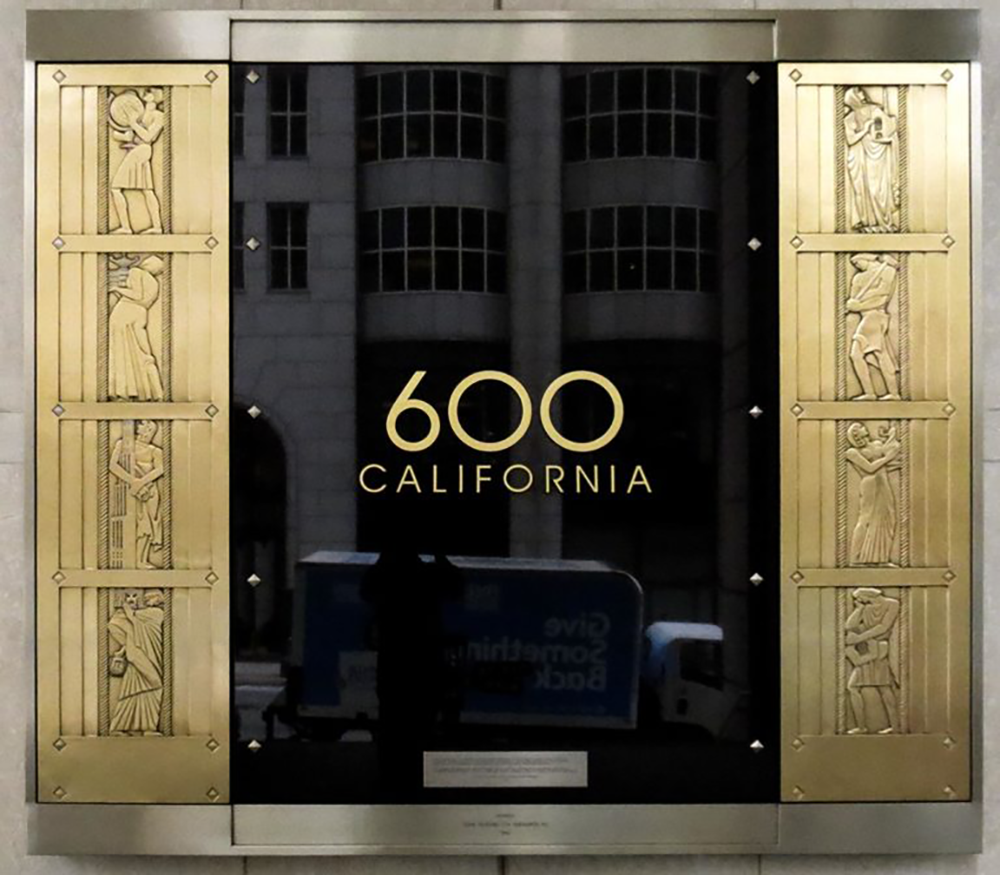
It is easy to stop at a building’s largest sculpture. Art Deco becomes much more interesting when you notice the smaller things that carry the same visual language: elevator doors, grilles, light fixtures, capitals, inscriptions, railings, and repeated animal or plant forms. These are not leftovers from a more dramatic design. They are the means by which a building keeps its character after the visitor has passed the grand entrance.
Small-scale sculpture also makes architecture feel made for people rather than only for the skyline. You encounter a door at walking speed. You wait beside an elevator. You put a hand on a railing. At those moments, the patterns and figures work almost privately, giving a visitor a reason to pause even in a busy public place.
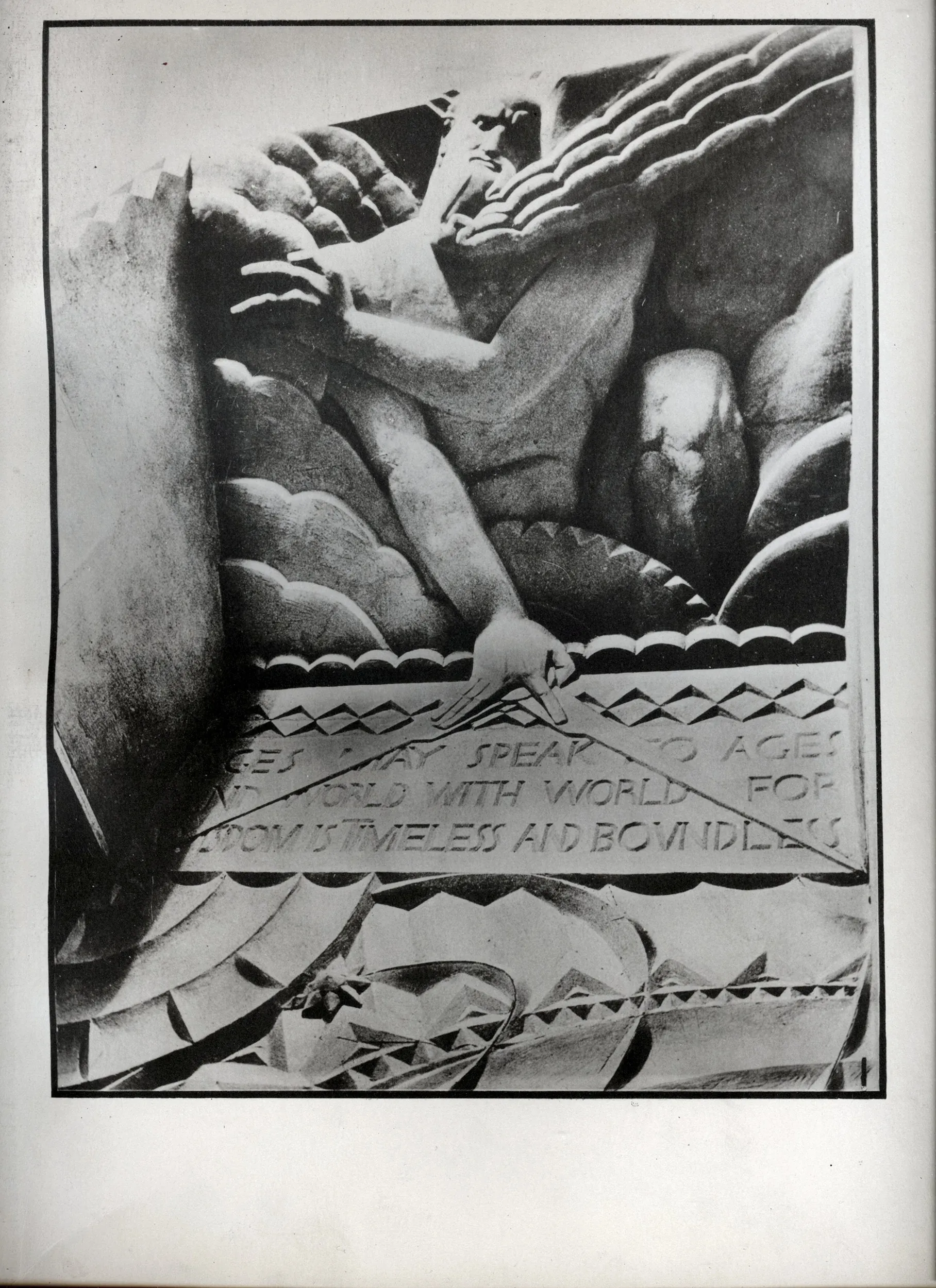
The archive’s Details, Details collection gathers these close-range encounters, including ornamental doors and other functional objects. The Art Deco elevator doors are a useful case in point. Their value is not separate from their function. The doors still have a practical job, but their pattern gives an everyday transition the same care that a monumental facade receives.
5. Read the sculpture as part of a route through the building
The final step is to connect the pieces. Do not treat a tower figure, an entrance relief, and an interior detail as unrelated stops. Notice the route they create. The most successful Art Deco programs repeat ideas in different forms so a visitor carries one impression from exterior to interior. A large public symbol might become a small pattern, a line of text, or a figure on a door.
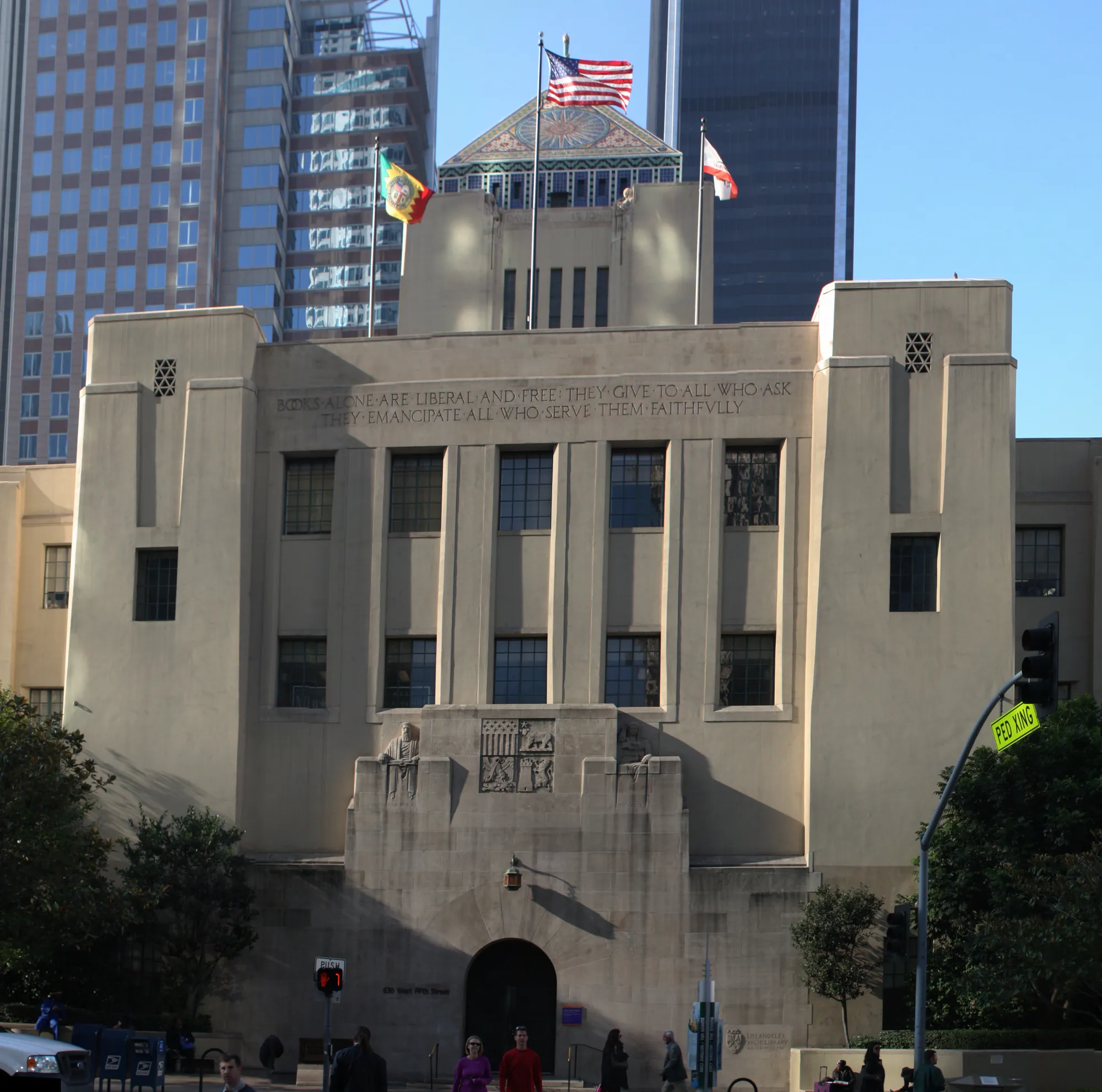
The Los Angeles Central Public Library makes this especially clear. Its tower, exterior figures, entrances, and interior ornament all explore knowledge, language, and the movement of ideas. The archive’s Los Angeles Central Public Library collection shows how a visitor can move from broad exterior symbolism to details that are easy to miss. The Torch of Knowledge page then narrows the view to one high, public image made to crown the whole program.
This way of looking is useful even when you do not know every subject or source. You can still ask practical questions. Where does the sculpture first appear? What repeats as you move? Which materials get warmer, darker, shinier, or more detailed as you come closer? Does the building seem to use a figure as a landmark, a guard, a teacher, or a host? Those observations reveal the work of architectural sculpture before an identification label ever does.
A simple way to compare Art Deco buildings
Comparing two buildings can sharpen the eye. Start with the first thing each one gives you from a distance. One may rely on a single figure high above the street. Another may use a strong central entrance, a relief, or a band of lettering. Then look for the second reading, the details that only appear once the building has brought you close. This two-step approach keeps scale from becoming an obstacle. A work can be visually direct from a block away and still offer a more thoughtful experience at the threshold.
It also helps to compare materials. Stone can make a figure feel permanent and civic. Bronze can catch light, deepen with age, and make a handrail, door, or small figure feel immediate. Tile, glass, carved wood, and painted ornament can carry the same themes in a different register. Art Deco programs often gain their energy from these contrasts, pairing a broad facade with surfaces that become richer as a visitor moves through the building.
The question is not whether every detail belongs to one strict visual formula. The question is whether the parts cooperate. Does the entrance prepare you for the interior? Does a recurring shape, animal, figure, or inscription give the place a recognizable voice? When the answer is yes, sculpture is doing more than filling an empty surface. It is helping architecture guide attention, hold memory, and make a public place feel deliberately made.
Where to continue your Art Deco search
Lee Lawrie’s work is a strong place to begin because it spans major American buildings and so many scales, from tower figures to small objects that meet a visitor face to face. The archive’s introduction to Lee Lawrie provides the wider career, while the Rockefeller Center sculptures guide offers a practical walk through three of the best-known New York landmarks.
For the fullest single example, the Nebraska State Capitol collection lets you see how one building can sustain a sculptural idea from its skyline to its rooms. Gregory Paul Harm’s Prairie Deco brings that commission into a richer visual story, with the kind of close photographs that make architectural sculpture easier to understand when a return visit is not possible.
Once you begin to look for Art Deco sculpture, the style stops being only a matter of zigzags and setbacks. Buildings begin to show their subjects. A doorway becomes an argument about knowledge or civic life. A tower becomes more than a skyline shape. And a small detail, seen at the right moment, can explain the larger work around it.
Frequently asked questions
What makes a sculpture Art Deco?
Art Deco sculpture often uses simplified forms, strong geometry, rhythmic repetition, and modern materials or finishes. In a building, it is usually designed to work with the entrance, wall, tower, or room around it rather than as a separate object on a pedestal.
Where can I see Art Deco sculpture in the United States?
Notable examples appear at Rockefeller Center in New York, the Nebraska State Capitol in Lincoln, the John Adams Building of the Library of Congress in Washington, D.C., and the Los Angeles Central Public Library. Each uses sculpture to give a public building a clear identity.
Is Atlas at Rockefeller Center an Art Deco sculpture?
Yes. Atlas was designed by Lee Lawrie with Rene Chambellan for the International Building at Rockefeller Center. Its powerful silhouette, simplified form, and relationship to a Fifth Avenue entrance make it a defining Art Deco landmark.
Why is sculpture important in Art Deco architecture?
Sculpture gives Art Deco architecture a human scale and a visible subject. It can make an entrance ceremonial, turn an idea into a public symbol, and reward a closer look after a building first catches the eye from far away.
Related posts
 Art Deco
Art Deco Buildings: 5 Features to Look For
Learn the five features that make Art Deco buildings distinctive, from stepped skylines and grand entrances to materials, sculpture, and civic symbols.
 Art Deco
Famous Art Deco Artists: 6 Ways to See the Style
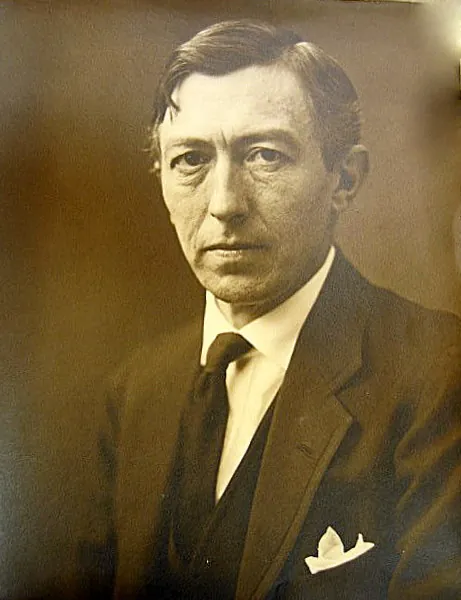
Meet famous Art Deco artists, including Tamara de Lempicka, A. M. Cassandre, Erté, René Lalique, and Lee Lawrie.
Art DecoArt Deco Sculptors: How to Read Their Work
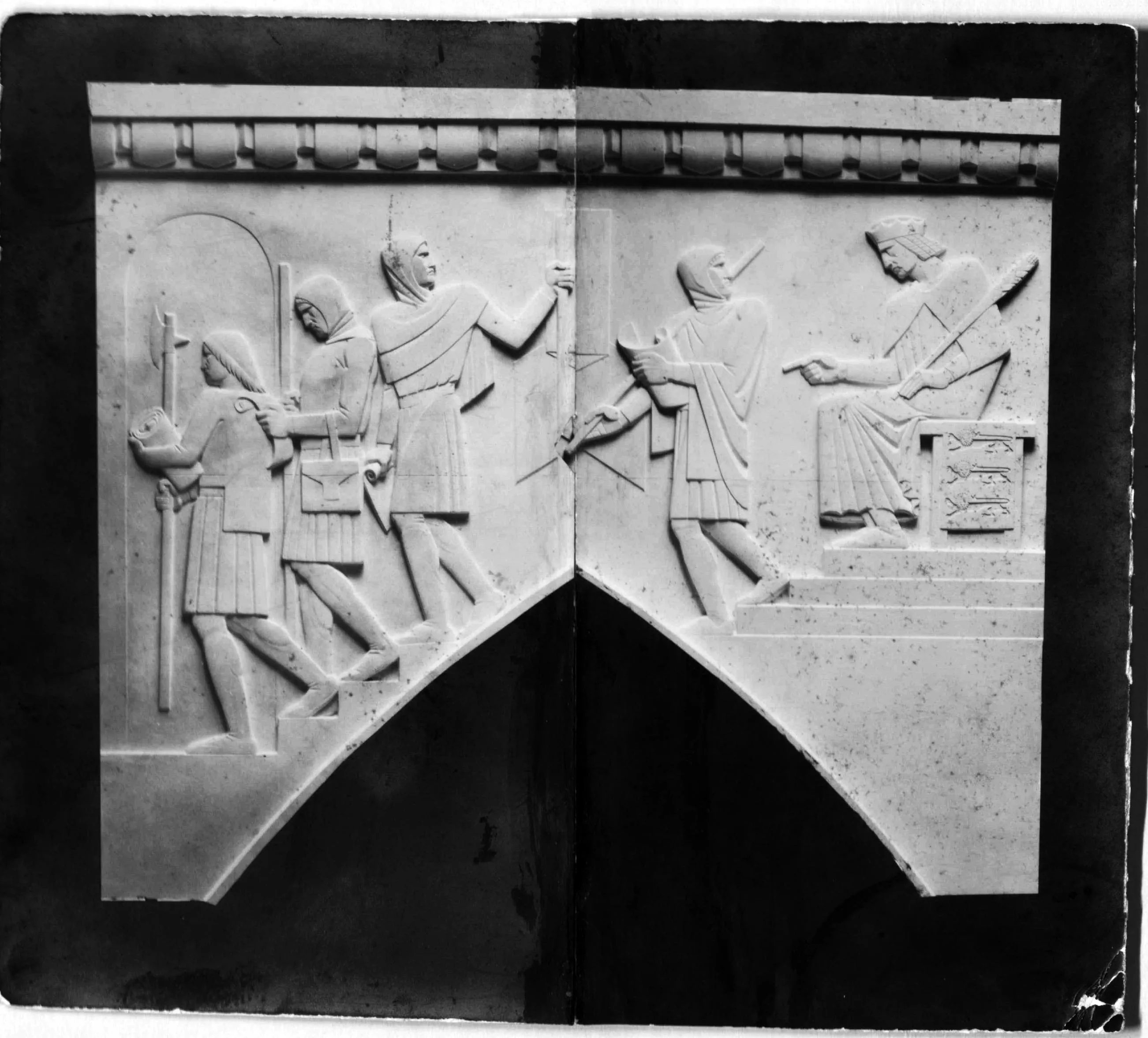
Learn how Art Deco sculptors used figure, material, symbol, and setting to make public buildings and everyday spaces speak.
Art Deco Painters: How to See Their Work
Meet the painters behind Art Deco’s sharp glamour, then learn how murals, portraits, and public spaces turned the style into a visual experience.