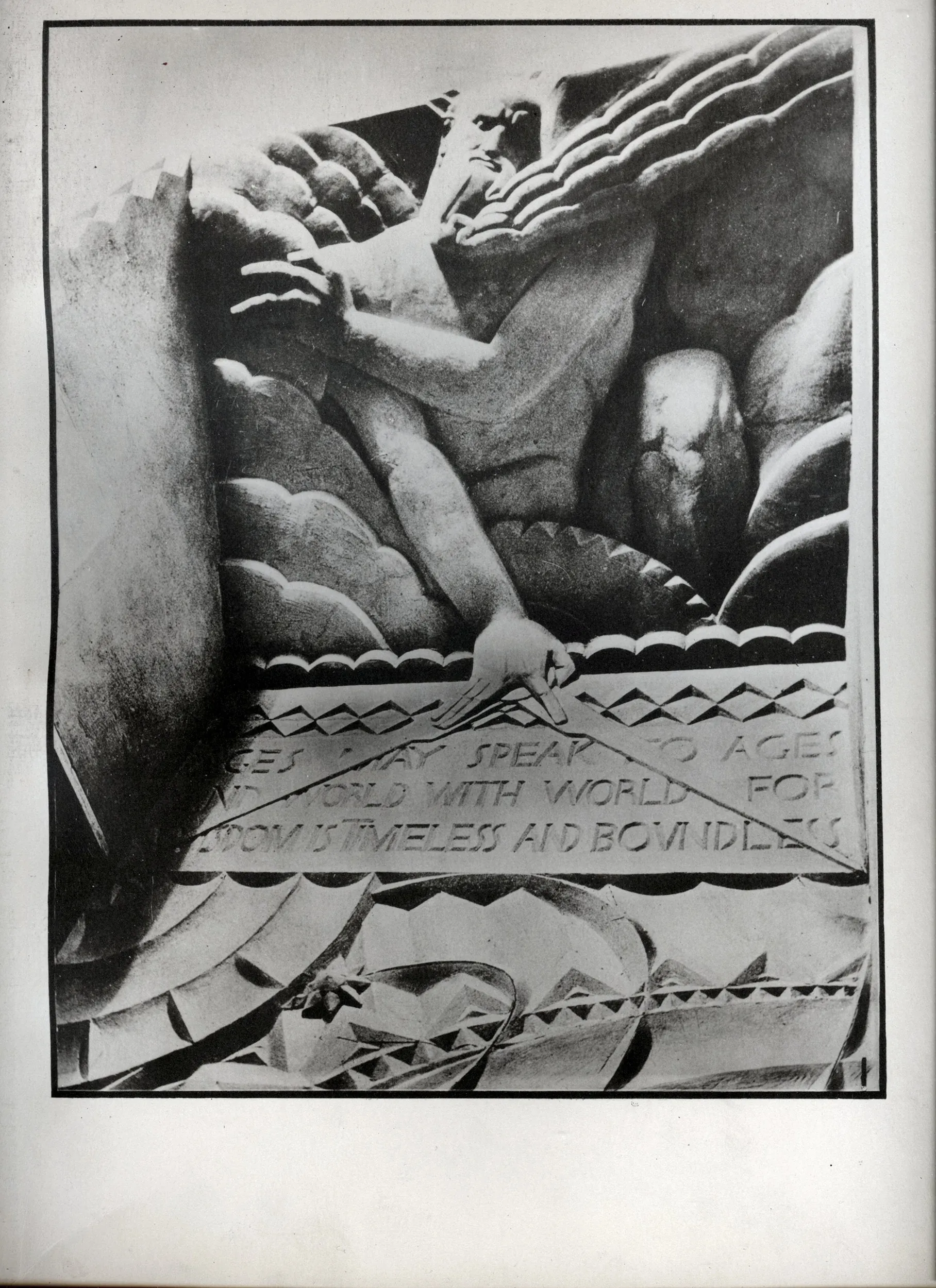
Wisdom Creating the Universe is easy to walk beneath without really seeing. It sits high above the main entrance to 30 Rockefeller Plaza, where the rush toward the doors, the height of the facade, and the scale of the Center all compete for attention. Pause before entering, though, and the relief becomes one of the clearest statements of what Lee Lawrie could do: turn a building entrance into a public image that feels both monumental and direct.
Find Wisdom above the entrance to 30 Rockefeller Plaza
Start outside the main entrance to 30 Rockefeller Plaza and look up before you cross the threshold. Wisdom Creating the Universe is not a freestanding monument or a gallery object set apart from the building. It was made to command the doorway, with the figure, the surrounding stone, and the inscription forming a single composition. The best first view is from far enough back to take in the whole entrance. Then move close enough to see how the relief changes the scale of the doors below it.
That placement is the point. A person arriving at a major office building does not have the quiet approach available in a museum. There are crowds, traffic, reflections, and a great deal of vertical architecture competing for the eye. Lawrie answered that problem with a figure broad enough to read at a distance, but integrated tightly enough with the facade that it never feels like a statue parked in front of the building. The sculpture tells you that the entrance matters before you have entered it.
The archive’s Rockefeller Center collection helps place the relief in its setting. Its photographs show how Wisdom relates to Atlas, the International Building, the Lower Plaza, and the smaller sculptural programs that visitors often miss. This is the useful distinction to carry into a visit: the building is not merely a backdrop for art. Here, the art helps give the building its public character.

Read the inscription as part of the design
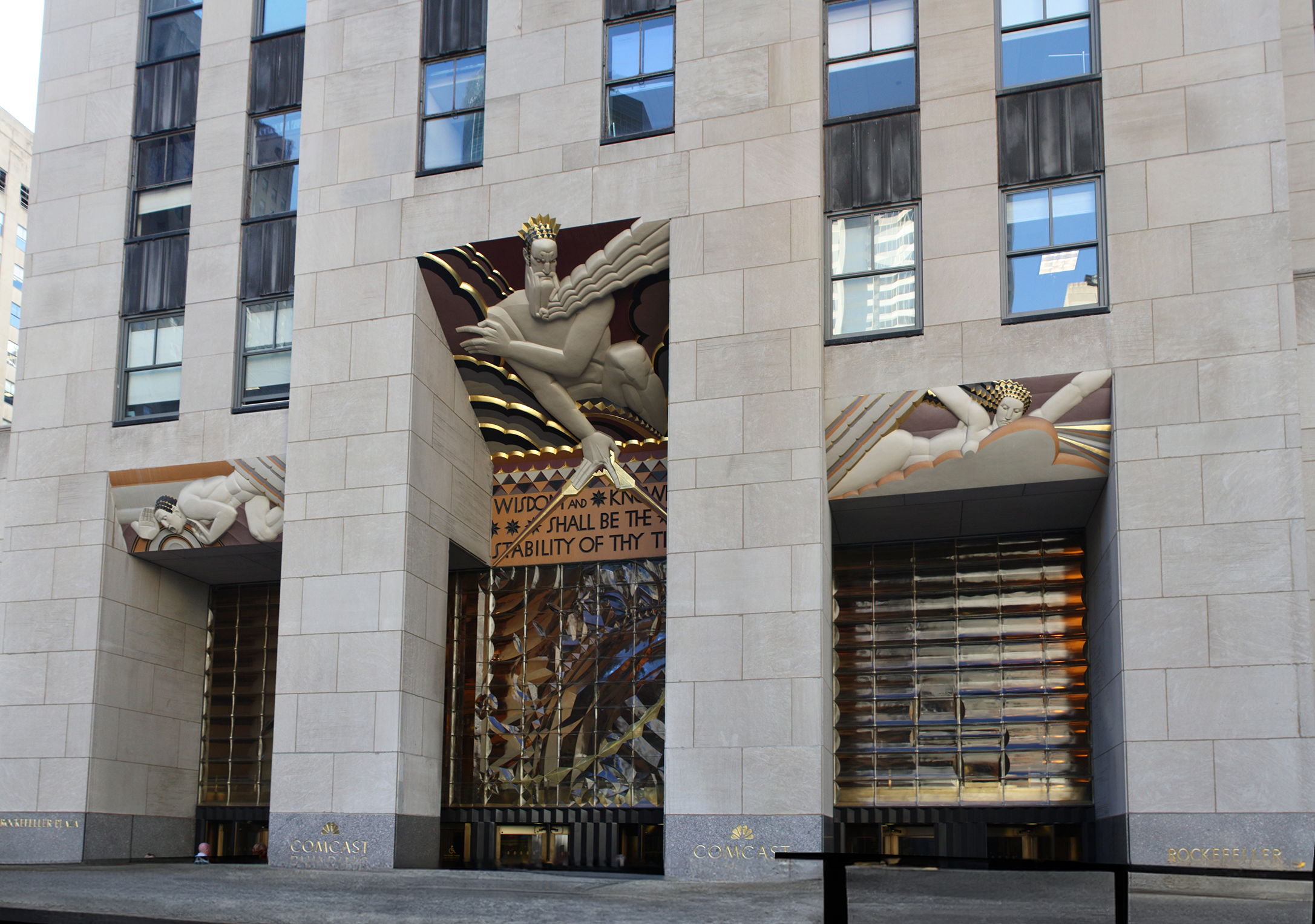
Beneath the figure is the familiar line, “Wisdom and Knowledge shall be the stability of thy times.” The words come from Isaiah 33:6, but the relief does not ask visitors to treat them as a quotation floating separately from the architecture. The lettering, image, and doorway are designed to be read together. The message gives the entrance a tone of purpose. The figure gives that message a human scale and a physical presence.
It is tempting to read the inscription as a simple motto and move on. A slower look makes it more interesting. The line speaks of stability, but the setting is an intensely active one: a dense Midtown crossing, a building used by thousands of people, and a complex shaped around movement between street, plaza, lobby, and tower. Lawrie’s achievement is to give that motion a fixed point. The figure does not stop the city around it. It gives the entrance a sense of order within it.
The wording also explains why this relief has remained so memorable. It does not rely on a specialized knowledge of mythology or a guidebook’s interpretation before it can be felt. Visitors can see the face, the radiating form, the emphatic lettering, and the great doorway beneath. Those elements communicate at street speed. The closer view adds more: the way the relief catches light, the contrast between carved forms and flat stone, and the deliberate fit between the sculpture’s symbolic message and the function of a principal entrance.
The U.S. Commission of Fine Arts profile of Lee Lawrie places this Rockefeller Center work within a career that crossed major civic, academic, religious, and commercial buildings. That range matters here. Lawrie was not simply making attractive figures for important facades. He repeatedly used sculpture to help a building explain what it hoped to represent.
A 1933 record shows an alternate inscription
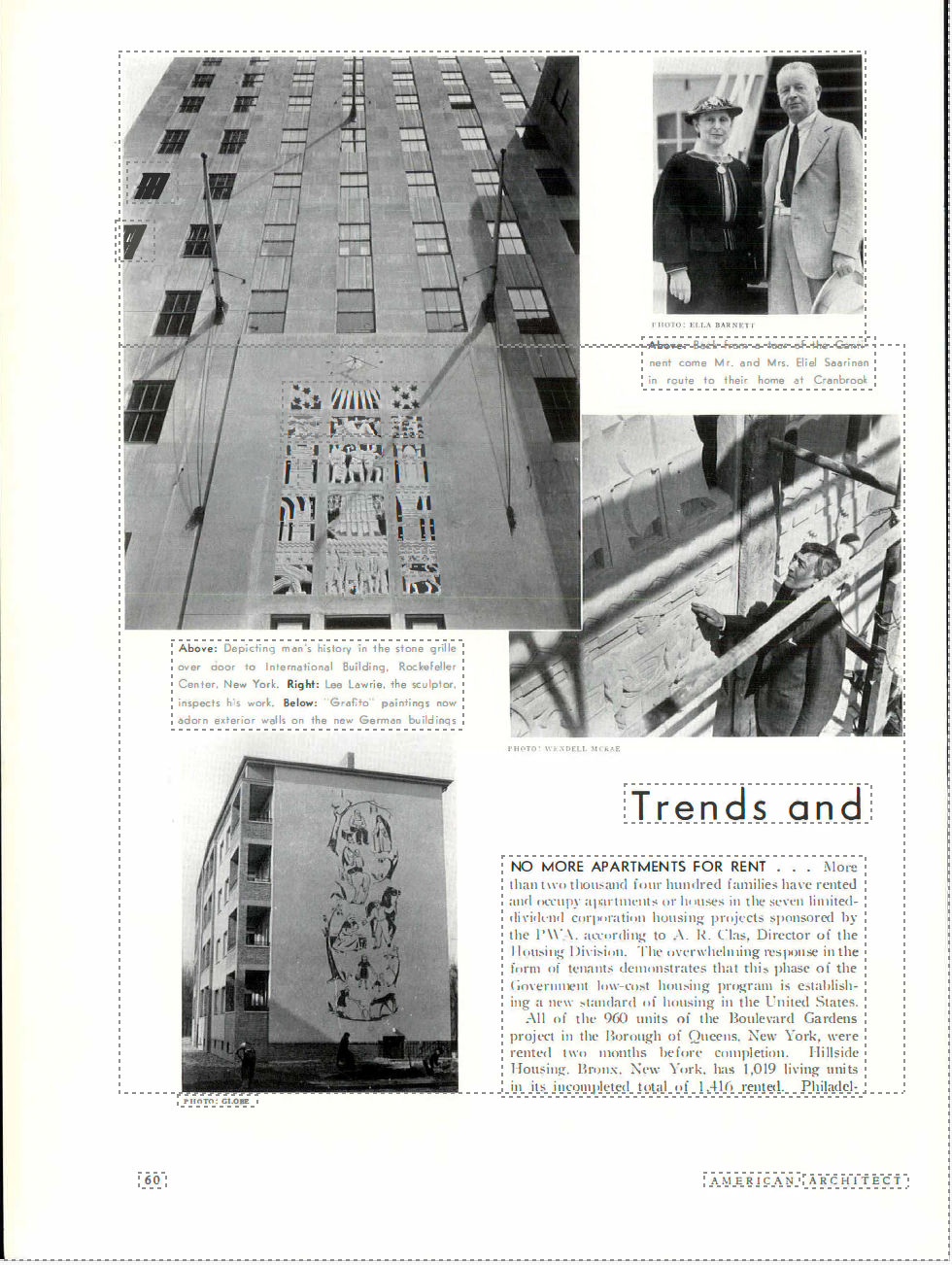
The archive preserves a revealing piece of the process: an August 1, 1933 letter from Todd, Robertson, Todd Engineering Corporation to Lee Lawrie. It approves “Guided by Light, Heralded by Sound, Time Marches On Through the Ages” as the final inscription for the building. Those are not the words ultimately carved above the entrance. That difference is valuable because it shows that the message was still being considered as the architectural program came together.
For a visitor, that small record changes the way the work is seen. The completed relief can feel inevitable because it has become such a familiar part of the facade. The correspondence restores a little of the decision-making behind it. A building-scale image has to meet many demands at once: it needs to read from the street, suit its setting, work with lettering, and carry meaning without becoming cluttered. The finished inscription is brief, but the archive evidence reminds us that brevity can be the result of close attention.
That is also why period material matters. It gives the public work a history beyond the finished photograph. The archive’s notes on Lawrie, Hildreth Meiere, Bertram Goodhue, and Raymond Hood trace the professional connections that brought artists and architects into the same orbit. At Rockefeller Center, those connections became visible in stone, metal, color, lettering, and space.
How to look at Wisdom in five minutes
- Step back before you go in. Begin far enough from the doors to see the figure, lettering, entrance, and upper facade as one composition.
- Read the inscription aloud or silently. Notice how its horizontal band steadies the composition beneath the figure and changes the emotional tone of the doorway.
- Move toward the doors. From close range, the relief becomes less like a distant emblem and more like a carefully shaped architectural surface.
- Look from one side of the forecourt. The angle reveals how the sculpture catches daylight and remains legible despite the depth and height of the facade.
- Return after seeing the Lower Plaza. The contrast with Prometheus below makes Wisdom easier to read as an entrance image rather than a centerpiece for a public room.
This route is deliberately short. The aim is not to turn a visit into a checklist, but to give the eye enough time to change gears. From a quick glance, Wisdom can seem like one more impressive detail on a very large building. From several distances, it becomes clear that the doorway, inscription, and relief are working together to make arrival feel consequential.
Light changes the result. In bright sun, the strong outline and broad forms are easiest to read. In softer light, the relationship between the carved surface and the surrounding stone can become more apparent. On a busy day, the movement below the relief makes the figure’s fixed composure feel even stronger. Each condition shows a different part of the design, which is exactly what architectural sculpture is built to handle.
Wisdom, Prometheus, and Atlas have different jobs
Three figures make an especially useful Rockefeller Center walk. Start with Wisdom at 30 Rockefeller Plaza, continue down to Prometheus in the Lower Plaza, and then walk east to Atlas on Fifth Avenue. They are all memorable, but they are not variations of the same idea. Each has a different artist, setting, material presence, and role in the experience of the complex.
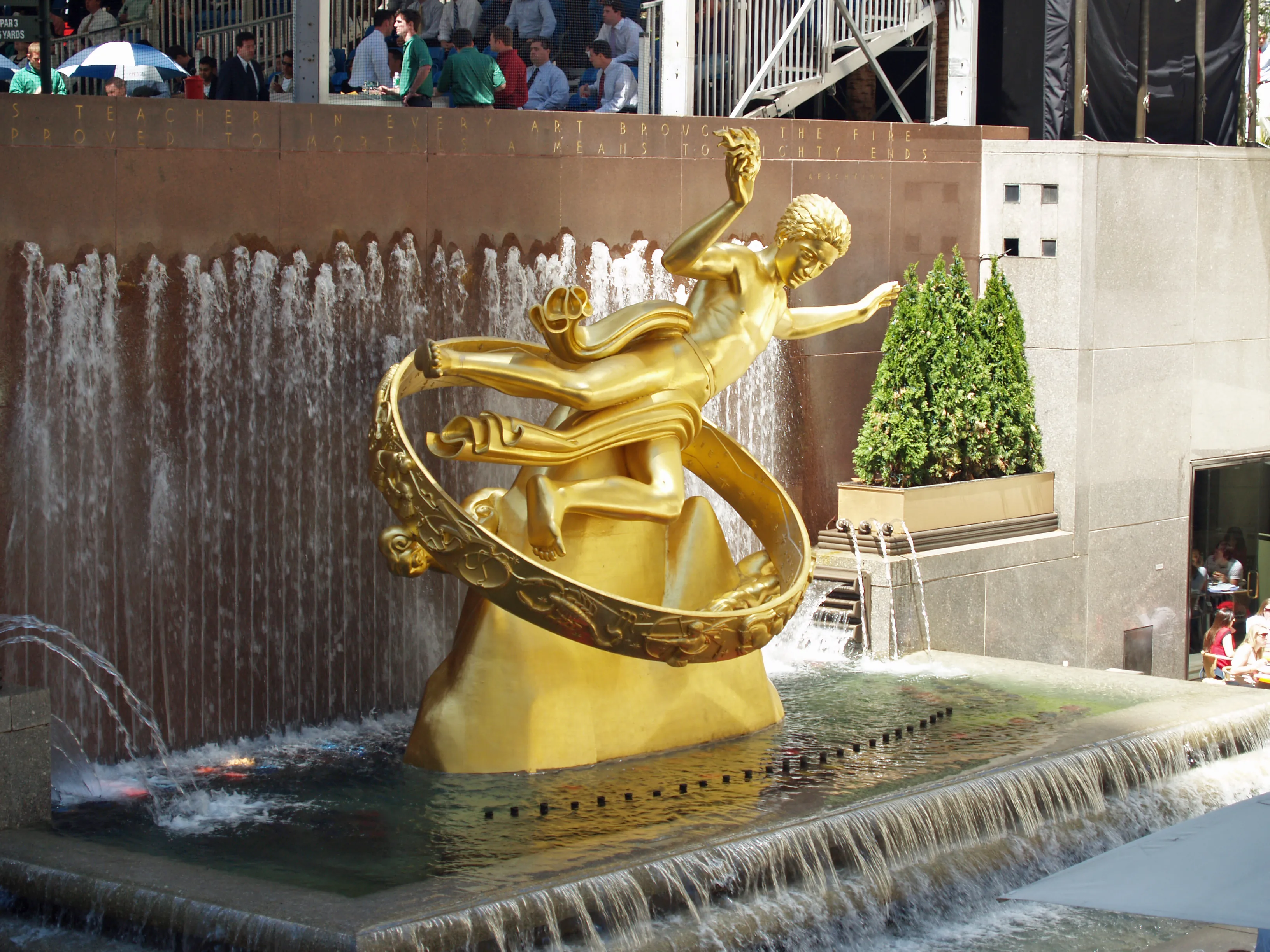
Prometheus, designed by Paul Manship, gathers the Lower Plaza around a bright, fluid centerpiece. The archive’s Prometheus visitor’s guide explains how the gilded figure works with the rink, the surrounding walks, and the tower above. Wisdom, by contrast, is a high entrance relief. It prepares you to enter 30 Rockefeller Plaza and gives that threshold a formal, almost ceremonial focus.
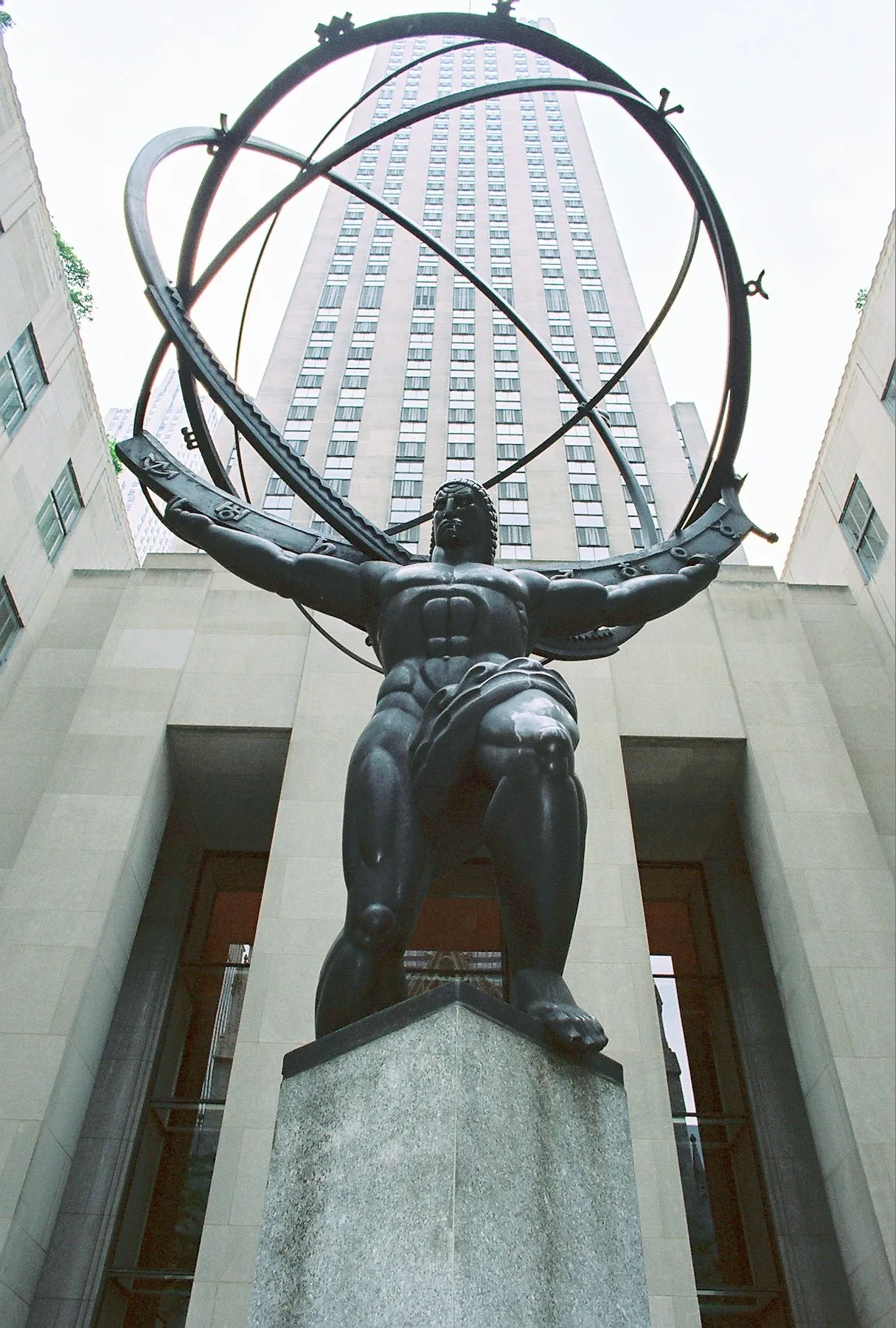
Atlas works differently again. The bronze figure stands at the International Building on Fifth Avenue, facing the avenue and carrying an armillary sphere. The archive’s guide to Atlas follows that relationship between sculpture, street, and building edge. Atlas meets the city from the outside. Wisdom marks the moment of arrival. Prometheus holds the center of a shared public room. Once those different jobs are clear, the Center’s art feels less like a series of famous stops and more like a deliberately paced environment.
Lawrie’s role becomes still clearer when you look beyond these three landmarks. He shaped a much larger share of the complex’s architectural sculpture, from major facade works to details that are easy to overlook. The Smithsonian American Art Museum’s artist record offers a concise introduction to the breadth of his career, while the archive’s catalog of works follows the same habit of close looking through libraries, memorials, capitols, and public buildings across the country.
Why this entrance is a strong introduction to Lee Lawrie
Wisdom Creating the Universe is a particularly good way into Lawrie’s work because it makes his central skill visible in one glance. He could give a building a human presence without separating the sculpture from the building itself. The figure is monumental, but it is never independent of the entrance. The inscription is memorable, but it gains force from the stone, the scale, and the movement of people below it.
That same approach appears throughout the archive. At the Nebraska State Capitol, Lawrie’s sculptural program works across an entire civic building. At the Los Angeles Central Public Library, figures and symbols help make the architecture legible as a place devoted to learning. Rockefeller Center lets visitors see the principle in especially concentrated form: sculpture is not an accessory. It is part of how the building speaks.
For readers who want to go further, the archive brings together the photographs, period records, and close observations that make those connections easier to follow. Begin with the Rockefeller Center collection, then continue through the related guides in this category. The result is a more rewarding visit, but also a fuller picture of an artist whose work helped give some of America’s most familiar buildings their lasting identity.
Frequently asked questions
Who made Wisdom at Rockefeller Center?
Wisdom Creating the Universe was designed by Lee Lawrie for the main entrance to 30 Rockefeller Plaza. It is one of the central works in his much larger sculptural contribution to Rockefeller Center.
Where is Wisdom Creating the Universe?
The relief is above the principal entrance to 30 Rockefeller Plaza. Look up before going through the doors, then step back across the forecourt to see how the figure, inscription, and building facade work as one composition.
What does the inscription above Wisdom say?
The inscription reads, “Wisdom and Knowledge shall be the stability of thy times.” It comes from Isaiah 33:6 and gives the entrance a public message about knowledge, steadiness, and responsibility.
Is Wisdom near Prometheus and Atlas?
Yes. Wisdom is above the entrance to 30 Rockefeller Plaza, close to the Lower Plaza where Prometheus stands. Atlas is farther east on Fifth Avenue at the International Building. Seeing all three makes the different roles of Rockefeller Center sculpture much easier to understand.
Related posts
Rockefeller Center ArtRockefeller Center Art Deco: A Guide to Lee Lawrie
A practical guide to finding Atlas, Wisdom and the larger sculptural program that Lee Lawrie helped shape at Rockefeller Center.
Rockefeller Center ArtAtlas Statue at Rockefeller Center
Find Atlas at Rockefeller Center, learn who made the bronze statue, what its armillary sphere means, and how to see it on Fifth Avenue.
 Rockefeller Center Art
Prometheus Statue at Rockefeller Center
Find the gilded Prometheus statue at Rockefeller Center, learn its meaning and artist, and see how it shapes the Lower Plaza.
 Rockefeller Center Art
Lee Lawrie, Sculptor of America’s Great Buildings
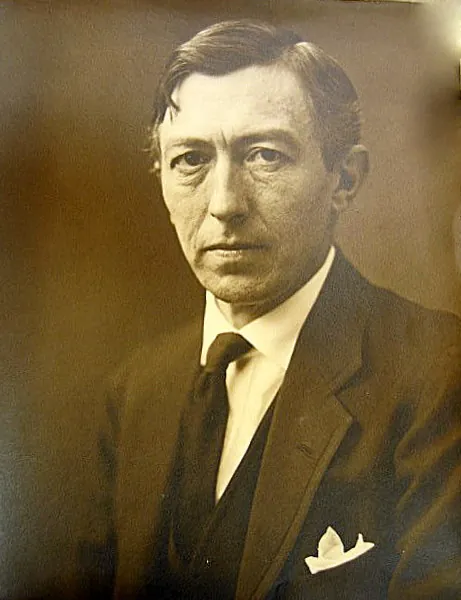
Who was Lee Lawrie? Meet the architectural sculptor whose work shaped the Nebraska State Capitol, Rockefeller Center, libraries, memorials, and more.