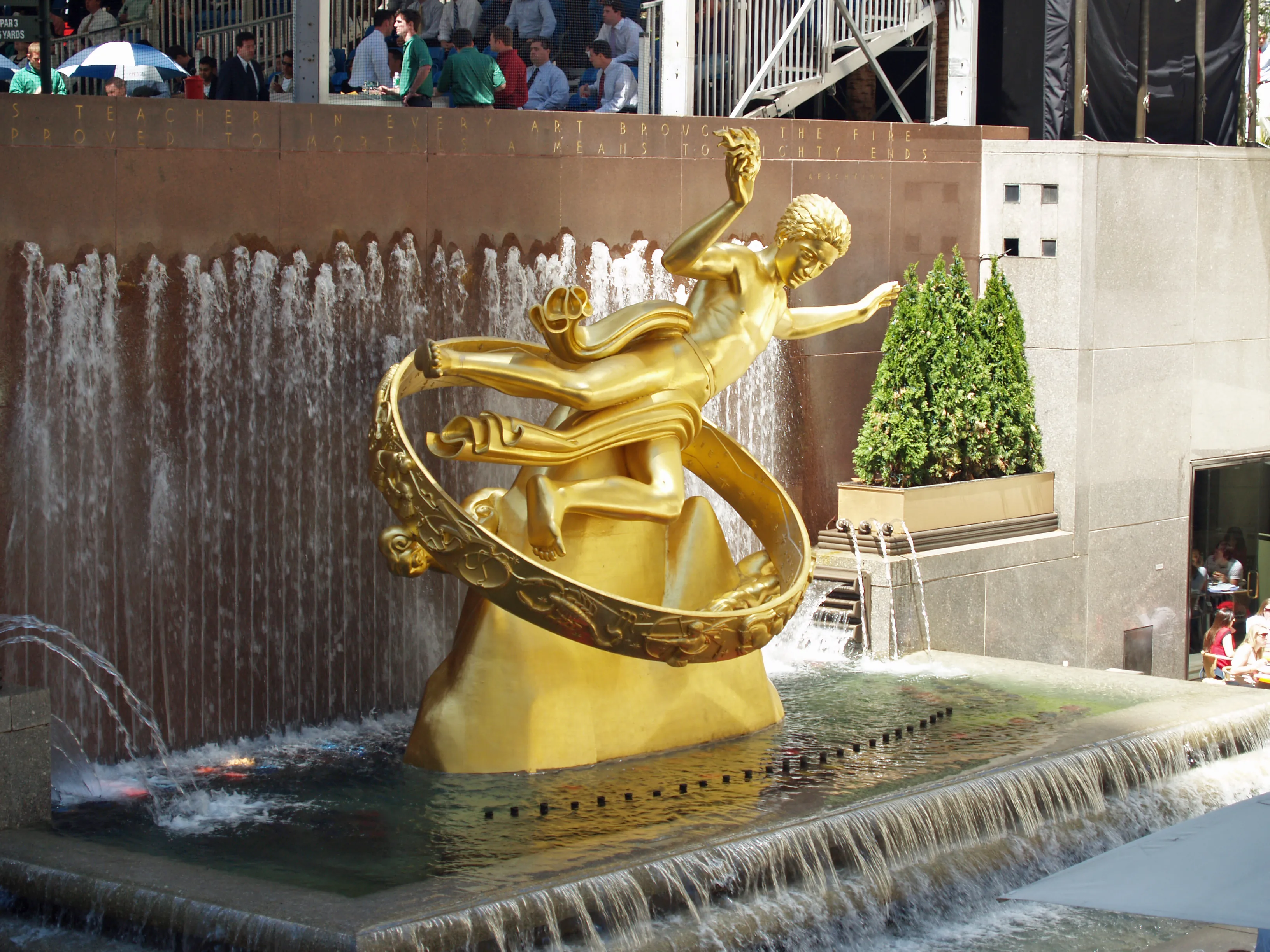
Prometheus is one of the images people carry away from Rockefeller Center: a bright figure stretched above the Lower Plaza, poised over the rink and the crowd below. It is famous enough to feel familiar before you have really looked at it. A better visit begins by treating it as more than a photo stop. The sculpture has a specific myth, a carefully chosen setting, and a job in the larger composition of Rockefeller Center.
Find Prometheus in the Lower Plaza
Prometheus is not on Fifth Avenue, and it is not the dark bronze figure holding a celestial sphere. It stands above the Lower Plaza, at the heart of the space most visitors associate with the skating rink, the seasonal tree, and the view toward 30 Rockefeller Plaza. That position is the key to understanding it. The sculpture was made for a public room in the middle of the complex, where people arrive, pause, look down from the surrounding walks, and gather below.
Start from the upper level and look toward the statue before walking down. From there, the composition is legible in one sweep: the gold-coloured figure, the stone wall, the shallow basin, the rink, and the tall building above. Then descend to the plaza and look back. At ground level, Prometheus feels less like an isolated monument and more like an upper edge to the room. The sculpture gives the space a dramatic focal point without cutting it off from the city around it.
Rockefeller Center’s own public-art guide is useful for locating the work within the complex. On a busy day, it also helps to pause for a minute at the north or south end of the rink. From those positions, you can see how the figure directs attention upward, while the plaza activity keeps the scene grounded in daily life.

Who made the sculpture?
Prometheus was designed by Paul Manship, one of the leading American sculptors of the early twentieth century. Manship is known for figures that bring ancient myth into a streamlined modern language, and Rockefeller Center gave him a setting large enough for that approach to work at city scale. The figure feels ancient because of the story behind it, but its smooth, simplified line is deliberately modern. That combination is one reason it still belongs so naturally to the Center’s Art Deco setting.
The work was installed in 1934, when Rockefeller Center’s architecture, plazas, murals, and sculpture were taking shape together. Prometheus is often called gilded bronze. The bright surface is essential to its effect. Against the gray stone and changing sky, it reads immediately from across the plaza, then becomes more complex as you move closer and see the long, sweeping body and the patterned surface behind it.
The commission also shows why it is useful to distinguish Prometheus from the work of Lee Lawrie. Lawrie’s Rockefeller Center collection includes Atlas, Wisdom Creating the Universe, International Building figures, and other architectural sculpture throughout the complex. Prometheus belongs to Manship, but it shares the same larger ambition: making art part of how a visitor reads the place.
What Prometheus means
In Greek myth, Prometheus is the Titan who brings fire to humanity. That act has long made him a symbol of knowledge, skill, invention, and the risks that can come with them. The story has many versions, but its central tension is clear: fire changes human life, and the gift comes at a cost. The Encyclopaedia Britannica account of Prometheus provides a concise background on the myth.
At Rockefeller Center, the figure is not presented as a quiet illustration from a book. Manship turns the myth into movement. Prometheus seems to sweep into the plaza rather than stand on a conventional pedestal. The pose gives the sculpture energy, while the bright surface turns the body into an event in changing daylight. The work is large, but its line is unusually fluid. That balance helps it hold its own against a tall building without becoming a block of visual weight.
The setting changes the meaning as well. Rockefeller Center was built as a commercial and cultural center during the Great Depression. A myth about a transformative gift could easily have become heavy-handed in that context. Instead, the Lower Plaza makes the idea public and usable. Skaters pass beneath it, office workers cut through the space, families gather at the railings, and visitors see it from several levels. The message is not delivered from a distant monument. It is absorbed through a place people continue to use.
The most revealing moment is often the transition between those levels. From the upper walk, Prometheus can look almost like an emblem placed against the stone. On the way down, its body begins to occupy the full height of your view. At the rink, the figure becomes a roofline and a source of light rather than a distant image. This is how architectural sculpture earns its place: it gives a changing sequence of spaces a single visual idea without making every moment feel the same.
How to look at Prometheus in five minutes
- See the whole plaza first. Look from above before focusing on the figure. Prometheus is part of a space, not simply an object in it.
- Notice the direction of the body. The figure moves outward and downward, carrying your eye from the stone wall toward the rink and the people below.
- Compare light and shadow. The gilded surface changes through the day. A cloudy visit reveals the outline, while direct light emphasizes the figure’s brightness against the building.
- Look at the rear wall. The patterned backdrop gives the sculpture a field to move across, keeping the figure clear at a distance.
- Step away and return. From the opposite side of the plaza, the sculpture becomes a single clear gesture again. The shift between detail and silhouette is part of the design.
This sequence is more satisfying than trying to recreate a single familiar photograph. The work changes with your height, distance, and angle. From a railing, the statue reads as a bright sign within the plaza. At rink level, its scale becomes more imposing. From the approach along the concourse, it pulls the eye through the room. Manship designed a sculpture that could survive all of those views.
Read the plaza as a complete setting
It is tempting to judge Prometheus only by the figure, but the sculpture makes more sense when you give equal attention to the setting around it. The Lower Plaza is shaped by railings, steps, planting, water, circulation, and the tall central tower. Each element changes the way the statue is seen. The stone wall gives the gold figure contrast. The open rink creates a clear foreground. The walks above provide the long view that lets the full composition register before detail takes over.
This is also why a photograph can be both accurate and incomplete. A close photograph may show the modelling of the body. A wide photograph may capture the plaza and tower. Neither tells you how the work changes as you approach it or how people naturally move through the space. A good visit lets those views accumulate. Look from above, stand at the center, then leave by a different route. The sculpture becomes clearer because the architecture changes the frame around it.
That way of looking also prevents the Lower Plaza from becoming a backdrop. The rink, seasonal installations, and crowds may be the reason many people arrive, but the permanent design is still doing the quieter work. Prometheus holds the visual center while the surrounding space stays active. It gives the plaza a stable identity through changes of weather, season, and use.
Prometheus and Atlas: two different landmarks
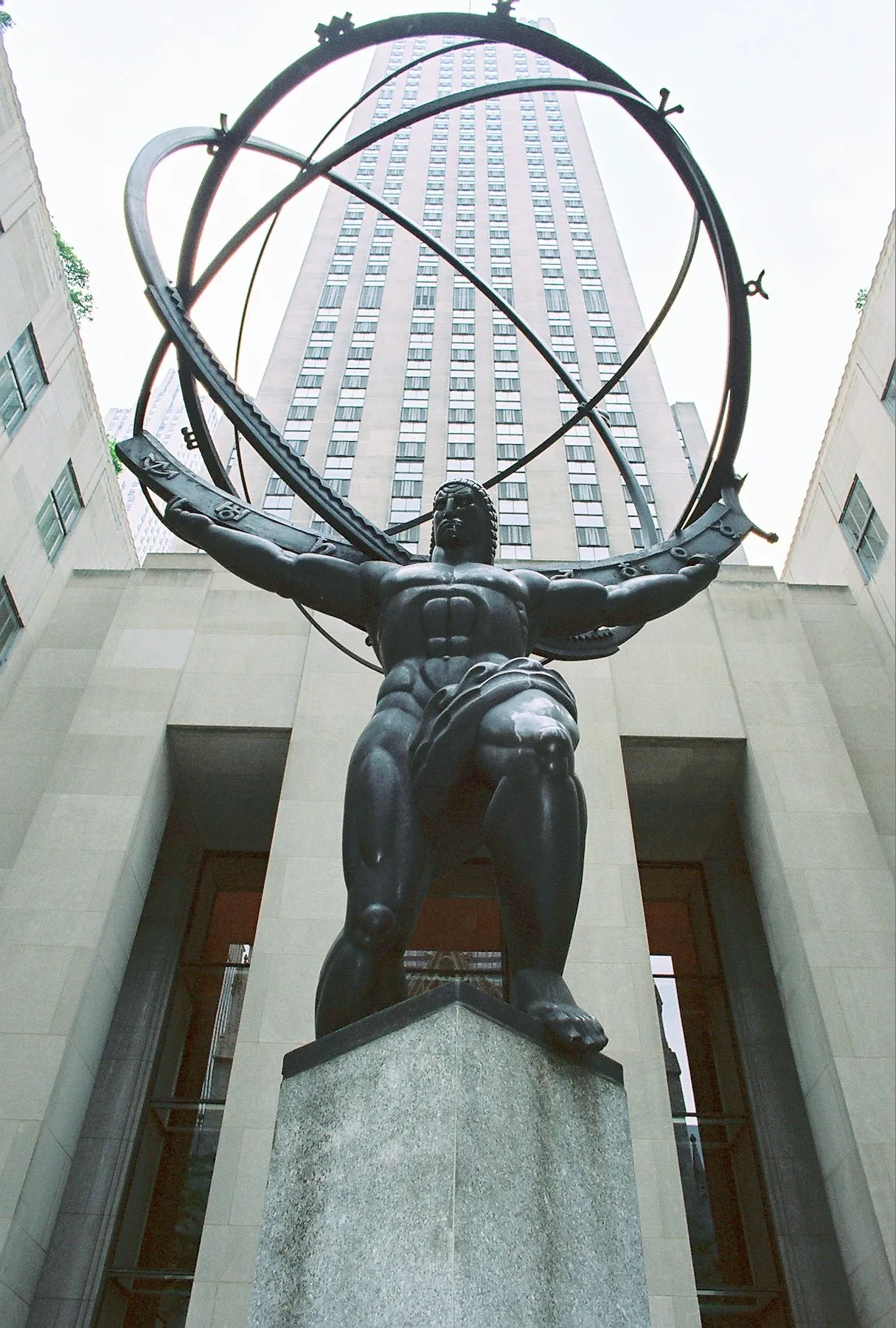
Prometheus and Atlas are often mentioned together because each is a major Rockefeller Center sculpture drawn from Greek myth. They should not be treated as twins. Prometheus is the gold-coloured Lower Plaza figure by Paul Manship. Atlas is the dark bronze figure at the International Building on Fifth Avenue, designed by Lee Lawrie with Rene Paul Chambellan. Prometheus gives the center an interior focal point. Atlas gives the complex a strong face toward the avenue.
The contrast is worth seeing in person. After Prometheus, walk east to Fifth Avenue and find Atlas at the International Building. The archive’s guide to Atlas explains how the armillary sphere, the street corner, and the building entrance work together. Atlas meets the city at its edge, while Prometheus gathers the visitor into the middle. One is a threshold; the other is a centerpiece.
That difference also explains why both works endure in photographs. They are memorable shapes, but the shapes serve different architectural jobs. Atlas uses the open rings of a celestial sphere to frame street and sky. Prometheus uses a horizontal, descending body to activate a lower plaza. Once you notice those choices, Rockefeller Center begins to feel less like a collection of attractions and more like a deliberately paced experience.
How Lee Lawrie’s work completes the picture
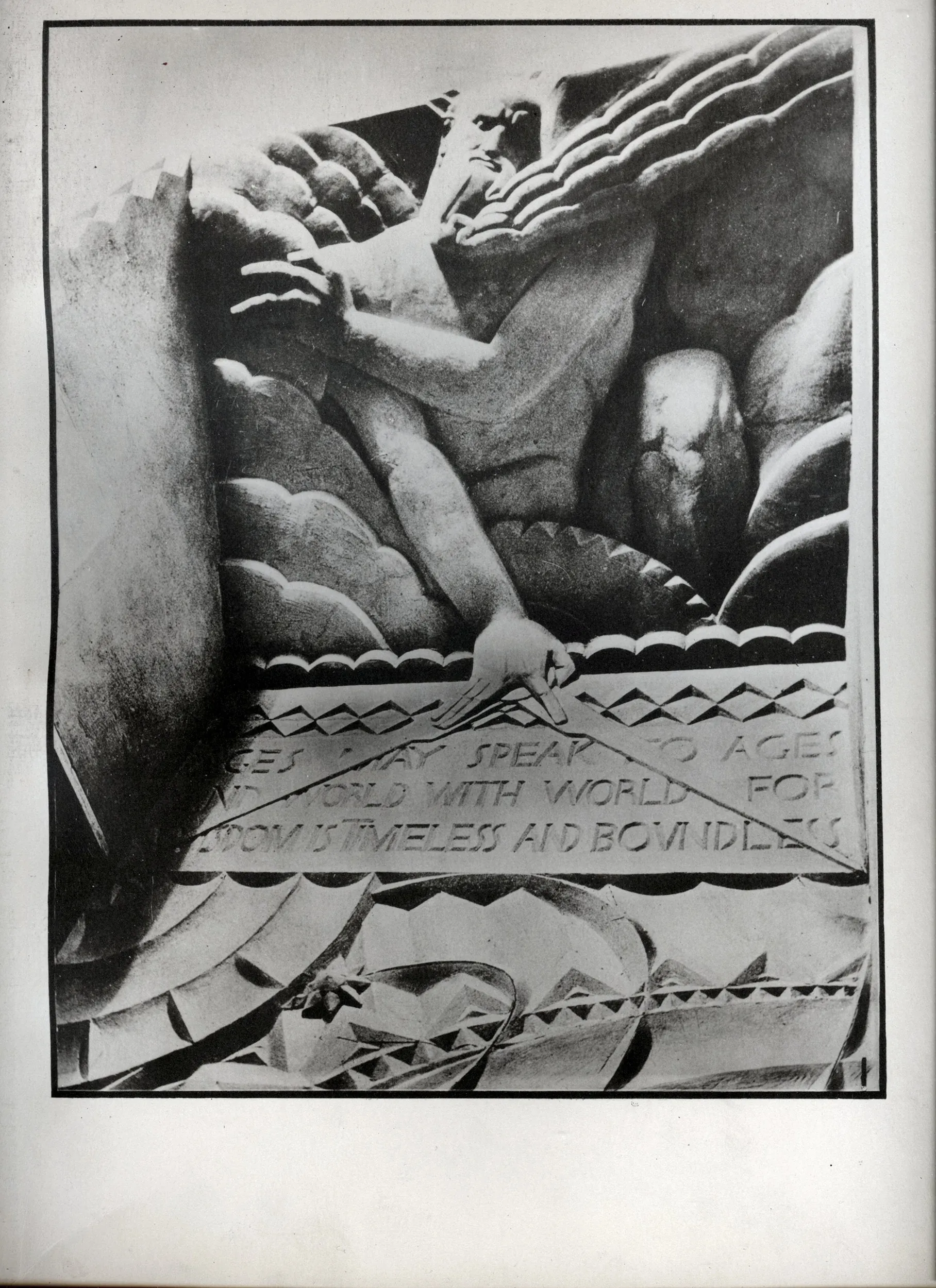
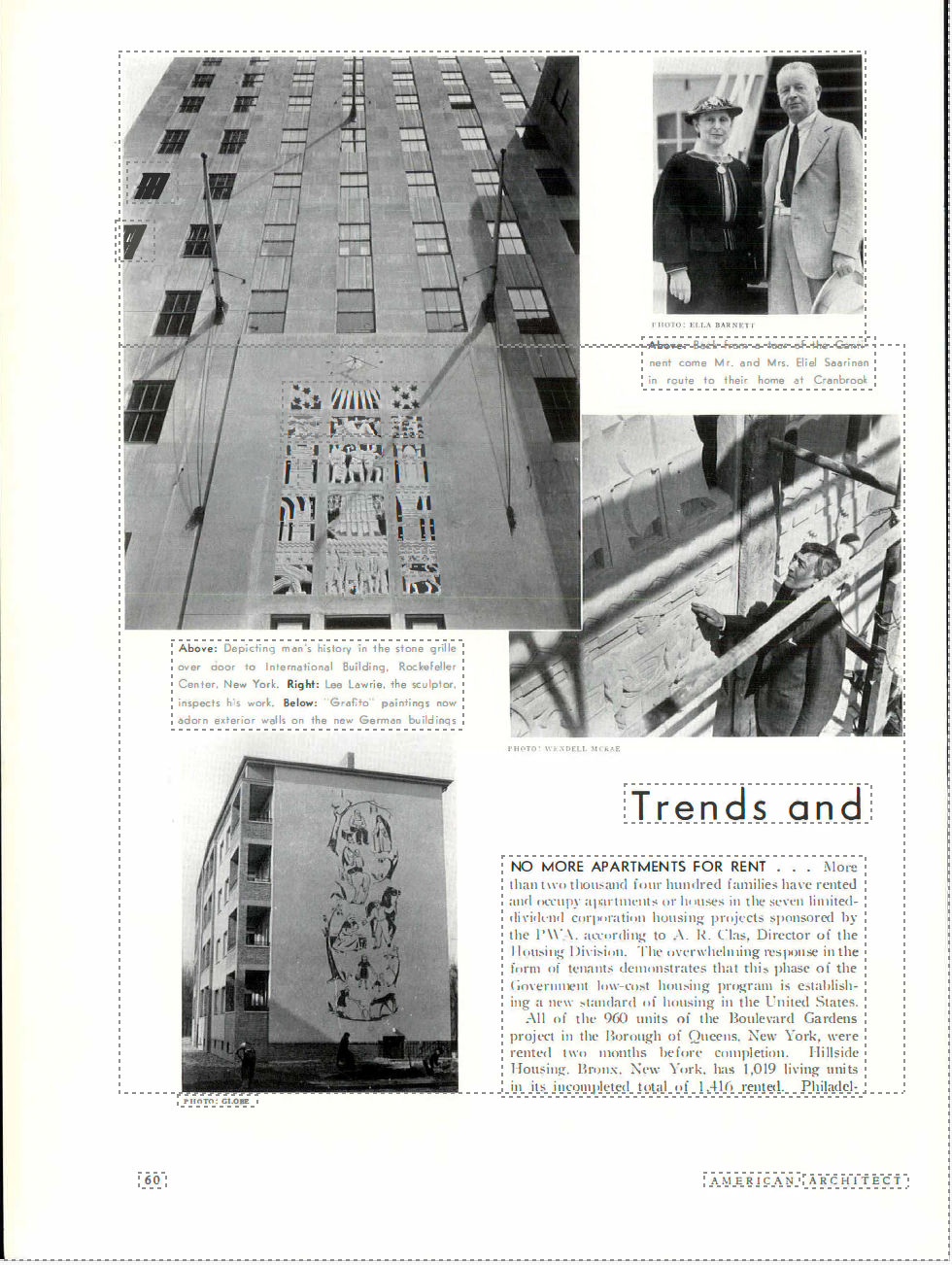
Prometheus is not a Lee Lawrie sculpture, but it is an excellent way into Lawrie’s Rockefeller Center work because it makes the overall art program impossible to ignore. After seeing the Lower Plaza, look for Lawrie’s Wisdom Creating the Universe above the entrance to 30 Rockefeller Plaza, then continue toward the International Building. The archive’s Rockefeller Center Art Deco guide gives a practical route through those works and explains how sculpture helps define entrances, facades, and public space.
Gregory Paul Harm’s archive is especially useful for that next step because it connects well-known landmarks to the work around them. Its Rockefeller Center pages include original photography and period material that place Lawrie’s sculptures within the wider building program. Readers interested in the artist’s broader career can continue into the Landmarks and Discoveries collection, where similar questions of symbolism, scale, and architectural setting appear at libraries, capitols, and civic buildings across the country.
A simple route makes the comparison easy. Begin at Prometheus in the Lower Plaza. Move up to the entrance of 30 Rockefeller Plaza to see Wisdom Creating the Universe. Then walk east to Atlas at the International Building and look back toward the plaza you have just left. The route takes you from an interior public room, to a major entrance, to the Fifth Avenue edge of the complex. It reveals three different ways sculpture can give a building or a city block its identity.
Prometheus is a fine reason to visit Rockefeller Center. Looking beyond it reveals the more lasting achievement: a public environment in which artists and architects gave myth, history, and civic ambition a visible place in everyday New York.
Frequently asked questions
Who made the Prometheus statue at Rockefeller Center?
Prometheus was designed by the American sculptor Paul Manship for the Lower Plaza at Rockefeller Center. It is different from Atlas on Fifth Avenue, which was designed by Lee Lawrie with Rene Paul Chambellan.
Where is Prometheus at Rockefeller Center?
Prometheus stands above the Lower Plaza, beside the skating rink and beneath 30 Rockefeller Plaza. It is reached from the central concourse between Fifth and Sixth Avenues, rather than from the International Building entrance on Fifth Avenue.
What does the Prometheus statue represent?
The gilded figure represents Prometheus, the Greek Titan associated with giving fire to humanity. At Rockefeller Center, the image turns that myth into a public symbol of knowledge, aspiration, and creative force.
What is the difference between Prometheus and Atlas at Rockefeller Center?
Prometheus is the gold-coloured figure above the Lower Plaza and was made by Paul Manship. Atlas is the dark bronze figure with an armillary sphere at the International Building on Fifth Avenue, made by Lee Lawrie with Rene Paul Chambellan. They are separate works in separate parts of the complex.
Featured Prometheus photograph by David Shankbone, public domain via Wikimedia Commons.
Related posts
Rockefeller Center ArtRockefeller Center Art Deco: A Guide to Lee Lawrie
A practical guide to finding Atlas, Wisdom and the larger sculptural program that Lee Lawrie helped shape at Rockefeller Center.
Rockefeller Center ArtAtlas Statue at Rockefeller Center
Find Atlas at Rockefeller Center, learn who made the bronze statue, what its armillary sphere means, and how to see it on Fifth Avenue.
Rockefeller Center ArtWisdom at Rockefeller Center: A Closer Look
A guide to Lee Lawrie’s great entrance relief at 30 Rockefeller Plaza, its famous inscription, and the details that reward a slower visit.
 Rockefeller Center Art
Lee Lawrie, Sculptor of America’s Great Buildings
Who was Lee Lawrie? Meet the architectural sculptor whose work shaped the Nebraska State Capitol, Rockefeller Center, libraries, memorials, and more.