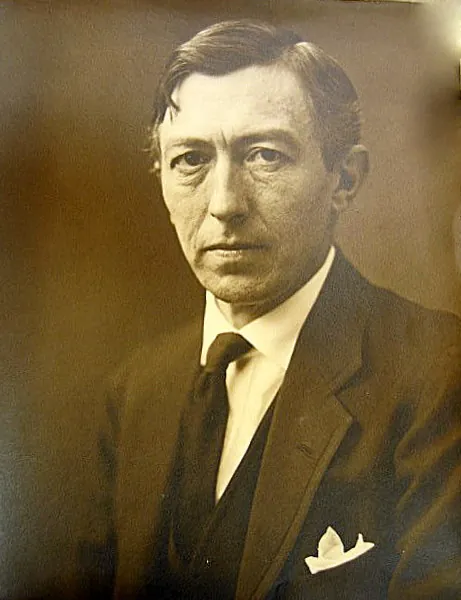
Lee Lawrie was the kind of sculptor whose work many people know before they know his name. A visitor can recognize Atlas on Fifth Avenue, pause beneath the great entrance relief at 30 Rockefeller Plaza, or look up at the Sower above the Nebraska State Capitol without realizing that the same artist helped shape all of those experiences. Lawrie’s achievement was not simply making memorable objects. He made sculpture part of the way major American buildings greet, guide, and stay with the people who use them.
Lee Lawrie was an architectural sculptor
Lawrie began his career in a Chicago sculptor’s studio as a teenager and went on to work across churches, libraries, memorials, commercial buildings, and civic landmarks. The U.S. Commission of Fine Arts profile of Lee Lawrie identifies Atlas at Rockefeller Center among his best-known works, alongside important commissions in Washington, D.C. That range is a useful clue to his importance. He was not limited to one style, one city, or one kind of building.
The phrase architectural sculptor explains what makes his work distinct. A freestanding monument can be approached as an independent object. Lawrie’s figures, reliefs, doors, and ornament were usually made to work with a particular building. Their placement mattered as much as their subject. A tall exterior figure had to read from across a street. A relief above an entrance had to give a visitor a reason to look up. A small bronze detail had to reward the person who came close.
That is why his work can feel so present in daily life. It is built into thresholds, facades, towers, rooms, and routes through a building. The archive’s catalog of works shows the breadth of that practice, from churches and war memorials to libraries and state capitols. Rather than treating decoration as a final layer, Lawrie helped buildings communicate their purpose through material, image, and scale.
The Nebraska State Capitol shows the scale of his ambition
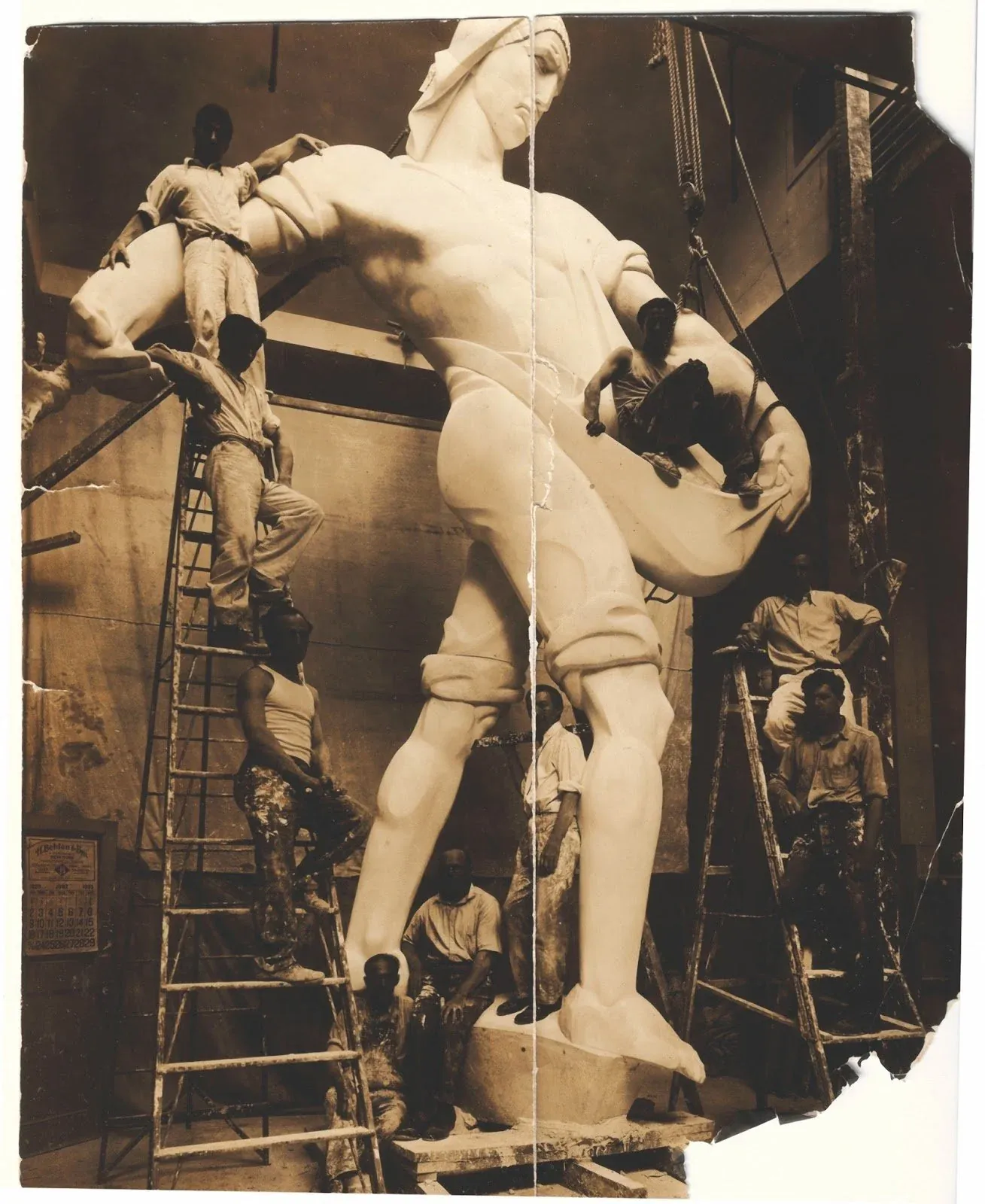
The Nebraska State Capitol in Lincoln is the clearest place to see Lawrie working across an entire building. He joined architect Bertram Goodhue, muralist Hildreth Meiere, and thematic consultant Hartley Burr Alexander on a project that treated architecture, sculpture, color, and civic ideas as parts of one whole. The Capitol’s own account identifies Lawrie as the artist responsible for its relief sculpture and stone decoration.
From the ground, the Sower is the work that first commands attention. The bronze figure stands high above the tower, turning an idea of agriculture into a landmark visible across the city. That is only the beginning. The Capitol also carries carved panels, animals, historical figures, column capitals, doors, and interior ornament. The Capitol’s guide to its panels and sculptures describes how Lawrie varied a corn motif across several interior settings, adapting a single idea to the building’s different rooms and purposes.
The result was unusually ambitious for an American statehouse. The building does not reserve its ideas for a single ceremonial room or an isolated monument outside. Its sculpture begins at the skyline and continues through the spaces where legislators, school groups, staff, and visitors spend time. That continuity makes the Capitol a useful starting point for anyone trying to understand Lawrie: he could make a public symbol visible from a distance, then sustain the same attention through the small details encountered indoors.
This is where Lawrie’s method becomes easiest to understand. A person does not encounter the Capitol from one fixed viewpoint. They see its tower from a distance, pass close to a door, move through formal chambers, and notice details at the pace of a visit. Lawrie gave each of those moments a different visual job. The archive’s Nebraska State Capitol collection follows that sequence through the building, while the Capitol facts guide provides further context for its scale and history.
He made libraries feel like places where knowledge matters
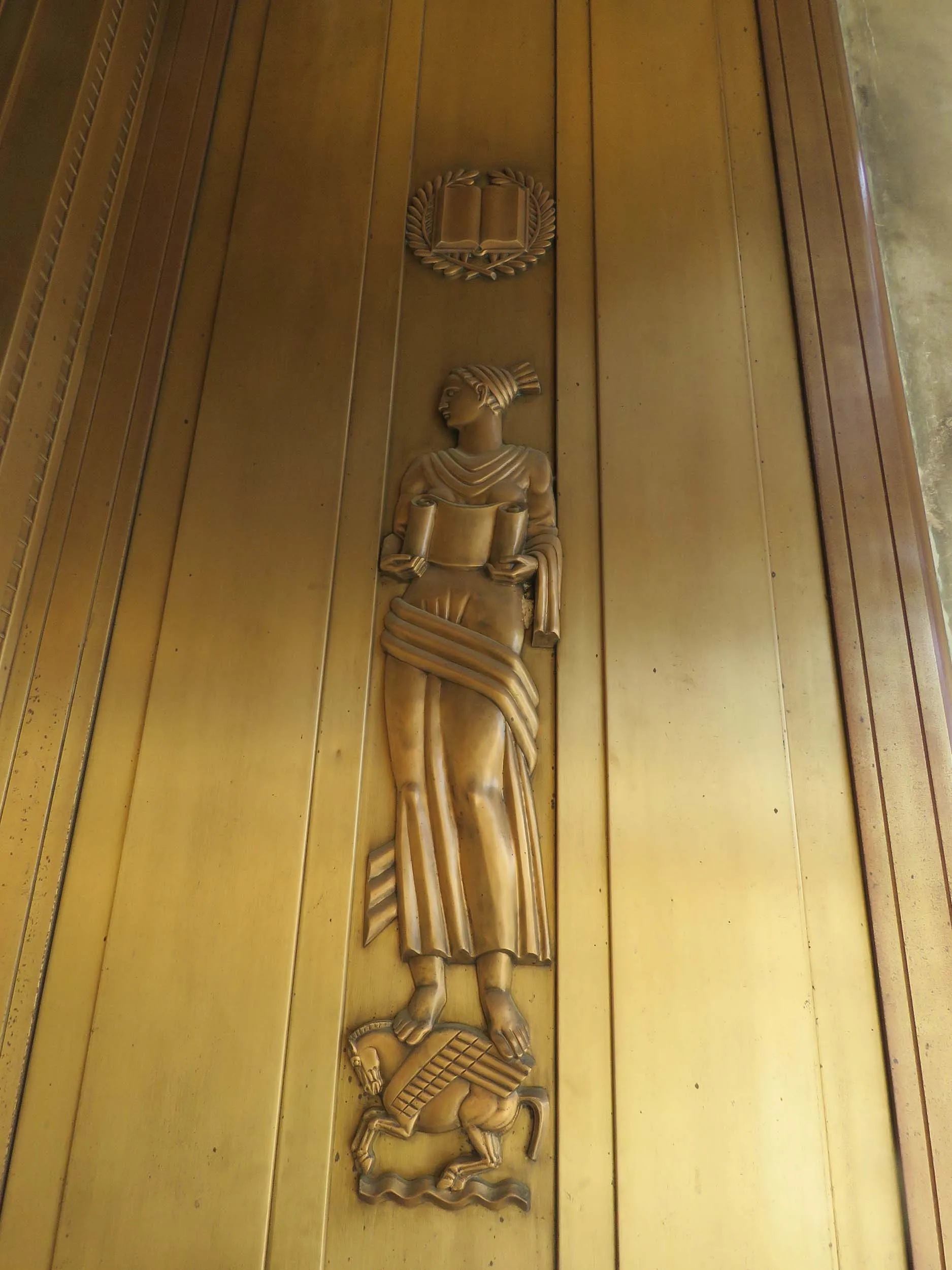
Lawrie’s work at libraries shows another side of the same skill. At the John Adams Building of the Library of Congress, bronze doors and exterior figures turn the building’s purpose into a visual subject. The Library of Congress’s guide to the John Adams Building documents bronze figures by Lawrie at the east entrance and places them among the building’s many artistic details.
Those choices are not simply illustrations attached to a government building. Writing, memory, language, learning, and intellectual history become part of the approach to the library itself. The archive’s John Adams Building page and Legendary Scribes page make the same point through close photographs of the doors and panels. The closer a visitor gets, the more the building asks them to consider what a library preserves and passes forward.
Lawrie brought a similar attentiveness to the Los Angeles Central Public Library. There, large symbolic figures, exterior programs, and smaller details help establish the building as a civic place devoted to learning. Architectural sculpture can be easy to overlook because it feels so firmly attached to its setting. That attachment is precisely the achievement. Lawrie made a building’s subject visible without interrupting its everyday use.
Rockefeller Center made his work familiar to millions
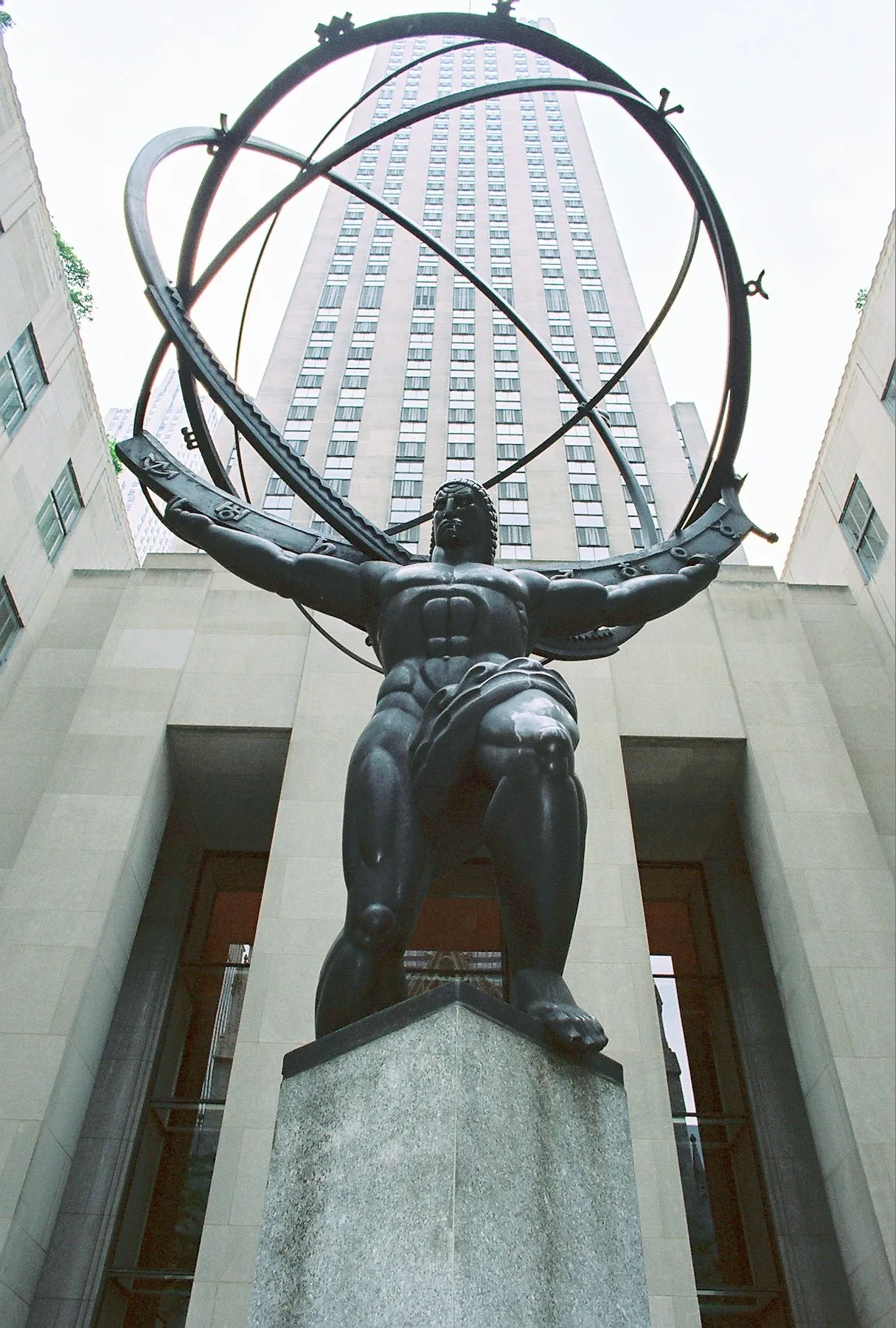
At Rockefeller Center, Lawrie’s sculpture had to work at the pace of Midtown Manhattan. The best-known example is Atlas, the bronze figure with an armillary sphere at the Fifth Avenue entrance to the International Building. It is a powerful silhouette from across the avenue, but its real strength comes from its fit with the building behind it. The figure makes the entrance feel purposeful before a visitor has crossed the threshold.
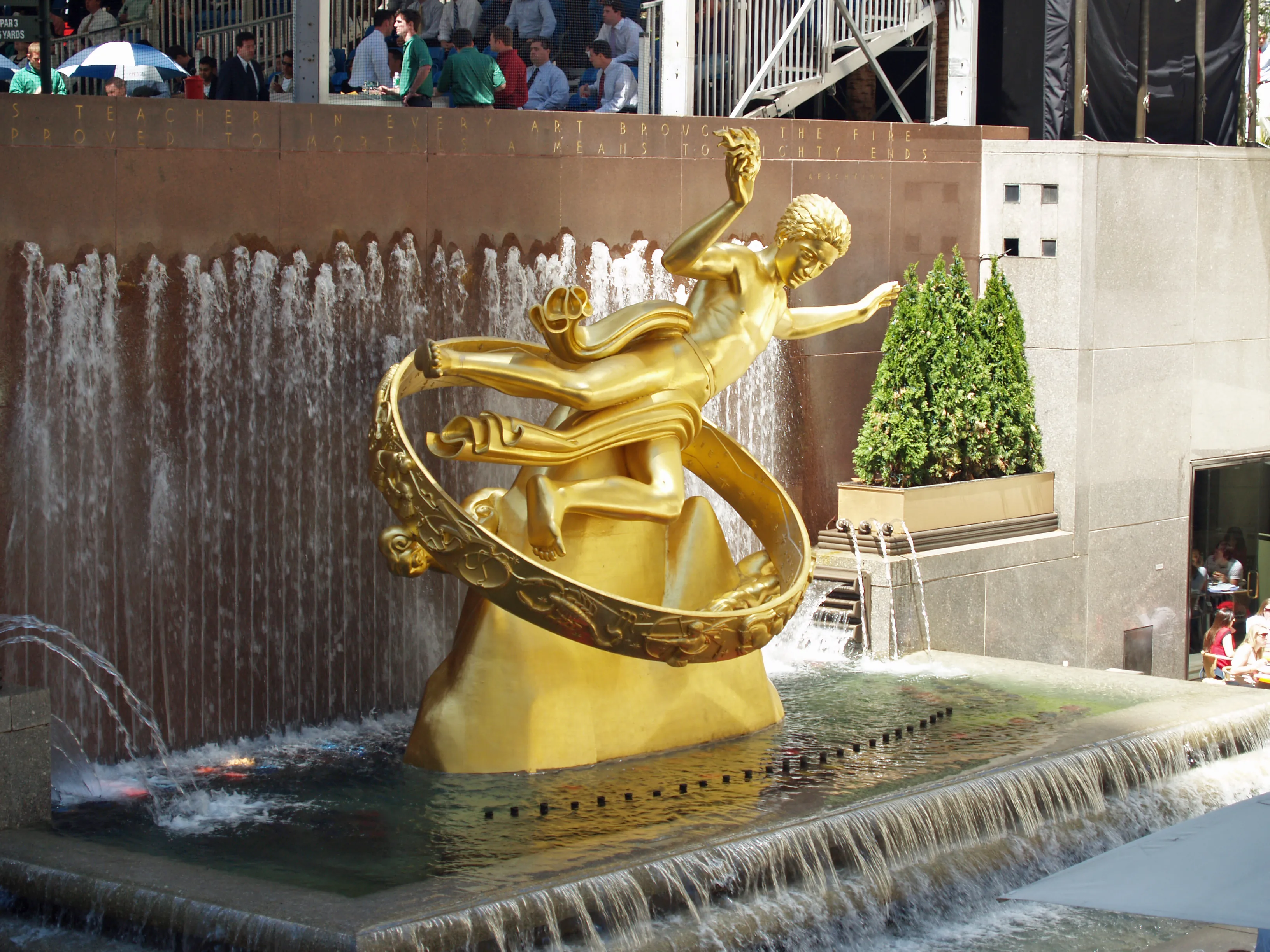
Atlas is often confused with Prometheus, the gold figure over the Lower Plaza. They are different works by different sculptors, in different parts of the complex. The archive’s Atlas guide explains how Lawrie and Rene Chambellan shaped the Fifth Avenue landmark, while the Prometheus guide traces Paul Manship’s plaza centerpiece. Seeing both makes the larger art program more interesting because each figure performs a distinct architectural role.
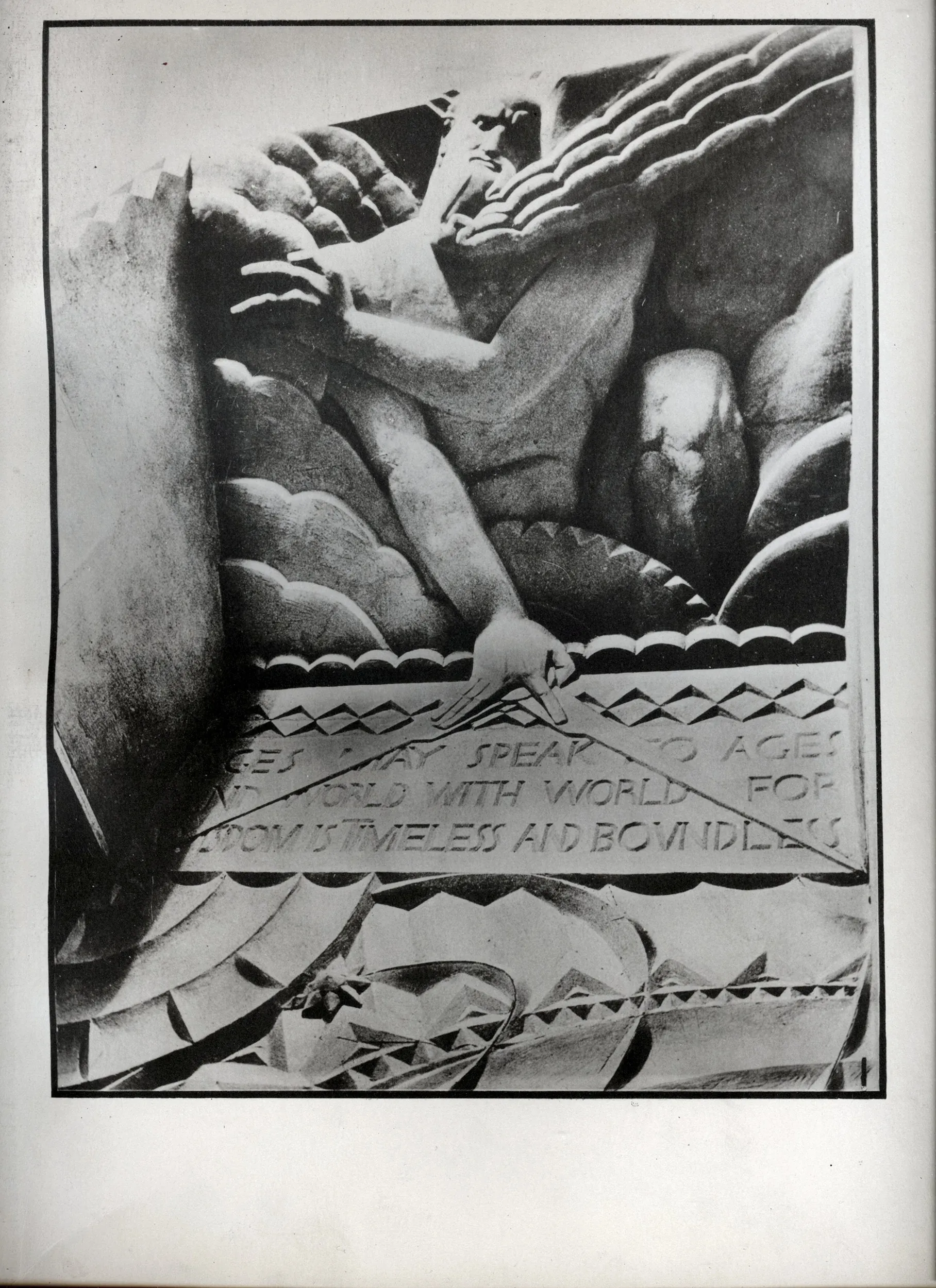
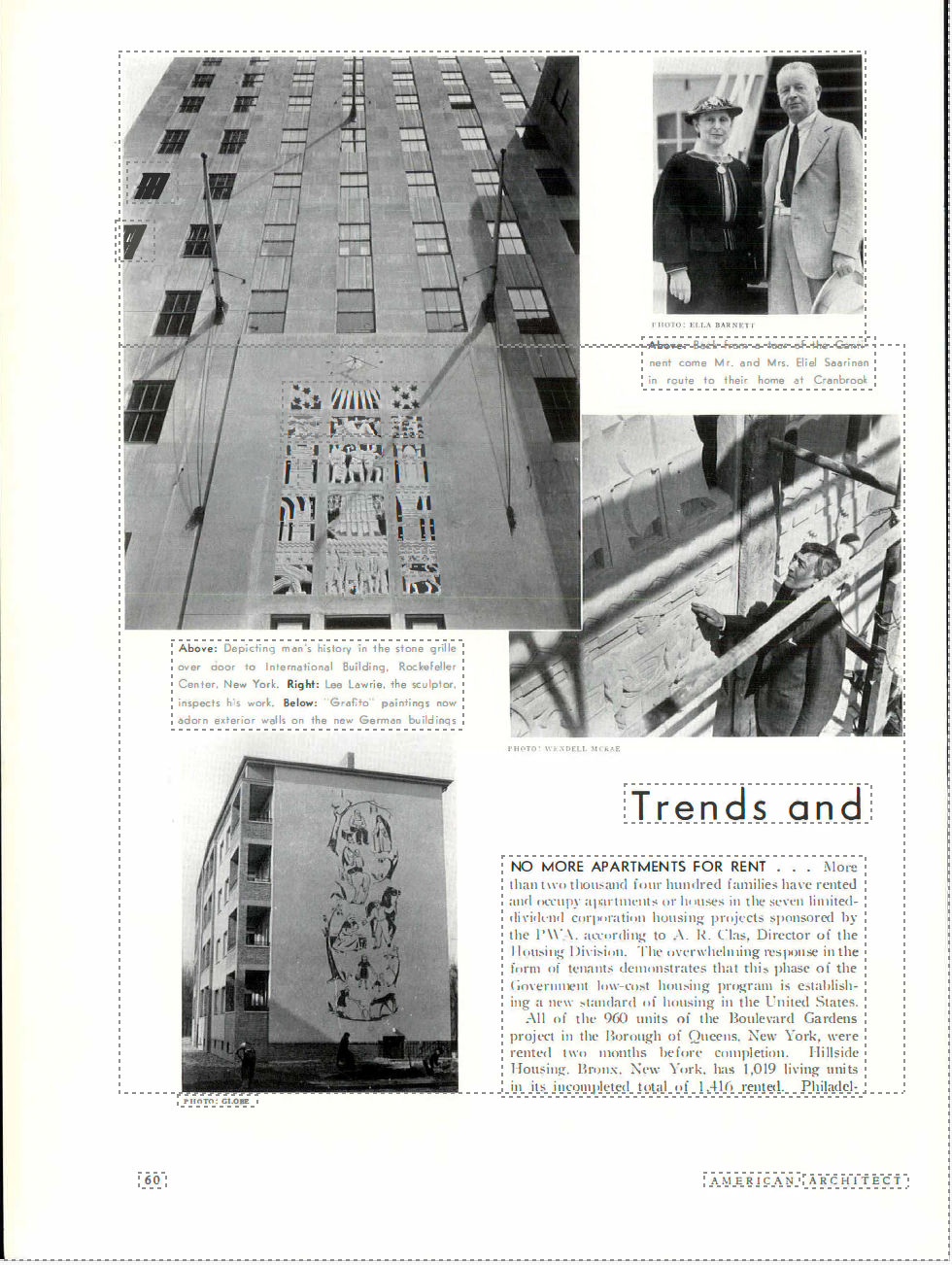
Lawrie’s Wisdom Creating the Universe above the main entrance to 30 Rockefeller Plaza is more closely fused to architecture still. The relief, inscription, and doorway form one composition. Rockefeller Center’s public-art guide helps place these works within a much larger collection, but Lawrie is especially important because he gave several key buildings their public face. His Wisdom guide is a good next stop for seeing how a single entrance can carry both symbolic weight and everyday movement.
Look for the building’s point of view
Lawrie’s work becomes easier to recognize when you stop asking only what a sculpture represents and start asking what it is doing for the building. Does it mark an entrance? Does it establish a landmark from far away? Does it explain the purpose of a room? Does it make a broad wall feel human in scale? These questions turn an ordinary walk through a city into a more active way of looking.
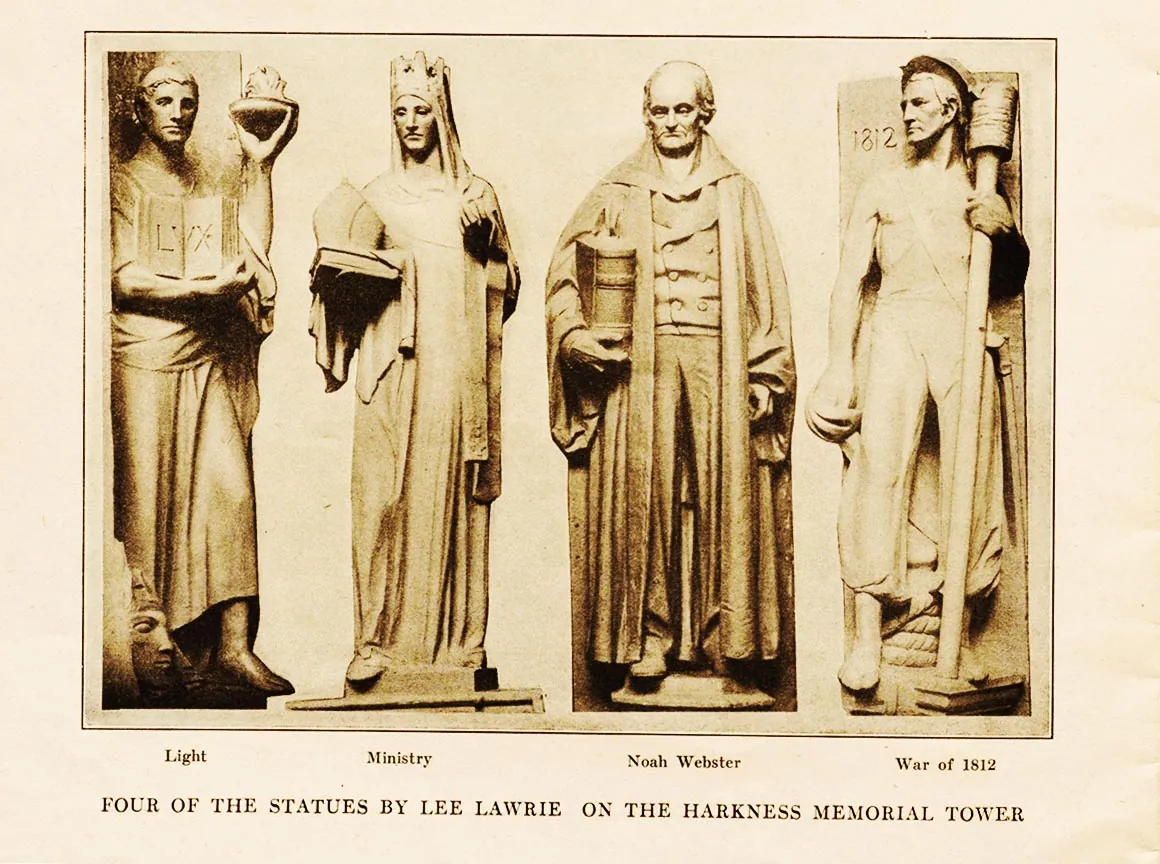
Harkness Tower at Yale is a useful example. Its figures belong to the upward rhythm of a Gothic tower, where they are seen in glimpses from a quadrangle rather than as museum objects placed at eye level. At the Nebraska Capitol, the same basic attention to scale moves from a skyline figure down to carved interior details. At Rockefeller Center, it shifts again to street corners and monumental entrances. Lawrie’s subjects change, but his concern with a visitor’s experience stays remarkably consistent.
This also explains why photography matters. A close image can reveal modeling and material that are hard to see from the street. A wider image can show how a sculpture belongs to a facade or a plaza. Neither replaces being there, but together they make a building easier to read. The archive’s photographs and field research allow readers to move between those views, from a small detail to the larger architectural setting that gives it meaning.
Why Lee Lawrie is worth a closer look
Lee Lawrie’s career offers a fuller way to understand American architecture of the early twentieth century. Major buildings were not conceived only as efficient structures or impressive facades. Their creators often expected them to carry history, learning, labor, faith, public service, and local identity. Lawrie’s work helped turn those ideas into something a visitor could see while walking past, entering, or moving through a building.
The archive is especially valuable because it follows that work across its many settings rather than reducing Lawrie to one famous statue. Start with the artist’s life, then explore the Rockefeller Center collection, the Nebraska Capitol, and the Library of Congress. For the most sustained look at his defining commission, Gregory Paul Harm’s Prairie Deco brings the Capitol’s sculpture, history, and visual program together in one illustrated volume.
Once you begin to notice Lawrie’s work, the best response is simple: slow down before you enter the building. Look up, step back, then come closer. His sculpture was made for that change of distance, and it still rewards it.
Frequently asked questions
Who was Lee Lawrie?
Lee Lawrie was an American architectural sculptor whose work shaped public buildings across the United States. He is especially known for the Nebraska State Capitol, Atlas and Wisdom at Rockefeller Center, and sculpture for the Library of Congress.
What kind of sculptor was Lee Lawrie?
Lawrie was an architectural sculptor. His figures, reliefs, doors, and decorative details were designed to work with a building’s purpose, scale, materials, and setting rather than stand apart from the architecture.
Did Lee Lawrie make Atlas at Rockefeller Center?
Yes. Lee Lawrie designed Atlas with Rene Paul Chambellan for the International Building on Fifth Avenue. The gold Prometheus figure in the Lower Plaza was made by Paul Manship, not Lawrie.
What is Lee Lawrie’s best-known work?
Atlas at Rockefeller Center is probably Lawrie’s most familiar single work. The Nebraska State Capitol was his largest and most sustained commission, with sculpture and ornament extending across the exterior and interior of the building.
Related posts
 Rockefeller Center Art
Rockefeller Center Art Deco: A Guide to Lee Lawrie
A practical guide to finding Atlas, Wisdom and the larger sculptural program that Lee Lawrie helped shape at Rockefeller Center.
 Rockefeller Center Art
Atlas Statue at Rockefeller Center
Find Atlas at Rockefeller Center, learn who made the bronze statue, what its armillary sphere means, and how to see it on Fifth Avenue.
 Rockefeller Center Art
Prometheus Statue at Rockefeller Center
Find the gilded Prometheus statue at Rockefeller Center, learn its meaning and artist, and see how it shapes the Lower Plaza.
Rockefeller Center ArtWisdom at Rockefeller Center: A Closer Look
A guide to Lee Lawrie’s great entrance relief at 30 Rockefeller Plaza, its famous inscription, and the details that reward a slower visit.