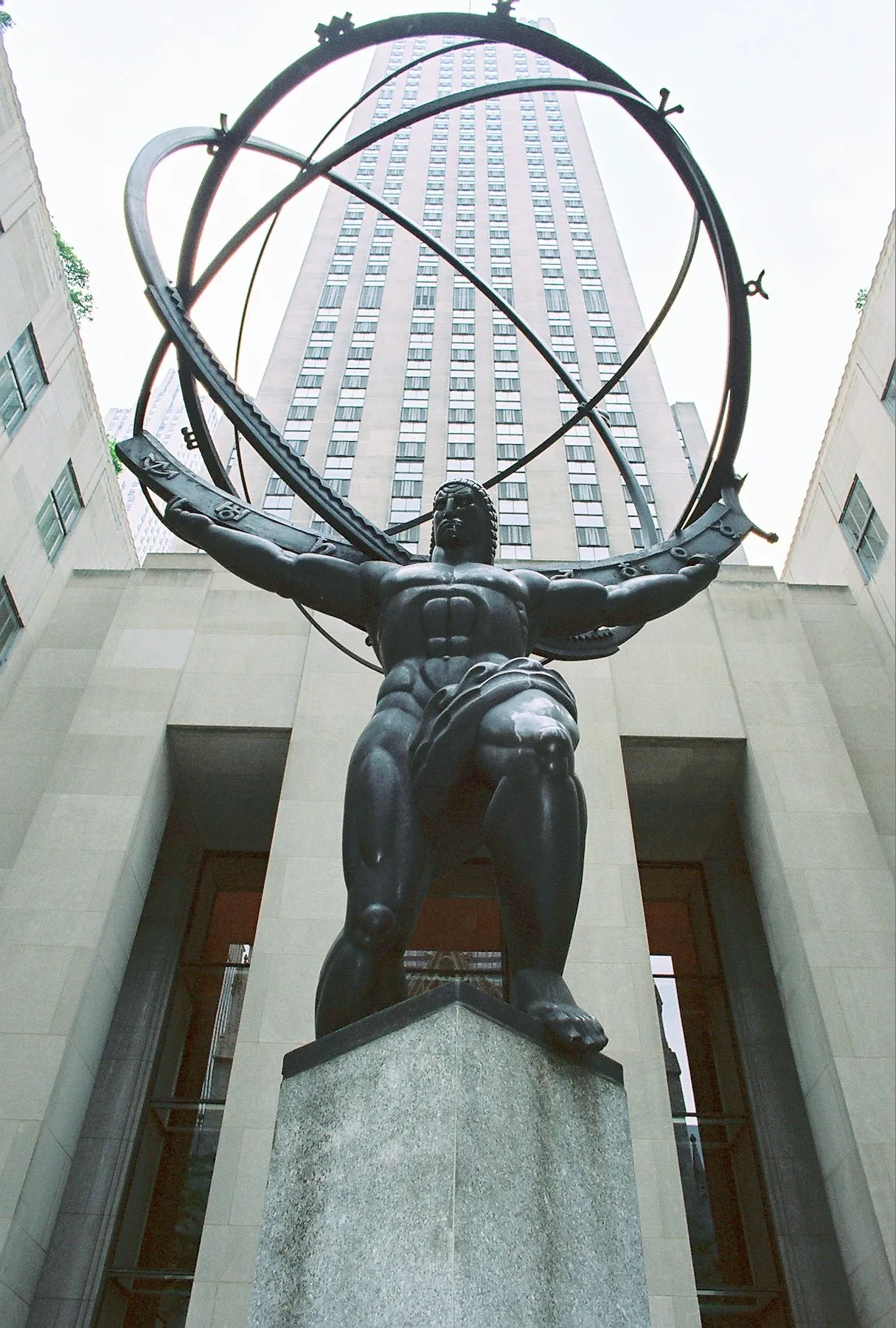
Rockefeller Center is easy to recognize and surprisingly easy to misread. Visitors often arrive looking for one famous statue, see Atlas or Prometheus, take a photograph, and move on. The greater achievement is the way sculpture shapes the whole place. Lee Lawrie helped give the complex its human scale, its symbolic language, and much of its memorable silhouette. This guide is a practical way to see that work with more attention.
Start with the building, not just the statue
Rockefeller Center was conceived as an architectural ensemble, not as a collection of stand-alone objects. The towers, entrances, setbacks, paving, and sculpture all have jobs to do. A figure may signal the purpose of a building, prepare a visitor for an entrance, or turn a hard urban corner into a public landmark. That is why the most rewarding way to see the Center is to look at where a work is placed before deciding what it represents.
Lawrie was especially suited to this kind of project. His career was built around architectural sculpture: work made in dialogue with a building’s scale, material, use, and civic meaning. The archive’s catalogue of works shows the same approach at libraries, capitols, memorials, churches, and commercial buildings across the United States. At Rockefeller Center, that approach reaches one of its most concentrated forms.
That distinction changes how a visitor reads the place. A museum sculpture is often designed to be approached from every side, with room to stand back and consider it as an independent object. Architectural sculpture has a more complicated brief. It needs to work with traffic, weather, shadow, views from across a street, and the practical fact that most people will see it while moving. It must carry meaning quickly, but it also has to reward the person who stops.
Rockefeller Center is particularly rich because the whole development asks you to shift between those two speeds. From a distance, you notice strong silhouettes and large symbolic gestures. At the entrance, lettering, relief, and material come into focus. The closer you look, the more the Center reveals an idea that runs through much of Lawrie’s work: buildings become memorable when their sculpture is not an afterthought.
Find Atlas on Fifth Avenue
Atlas is the first Lee Lawrie work most visitors notice. The bronze giant stands at the Fifth Avenue entrance to the International Building, carrying the heavens on his shoulders. His pose is familiar from classical myth, but Lawrie’s treatment is firmly of the twentieth century: compact, tensile, and built from emphatic planes rather than soft naturalism. The figure is not simply telling an ancient story. It gives the entrance an outsized sense of weight, duty, and worldly ambition.
It also matters that Atlas is facing the avenue. From the sidewalk, the sculpture acts like a threshold between the commercial energy of Fifth Avenue and the larger Rockefeller Center complex. The figure’s frame, the celestial armillary behind him, and the dark metal against the pale building make the composition legible at street speed. Up close, the relationship between figure and architecture becomes clearer. Atlas is monumental, but he is still serving the building.
Atlas is often described as if he were carrying the globe, but the armillary is more exact than that. It is a celestial instrument, and it gives the sculpture a larger intellectual frame than a simple display of strength. The giant is not merely burdened. He is holding a model of the heavens. That distinction helps explain why the work feels so different from a purely athletic monument. It is about force, certainly, but also calculation, order, and the imagined scale of the universe.
There is a practical reason Atlas photographs so well, too. The composition reads cleanly from a diagonal angle because the body, shoulders, and rings form a compact visual structure. Yet a photograph cannot fully explain the work’s relationship to the street. Visit at two distances: first from the opposite sidewalk, then from the building line. The change in viewpoint shows how deliberately Lawrie balanced a legible public symbol with a complex architectural entrance.
Rockefeller Center notes that the bronze Atlas weighs 14,000 pounds, stands 15 feet tall on a 9-foot pedestal, and carries an armillary sphere marked with the zodiac. Its 45 Rockefeller Plaza guide also notes that the sphere’s axis points to the North Star. Then spend a few minutes looking at the work from both sides of Fifth Avenue. The view from across the street gives the silhouette. The closer view reveals why its scale and placement matter as much as its subject.
Look up at Wisdom before going inside
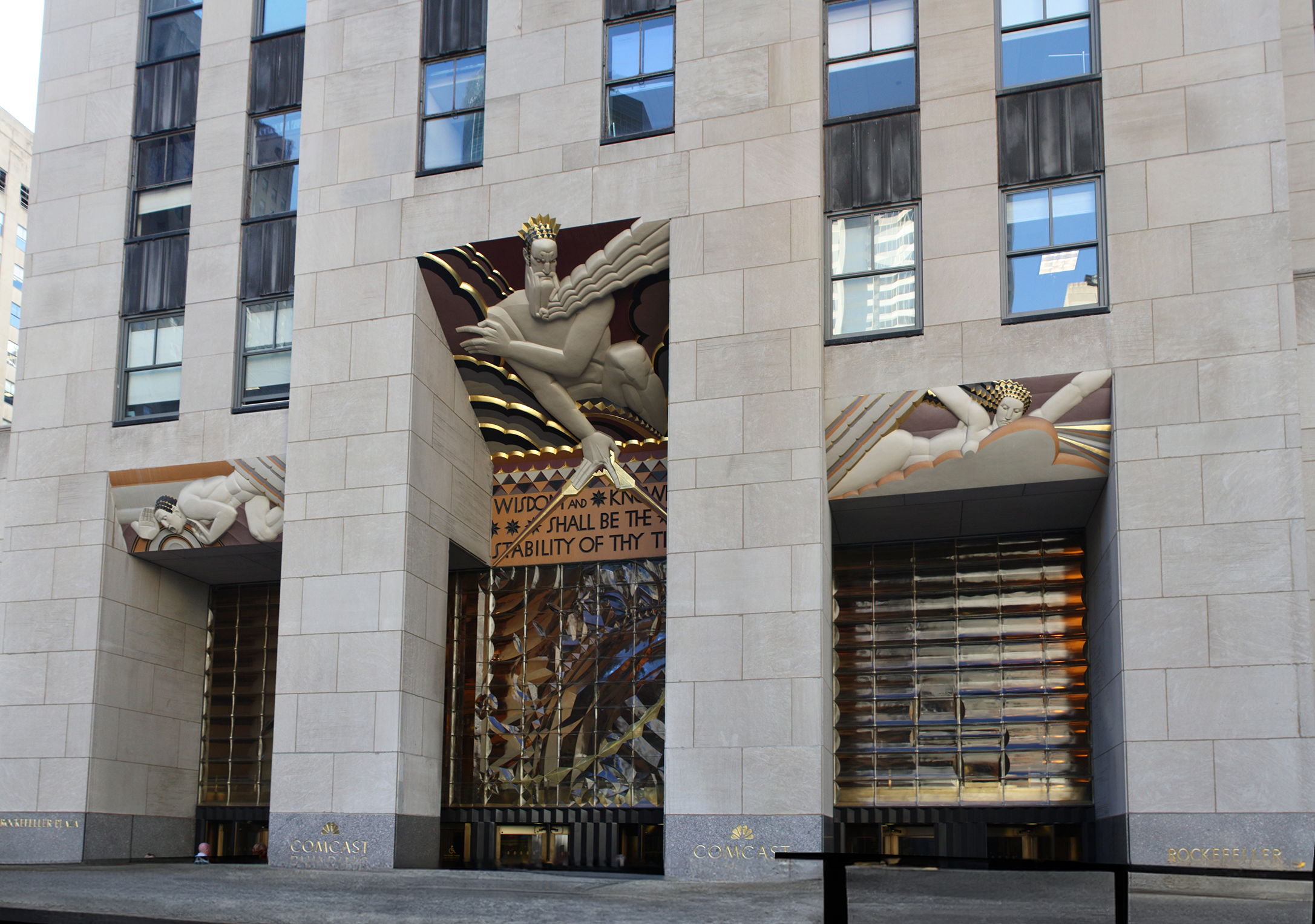
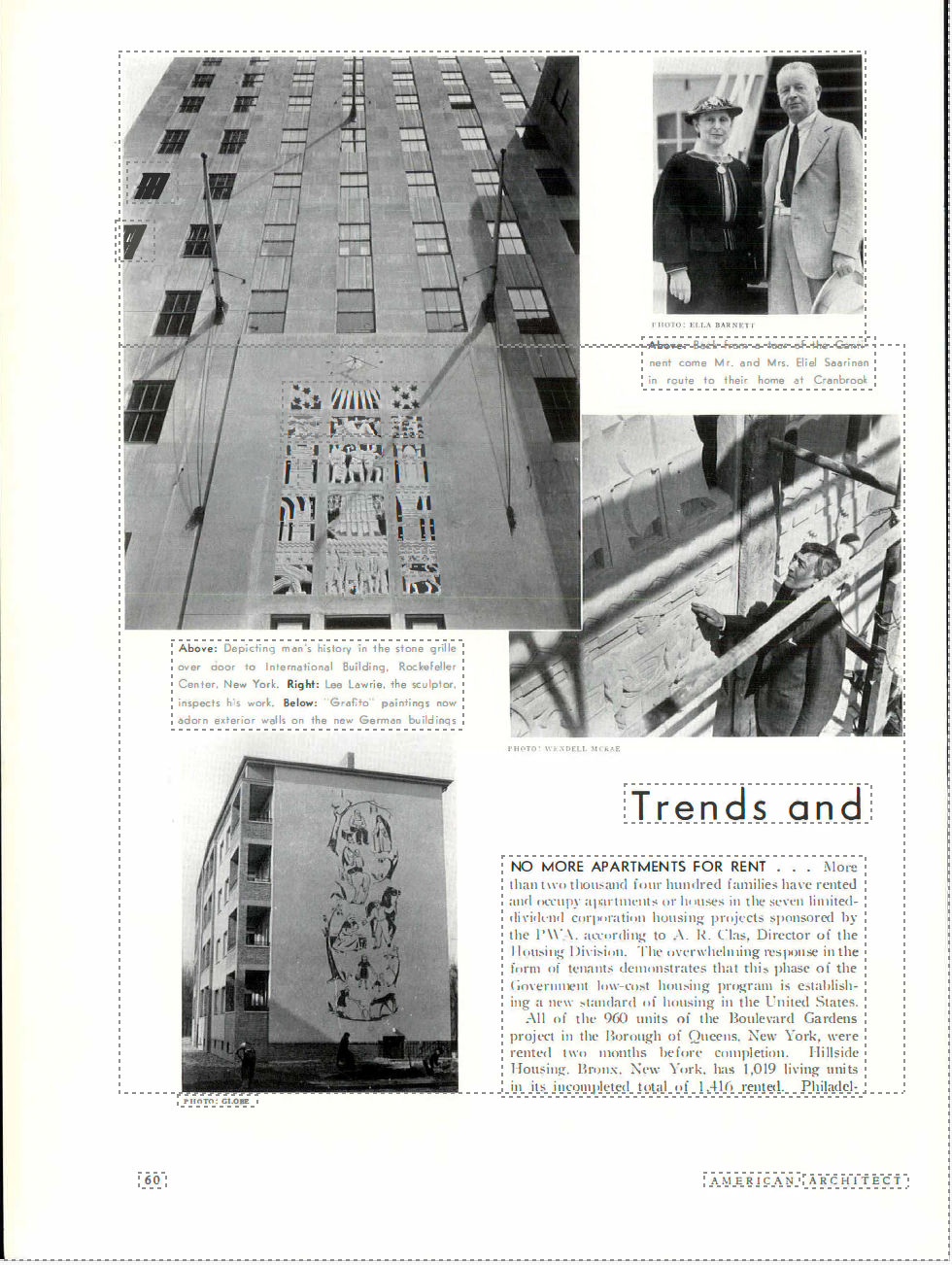
From Atlas, walk west toward 30 Rockefeller Plaza and pause at the main entrance. Above it is Wisdom, one of Lawrie’s most powerful statements in the entire complex. The work is high enough to be missed by people focused on the doors, the lobby, or the street traffic. That is precisely why stopping matters. It is a building-scale image, designed to be read as part of the facade.
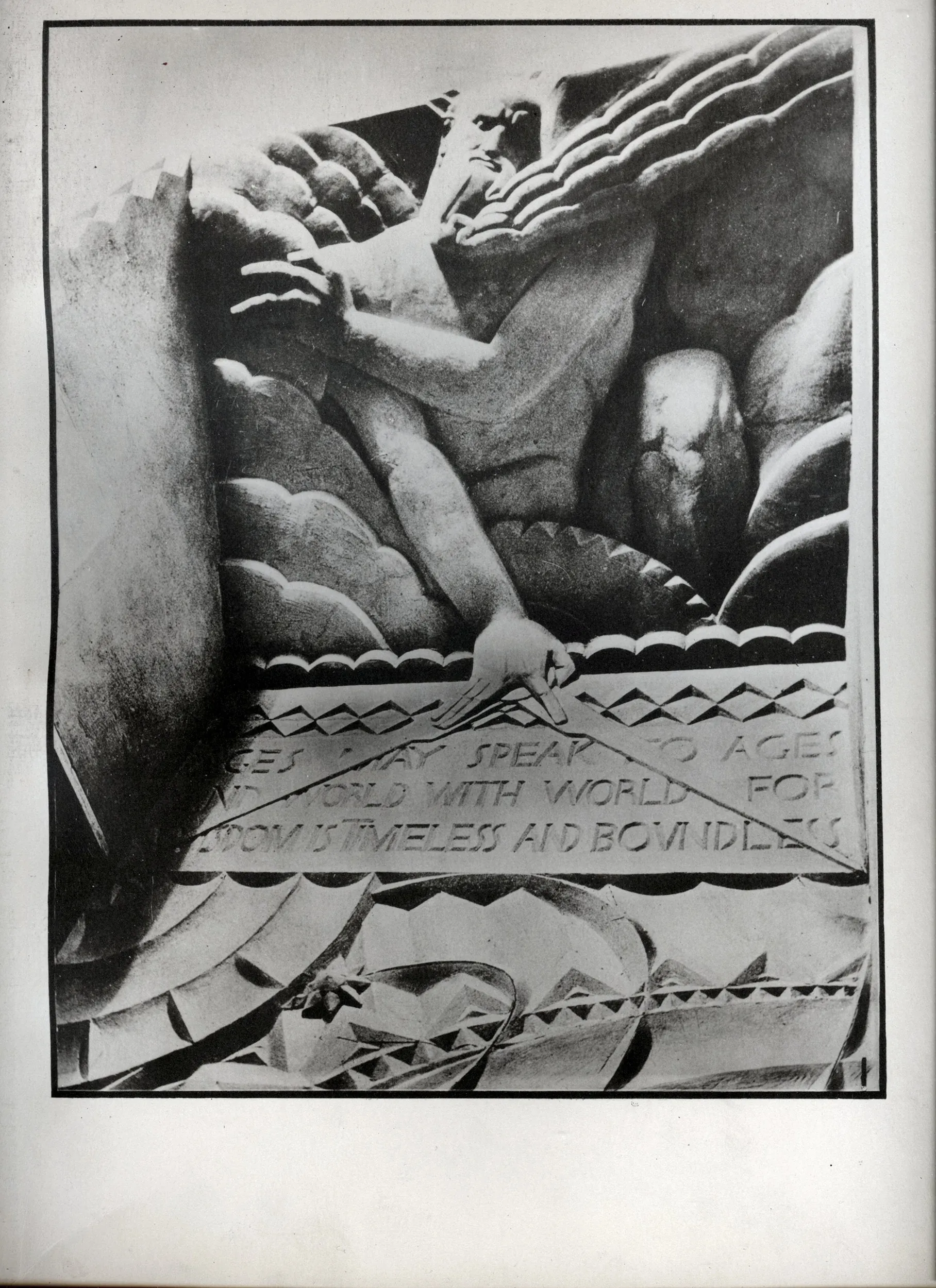
Wisdom is not decoration added after the architecture was finished. It is part of the entrance’s message about knowledge, industry, and aspiration. The figure’s scale and radiant composition give the doorway a ceremonial character, while the surrounding stone keeps the work tied to the building rather than floating free from it. The image rewards a slow look because its meaning sits in the relationship between figure, light, inscription, and threshold.
Notice how the International Building uses sculpture
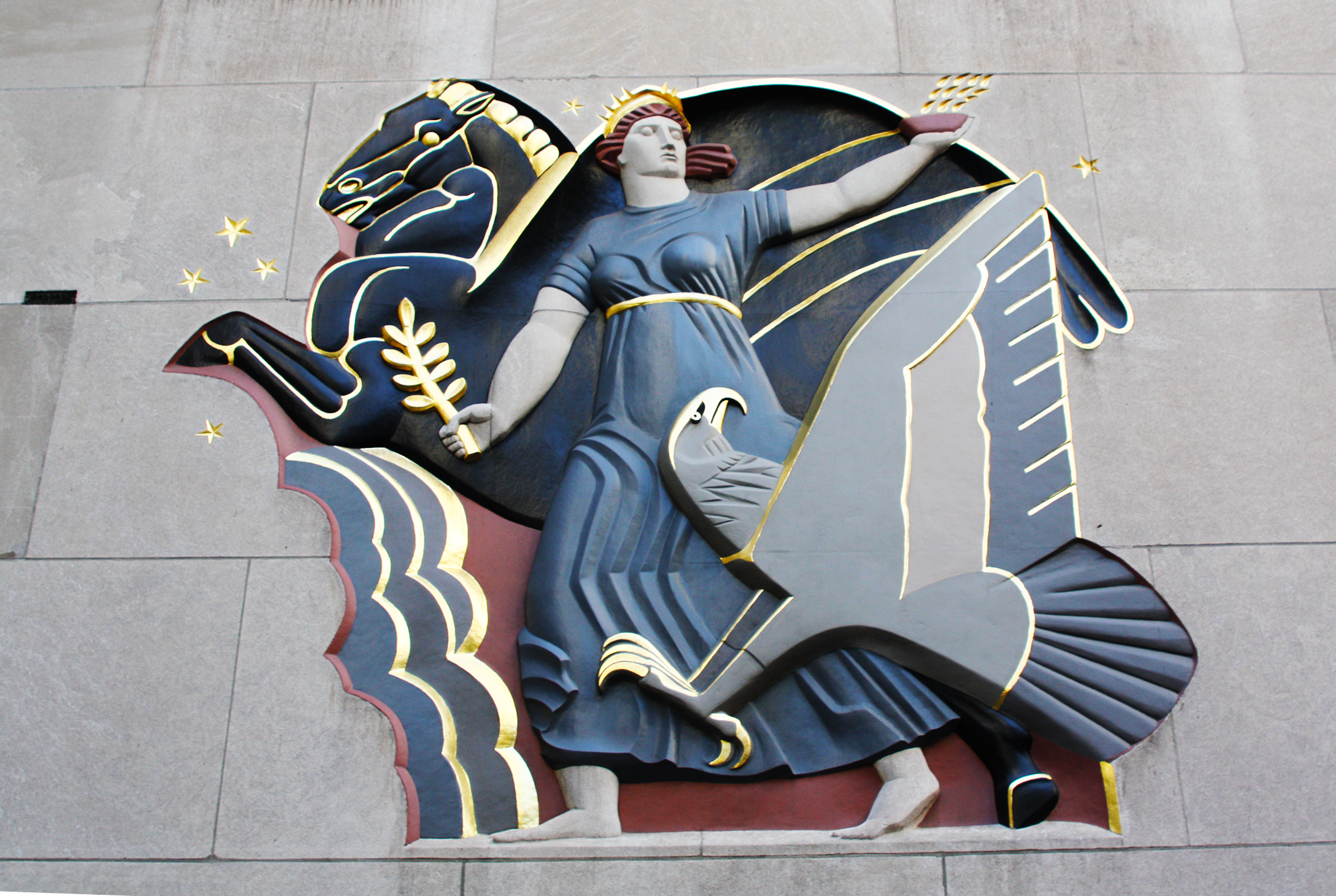
The International Building is where the wider Rockefeller Center art program becomes especially clear. Atlas gets most of the attention, but the surrounding facades show how sculpture can help a building speak about its purpose. Figures, reliefs, and decorative motifs do not all demand the same kind of attention. Some establish a landmark from a distance. Others ask visitors to come closer. Together, they make the building feel composed rather than merely surfaced.
This is a useful clue for anyone exploring Art Deco architecture. The style is often reduced to zigzags, polished metal, and dramatic setbacks. Those elements matter, but at Rockefeller Center the deeper effect comes from coordination. Stone, bronze, color, lettering, and sculpted figures are arranged to give modern buildings a public language. Lawrie’s contributions work because they do not interrupt that language. They make it visible.
On the site’s Rockefeller Center page, the archive gathers images of Atlas, Wisdom, the British Building lions, and other pieces that are easy to miss in a first visit. Use it as a visual companion before or after a walk. The goal is not to turn the Center into a checklist. It is to recognize the different roles sculpture plays across the complex.
It also helps to separate the artist from the building’s many other creators. Rockefeller Center brought together architects, muralists, sculptors, fabricators, and planners. No one figure accounts for the full visual program. Lawrie matters because his work gives several key buildings their public face, while his collaborations show how architectural sculpture is made through design, modeling, carving, casting, and installation. The Smithsonian’s artist record for Lee Lawrie is a useful starting point for the breadth of his career beyond this one New York commission.
A short walking route for seeing Lawrie’s work
- Begin at Atlas on Fifth Avenue. Take in the full silhouette first, then cross the street or move closer to understand how the bronze works with the International Building entrance.
- Walk to 30 Rockefeller Plaza. Before entering, look up at Wisdom. Notice how the work changes the scale and mood of the doorway.
- Circle the International Building. Look for the way sculpture marks entrances and corners. These details make more sense when seen as a sequence rather than isolated images.
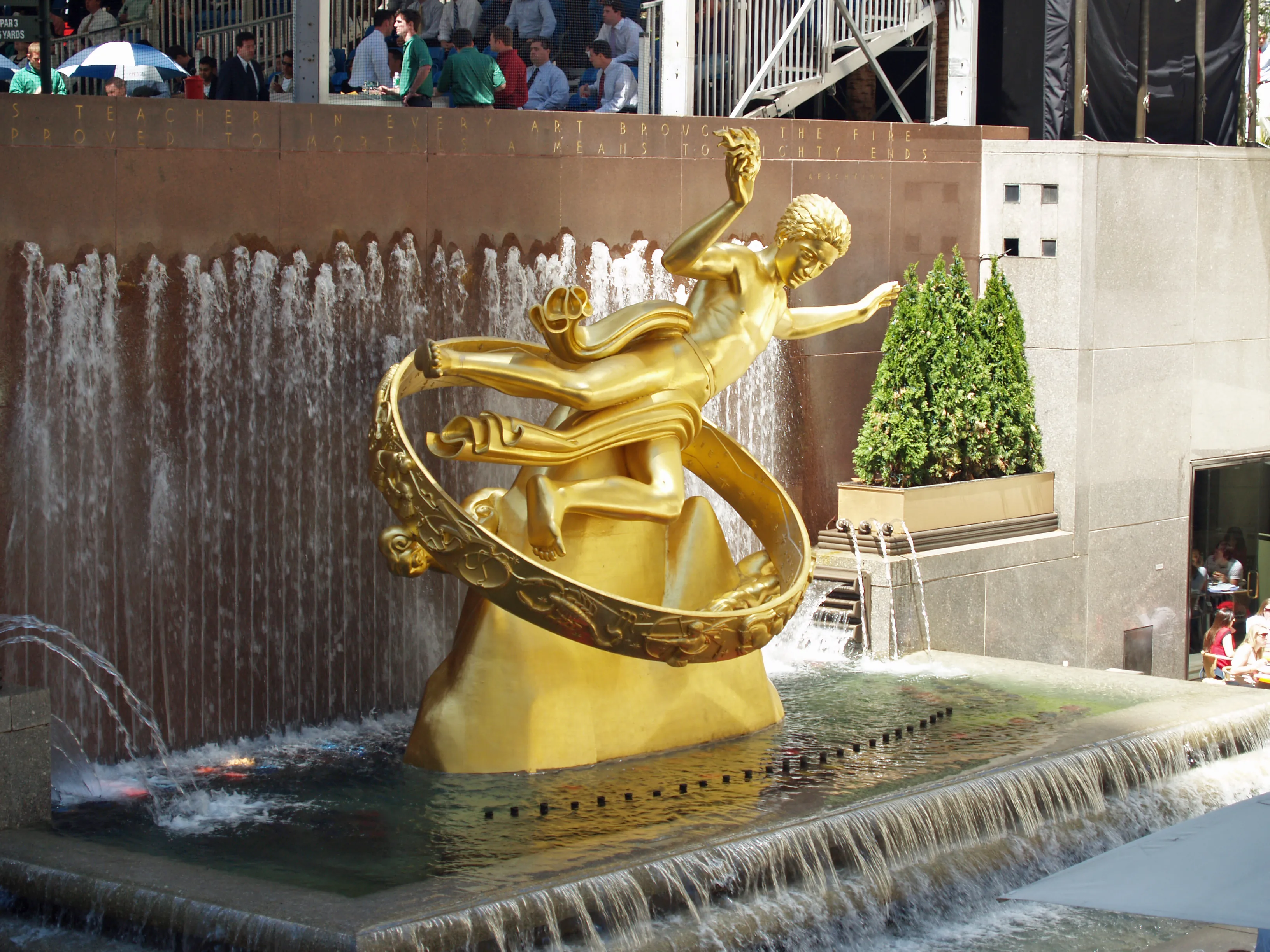
- Visit the lower plaza last. Prometheus is an essential Rockefeller Center landmark, but seeing Atlas and Wisdom first makes the contrast between the Center’s different sculptural voices more interesting.
- Return to one work for a second look. Architectural sculpture changes with distance. A detail that is nearly invisible from the sidewalk may organize an entire facade once you understand where it sits.
This route takes less than an hour at an unhurried pace, but it can change the experience of the place. Instead of treating the Center as a backdrop, you begin to see it as a coordinated visual argument about modern life, knowledge, labor, culture, and public ambition.
For the best light, do not worry about finding a single perfect time of day. Different surfaces come alive under different conditions. Bright sun clarifies the large forms of Atlas, while softer or overcast light can make relief and stone detail easier to read. In the evening, the Center’s lighting emphasizes silhouette and movement through the complex. A return visit is worthwhile because architectural sculpture is experienced through changing conditions, not as a fixed image.
Bring a camera only after you have spent a few minutes looking without it. Photographs are useful for remembering details, especially inscriptions and figures above eye level. But the best first question is simpler: what is this sculpture doing for the building? That question keeps the focus on the artist’s actual achievement, which is not just a collection of notable images but a way of giving architecture symbolic presence.
Why Lee Lawrie is the key to the bigger picture
Lawrie’s Rockefeller Center work is a strong entry point because it leads outward. Once you recognize his ability to give architecture a symbolic, human presence, the same instinct becomes visible in other commissions. The Landmarks and Discoveries collection follows that thread through libraries, public buildings, and other places where sculpture has become part of everyday civic life.
The archive’s advantage is the depth of that record. Gregory Paul Harm has spent years photographing and tracing Lawrie’s work, including pieces that are overlooked, altered, or easy to pass without notice. For readers who want the fuller Nebraska story, Lee Lawrie’s Prairie Deco explores the artist’s most extensive program at the Nebraska State Capitol. For questions about a work, a location, or research, the archive also offers a direct contact path.
That wider view is important because Lawrie is frequently remembered through a handful of famous works. The better story is his range. He could move from an immense civic facade to a doorway, a memorial, a library entrance, or a small bronze detail without losing the sense that sculpture belonged to the life of a building. The U.S. Commission of Fine Arts profile of Lawrie gives further context on an artist whose career reached far beyond the standard Art Deco highlights.
Rockefeller Center remains one of the best places to start, because it makes Lawrie’s central idea visible: sculpture does not have to sit apart from a building to be important. It can give the building its face, its rhythm, and its memory.
Frequently asked questions
Who made the Atlas statue at Rockefeller Center?
Atlas was designed by Lee Lawrie, with Rene Chambellan as the principal collaborator on its execution. The sculpture belongs to the International Building on Fifth Avenue, rather than the sunken plaza where Prometheus is located.
Is Atlas the only Lee Lawrie sculpture at Rockefeller Center?
No. Atlas is the best-known single landmark, but it is part of a much larger contribution. Lawrie’s work includes Wisdom above the main entrance to 30 Rockefeller Plaza, sculptures on the International Building, and figures and decorative programs elsewhere in the complex.
Where should I start a Rockefeller Center sculpture walk?
Start at Atlas on Fifth Avenue, then move west to the entrance of 30 Rockefeller Plaza to see Wisdom. From there, slow down around the International Building and the adjacent facades. The point is not to race from one landmark to another, but to notice how figures, materials, and entrances work together.
What is the difference between Atlas and Prometheus at Rockefeller Center?
Atlas faces Fifth Avenue and is part of the International Building. Prometheus is the gilded figure above the lower plaza. Both are essential to the Rockefeller Center experience, but they were made by different sculptors and belong to different architectural settings.
Related posts
Rockefeller Center ArtAtlas Statue at Rockefeller Center
Find Atlas at Rockefeller Center, learn who made the bronze statue, what its armillary sphere means, and how to see it on Fifth Avenue.
 Rockefeller Center Art
Prometheus Statue at Rockefeller Center
Find the gilded Prometheus statue at Rockefeller Center, learn its meaning and artist, and see how it shapes the Lower Plaza.
Rockefeller Center ArtWisdom at Rockefeller Center: A Closer Look
A guide to Lee Lawrie’s great entrance relief at 30 Rockefeller Plaza, its famous inscription, and the details that reward a slower visit.
 Rockefeller Center Art
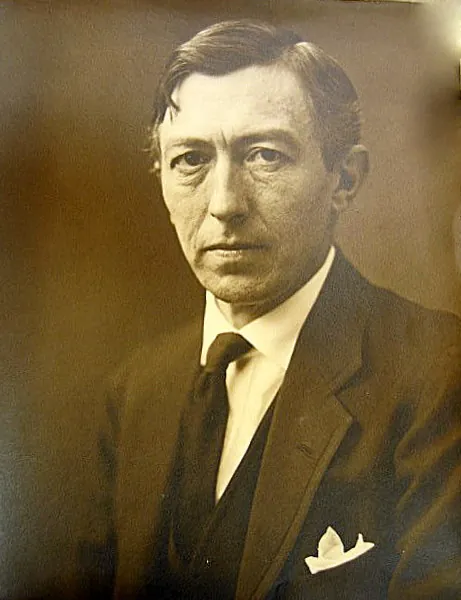
Lee Lawrie, Sculptor of America’s Great Buildings
Who was Lee Lawrie? Meet the architectural sculptor whose work shaped the Nebraska State Capitol, Rockefeller Center, libraries, memorials, and more.