
The best Art Deco buildings do more than look glamorous. They tell you where to look, how to enter, and what kind of public life takes place inside. A tower gives the skyline a clear profile. A doorway slows the visitor down. A relief, a bronze grille, or a few carved figures can turn an otherwise anonymous wall into a statement about learning, law, travel, work, or civic ambition. Once you know where to start looking, the style becomes far more than a collection of zigzags.
Begin with the building’s silhouette
Before studying a detail, step back far enough to see the whole composition. Art Deco is often easy to spot because it favors a strong outline: a tower that rises in setbacks, a block pulled upward by vertical piers, or a long facade organized into clear bands. The Royal Institute of British Architects describes the movement as a decorative style built around bold geometry, color, and strong profiles. That broad definition matters because it keeps the focus on design decisions rather than a short checklist of motifs.
Ask what the outline is doing from a distance. Is it making a civic building feel ceremonial? Is it turning a commercial building into a landmark? Is it giving a library or theater a memorable public face? In a successful example, the shape is not simply fashionable. It prepares the visitor for the building’s role. A tall central element may suggest aspiration or public importance, while a lower, broader composition may direct attention toward a carefully framed entrance.
The Nebraska State Capitol is an especially useful case because its tower, exterior sculpture, and interior imagery all belong to one visual program. The Capitol’s own account explains that the main north facade identifies the seat of government without having to spell it out. That is an excellent way to read any Art Deco landmark: look first for the message carried by its form, then look for the details that make the message specific.
Read the entrance as a threshold
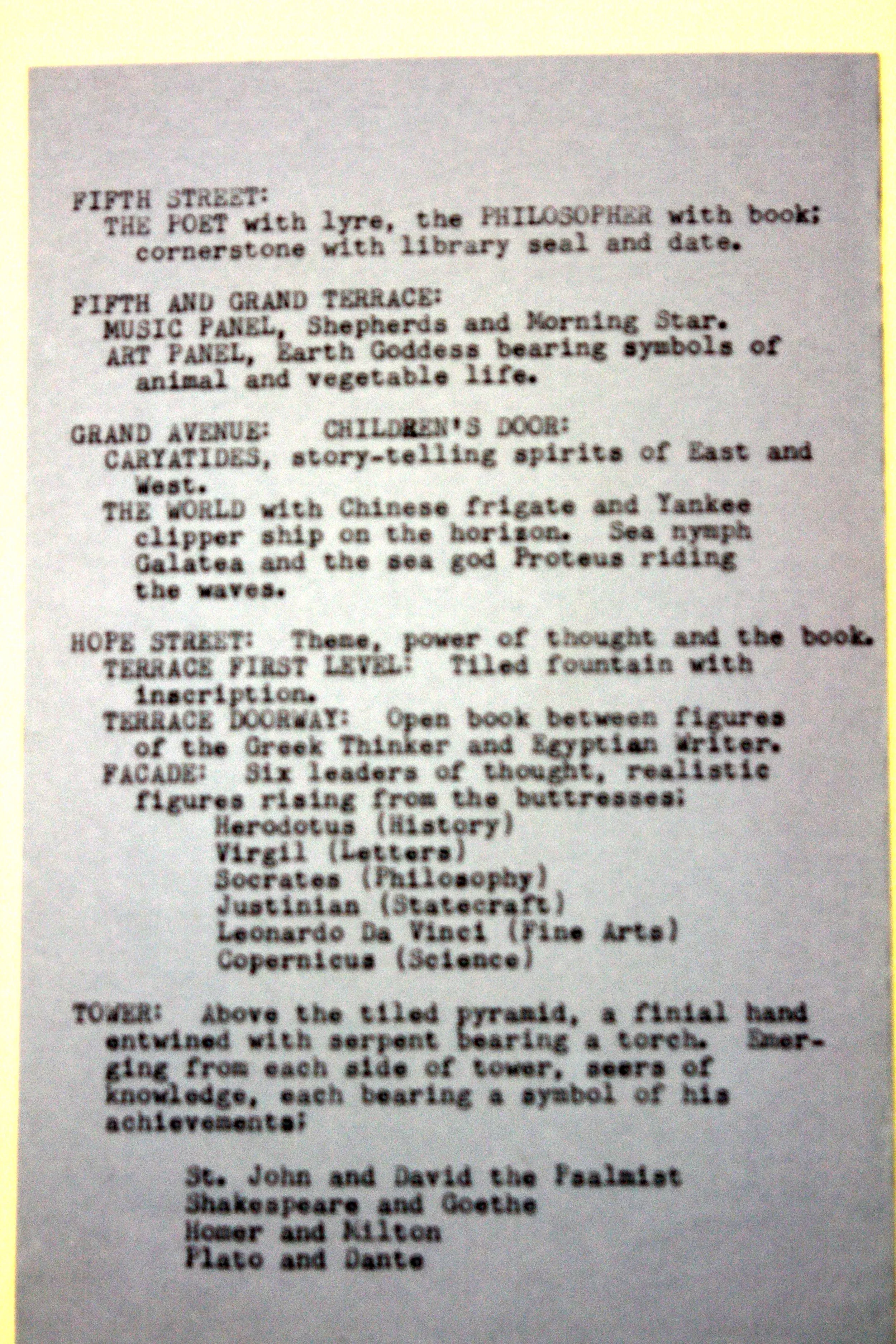
Art Deco entrances are rarely casual. Even when the surrounding building is simple, the doorway is often a concentrated burst of metalwork, stone, lettering, light, or sculpture. It is the place where a large building meets a person, and designers used it to change the pace of arrival. Look for frames within frames, recessed doors, repeated patterns, tall bronze panels, and figures placed just above eye level.
That concentration serves a practical purpose. From across the street, a visitor needs to find the way in. At the door, the building can reveal more intimate craftsmanship. This movement from distance to nearness is one of the style’s pleasures. The same design idea may appear first as a monumental facade and then again as a hand-sized detail in a door pull or grille.
The archive’s Art Deco elevator doors make the point well. They show that the language of the style did not stop at the exterior. A building could carry its visual character into the small repeated encounters of daily use. When you are visiting an Art Deco building, spend a minute at the entrance before rushing inside. Look for the materials, the symmetry, and the subject being introduced at the threshold.
Look for the public idea behind the decoration
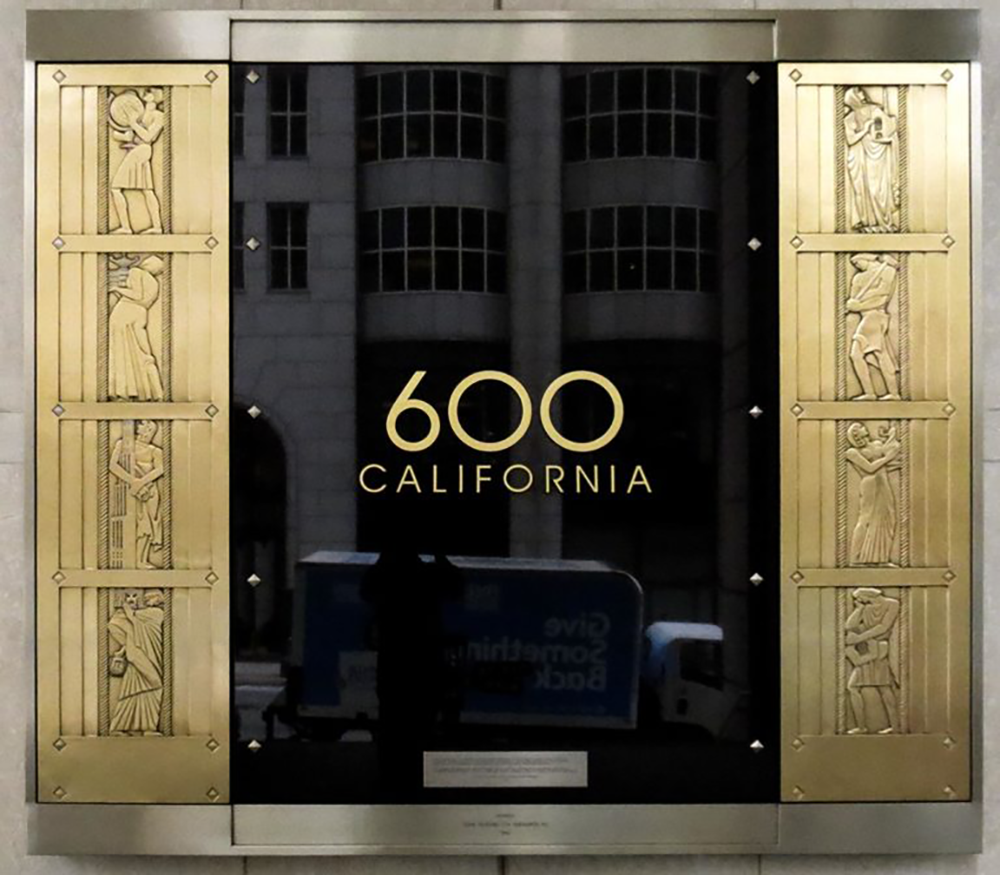
Art Deco ornament is often symbolic, but it is usually not a private puzzle. A building made for learning may use writers, inventors, books, animals associated with wisdom, or patterns that suggest knowledge and memory. A courthouse may use lawgivers, shields, scales, or disciplined geometric order. A state capitol may weave together agriculture, history, law, and the people of the state. The purpose is to make the institution legible before a visitor reads a sign.
This is where an Art Deco building becomes more interesting than a beautiful object. Its ornament does not float separately from its use. At Nebraska’s Capitol, the north facade includes figures of Wisdom, Justice, Power, and Mercy, while the Capitol’s guide to its panels and sculptures traces a wider program of county names, lawgivers, agriculture, and reliefs addressing civic history. The result is a building that communicates on several scales, from a passing view of the tower to the close reading of carved panels.
That kind of integration is one of Lee Lawrie’s great strengths. His work repeatedly gives buildings a human and symbolic presence without treating sculpture as a separate attraction. The archive’s catalog of works follows that approach through libraries, memorials, churches, commercial buildings, and civic landmarks across the country.
Notice how materials create contrast and rhythm
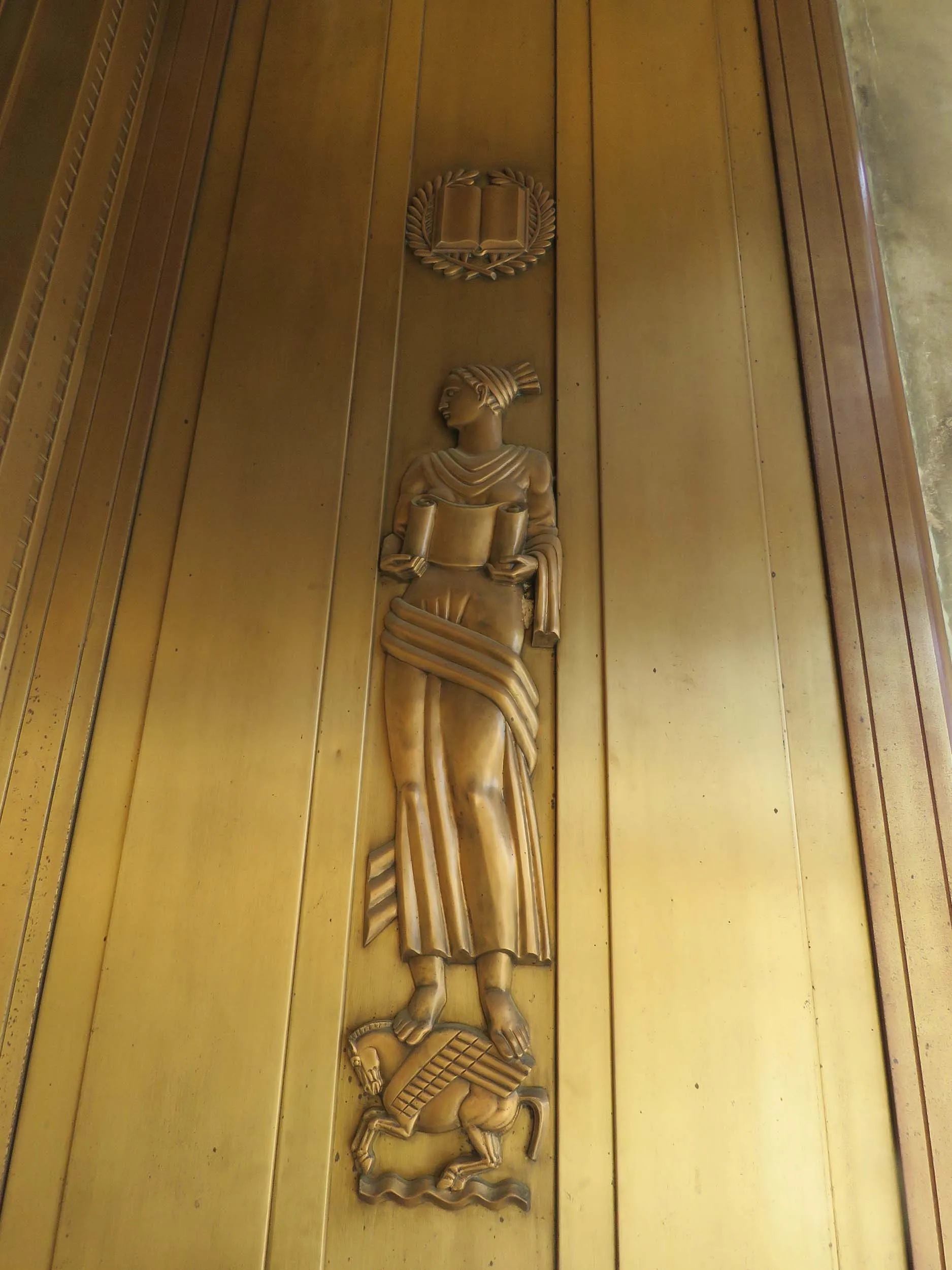
Art Deco is sometimes described as a style of expensive surfaces, and there is truth in that. Bronze, polished stone, glass, tile, colored metal, and glossy finishes can all contribute to its visual force. But the useful question is not whether a material seems luxurious. It is what the material does in the composition. Dark metal can sharpen a pale stone facade. A mosaic can make a high tower catch light. A carved limestone panel can slow the eye down along a wall.
Look for contrast in texture as well as color. Smooth and rough surfaces, deep recesses and shallow relief, bright metal and matte stone all help a building remain legible in changing weather. Good Art Deco design often uses repeated vertical lines or patterns to build rhythm, then interrupts that rhythm with a sign, sculpture, or doorway. Your eye is given a path, then a reason to pause.
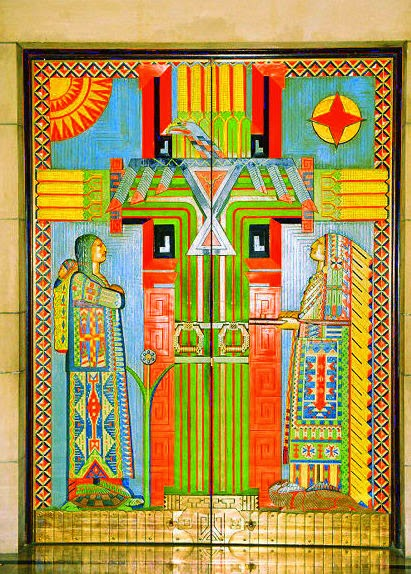
In the Capitol, the interior doorways and ornament show how a recurring motif can be adapted to different materials and rooms. The same broad idea does not have to be copied mechanically. Variation is part of what makes a complete building feel alive rather than merely decorated.
Four mistakes that make Art Deco hard to see
Do not look only for zigzags. The pattern is real, but it is not the whole style. A building can be unmistakably Art Deco because of its tower, symmetry, materials, or entrance sequence even when there is not a single obvious chevron in sight. Start with the broad composition, then let the smaller motifs confirm what you are seeing.
Do not separate the sculpture from the building. A great architectural figure can be photographed on its own, but the photograph may hide why it is there. Look at its height, the doorway or window beneath it, and the path a visitor takes toward it. The figure may be establishing a landmark, giving scale to a wall, or making an institutional idea feel human.
Do not assume every building is trying to look luxurious. Some Art Deco buildings are glamorous, but many are practical public places, from libraries and courthouses to offices, factories, and transportation buildings. Their ornament can be direct and durable rather than extravagant. The common thread is the effort to give modern construction a clear, memorable public character.
Do not stop at the facade. The most revealing evidence can be inside: elevator doors, lobby reliefs, light fixtures, stair rails, murals, tile, and inscriptions. These details show whether the building has a complete visual system or simply an impressive front. A slower walk through a building often explains its architecture better than a quick exterior photograph.
Compare the landmark with the detail
Art Deco is a style of scale changes. A building may first register as a distant skyline shape, then become a composition of large walls and windows, and finally reveal a human-scale world of carvings, metalwork, and inscriptions. Each level should support the others. If the tower feels bold but the entrance feels unrelated, the design loses some of its force. If a doorway is beautifully made but impossible to find from the street, the visitor’s experience breaks before the detail gets a chance to matter.
That is why looking at only one photograph can be misleading. A close view may flatten the architecture into a pattern, while a distant view may erase the workmanship that makes the building memorable. Try looking at a building in three stages: from across the street, from the front walk, and at arm’s length. The sequence shows how its designers managed attention. It also gives you a way to compare different buildings without reducing them to a popularity contest.
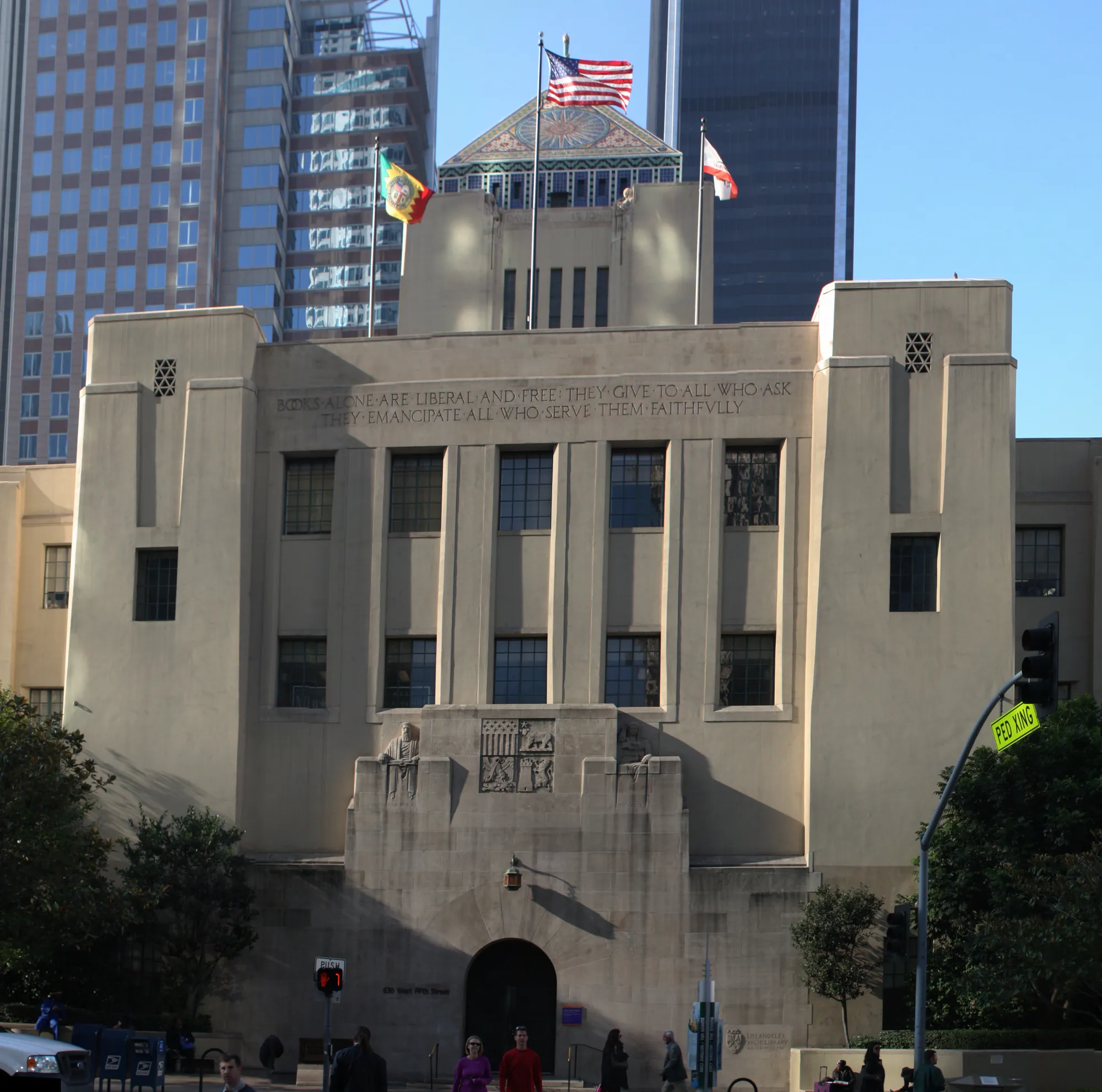
The Los Angeles Central Public Library collection is helpful for this kind of comparison. Its tower belongs to the city skyline, while its sculpture and architectural details reward a closer approach. The same principle appears at Sterling Memorial Library, where the Legendary Scribes program turns a university building into a place where learning has visible characters and stories. In both cases, the decorative work is not a detachable layer. It changes how the building is understood.
Once you notice that relationship, Art Deco becomes easier to recognize in less famous places. You may find it in a post office, school, courthouse, theater, bank, or apartment lobby. The building does not have to be covered in ornament. One strong composition at the entrance, a disciplined rhythm of windows, or a carefully chosen material contrast may carry the idea. The question is always the same: how do the large form and the small detail work together to make this place memorable?
Use a simple four-step way of looking
- Stand back first. Notice the silhouette, the strongest lines, and where the building wants your eye to go.
- Find the threshold. Study the entrance as a designed transition, not only a way through the wall.
- Name the subject. Look for figures, inscriptions, animals, tools, or patterns that speak to the building’s purpose.
- Move close. Compare what works at street distance with what only appears in the doors, reliefs, and interior details.
This method works whether you are looking at a world-famous skyscraper or a local library. It helps separate the actual evidence in front of you from the temptation to label every geometric pattern “Art Deco” and move on. The style is most rewarding when its architecture, decoration, and purpose are read together.
Why Lee Lawrie’s work gives this style a deeper story
Lee Lawrie is a powerful guide to Art Deco buildings because his career was built around the relationship between sculpture and architecture. At Rockefeller Center, the Nebraska State Capitol, the Library of Congress, and the Los Angeles Central Public Library, his work shows how a figure or relief can shape a visitor’s understanding of an entire place. It may announce an entrance, establish a landmark, or carry an idea through a room full of smaller details.
For a focused introduction, the archive’s guide to Art Deco sculpture explains how to read figures, reliefs, doors, and ornament on a building. Readers who want to see the approach at Rockefeller Center can continue to the Rockefeller Center collection, where Lawrie’s work can be viewed in the context of the larger complex. And Prairie Deco follows his most extensive architectural program at the Nebraska State Capitol.
The enduring lesson is simple: Art Deco buildings reward attention because they are made to be read. Their best details are not extras after the architecture is complete. They are part of how the building tells visitors what it is, why it matters, and how to experience it.
Frequently asked questions
What are the main features of Art Deco buildings?
Art Deco buildings often use strong vertical or stepped forms, clean geometry, stylized ornament, rich materials, and carefully staged entrances. The style can be lavish or restrained, but its strongest examples make structure, decoration, and purpose feel like one idea.
How can I recognize an Art Deco building?
Start with the overall silhouette, then look closer at the entrance and details. Repeated lines, zigzags, sunbursts, simplified figures, geometric metalwork, and sculptural panels are common clues. The key is how those elements organize a visitor’s approach to the building.
Why is the Nebraska State Capitol important to Art Deco?
The Nebraska State Capitol shows how a building can carry one visual program from tower to doorway to interior. Its sculpture, mosaics, inscriptions, and reliefs make ideas about government, law, agriculture, and civic life visible throughout the building.
Is Art Deco architecture the same as Art Moderne?
They overlap but are not identical. Art Deco often emphasizes geometry, symbolic ornament, and vertical drama. Art Moderne usually favors rounded corners, horizontal bands, and streamlined forms that suggest speed and motion. Some buildings share qualities of both.
Related posts
 Art Deco
What Is an Art Deco Sculpture? How to Read It on a Building
Learn what makes a sculpture Art Deco, then use five clear ways to read figures, reliefs, doors, and details on a building.
 Art Deco
Art Deco Artists: 6 Ways to See the Style
Meet the artists who shaped Art Deco, then learn how painting, posters, design, and architectural sculpture made the style visible.
Art DecoArt Deco Sculptors: How to Read Their Work
Learn how Art Deco sculptors used figure, material, symbol, and setting to make public buildings and everyday spaces speak.

Nebraska Library Tour: Prairie Deco on the Road
In two days and nearly 800 miles, Gregory Paul Harm brought Lee Lawrie’s Prairie Deco to 15 Nebraska public libraries and 11 bookstores and galleries.