Art Deco painters are often introduced through a single polished portrait: a poised sitter, cool light, sharp drapery, and an air of metropolitan certainty. That image is real, but it is only one part of the story. Painting in the Art Deco era also shaped murals, interiors, posters, and public rooms. The most useful way to approach it is not as a short list of famous names, but as a way of seeing how artists made line, light, and subject work with the places where people encountered them.
Begin with a wider picture of the style
Art Deco was never confined to a single medium. The style traveled through graphic design, architecture, furnishings, jewelry, sculpture, and painting, each field borrowing a shared taste for order, material, and visual force. The Sotheby’s overview of Art Deco places painting inside that broader world and makes an important point: only a small number of painters can be called decisively Art Deco, even though many artists of the period touched its visual language.
That distinction makes the subject more interesting. A painter did not need to put a zigzag on every canvas to belong to the moment. In a portrait, the style might appear in a sculptural face, a clean diagonal, a flattened plane of color, or a surface that seems almost polished. In a mural, it might appear through a bold figure, a simplified story, or a sequence designed to hold a large wall together. The question is not simply whether a picture looks fashionable. It is whether its forms make a modern, deliberate experience for the viewer.
Meet the painters through the jobs their work performed
Tamara de Lempicka remains the best-known name because her portraits give Art Deco a memorable human face. Her paintings turn sitters into sharply composed presences, using cool light and geometric drapery to make bodies feel as carefully built as machines or buildings. Her later reputation should not obscure the craft in those pictures. The Metropolitan Museum of Art’s record for Woman with Arms Crossed offers a close example of a painting in which pose, surface, and design carry as much meaning as the sitter’s identity.
Jean Dupas shows a different possibility. The Metropolitan Museum of Art records his reverse-painted and gilded glass panels for the ocean liner Normandie, a setting where painting became part of a complete interior rather than a private object on a wall. Robert Lee Eskridge offers an American counterpart worth knowing: the Delaware Art Museum describes his murals, oils, and watercolors as bright, stylized, and driven by interwoven contours. Their careers are not interchangeable, but together they show how Art Deco painting could move from portraiture to public architecture without losing its clarity.
Look for a composition that controls attention
One of the clearest signs of Art Deco painting is its command of the first glance. The eye often meets a strong contour, a controlled diagonal, a carefully simplified figure, or a concentrated patch of light before it notices smaller details. This does not mean every work is rigid. It means the artist has decided where a viewer begins and where the picture’s energy will travel next.
Try this with any portrait or mural. Step back until you can no longer read small details. What remains? Perhaps it is the tilt of a shoulder, the silhouette of a head, or a repeated pattern of limbs and drapery. Then come closer and see how color, texture, and small gestures support that large design. This is similar to the experience of an Art Deco building, where a clear skyline form gives way to more intimate detail at the entrance. The archive’s guide to Art Deco buildings follows that shift from distant shape to close observation.
See why murals matter
Murals matter because they cannot be separated from the rooms they inhabit. A large painted surface must work with windows, doors, lighting, furniture, and the movement of people through the space. That practical responsibility gave Art Deco painting a close relationship with architecture. The artist was not only making an image, but helping a room explain its purpose and establish its mood.
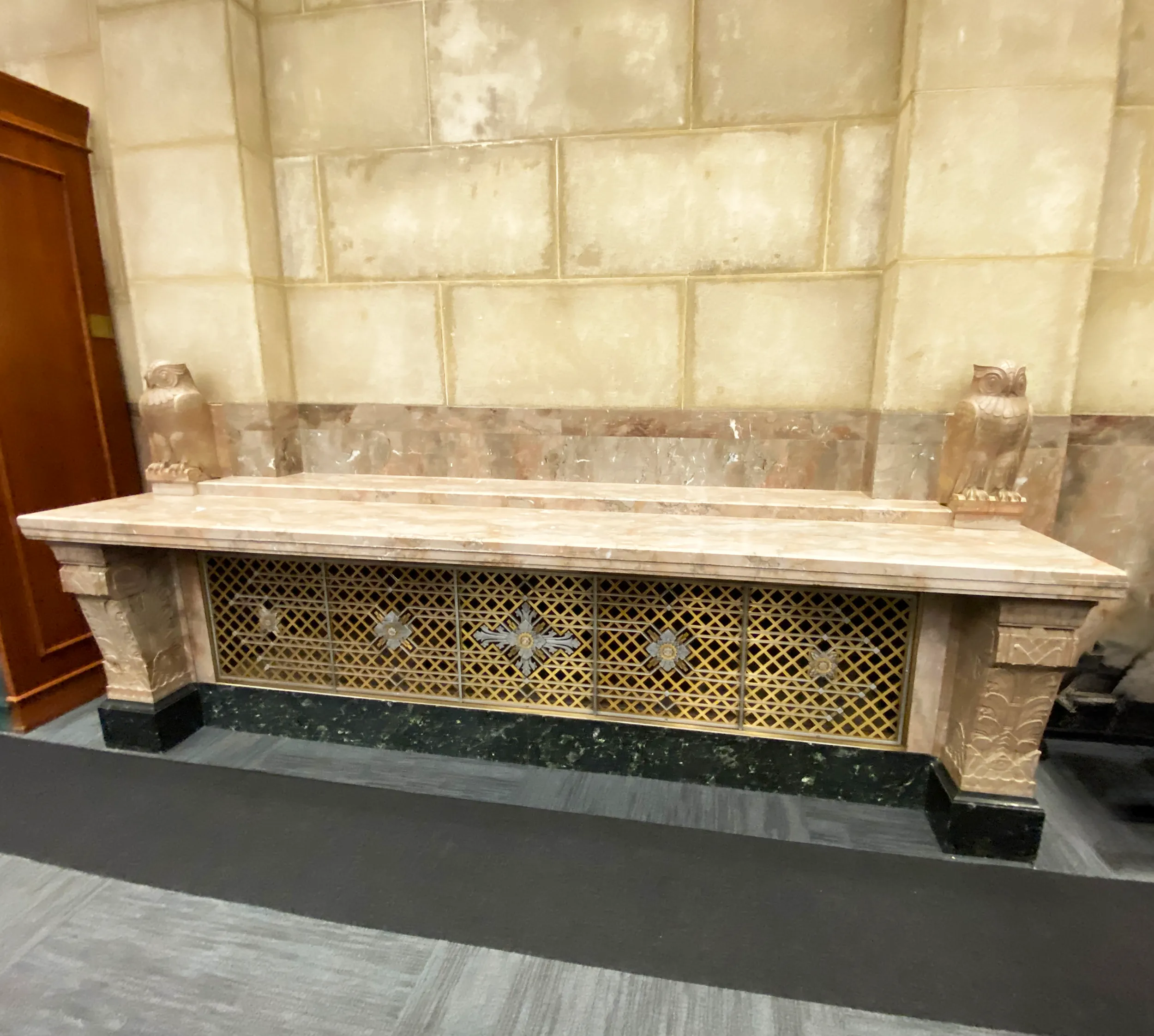
The Library of Congress’s John Adams Building offers a rich lesson in this shared work. Its reading rooms include murals by Ezra Winter alongside Lee Lawrie’s Art Deco details, with imagery and ornament carrying themes of learning, history, and public life across a single interior. The Library’s account of the building at 85 describes both Winter’s murals and Lawrie’s doors, grilles, plant forms, and owls. The result is stronger than a collection of isolated artworks because every element helps the visitor read the room.
Notice the relationship between painting and public purpose
Art Deco painters often worked with subjects that needed to be seen quickly and remembered: travel, industry, history, knowledge, modern life, or a person’s social presence. A portrait may make confidence visible. A decorative panel may turn a voyage into an experience of speed and luxury. A mural in a library or civic building may introduce visitors to the ideas the institution values.
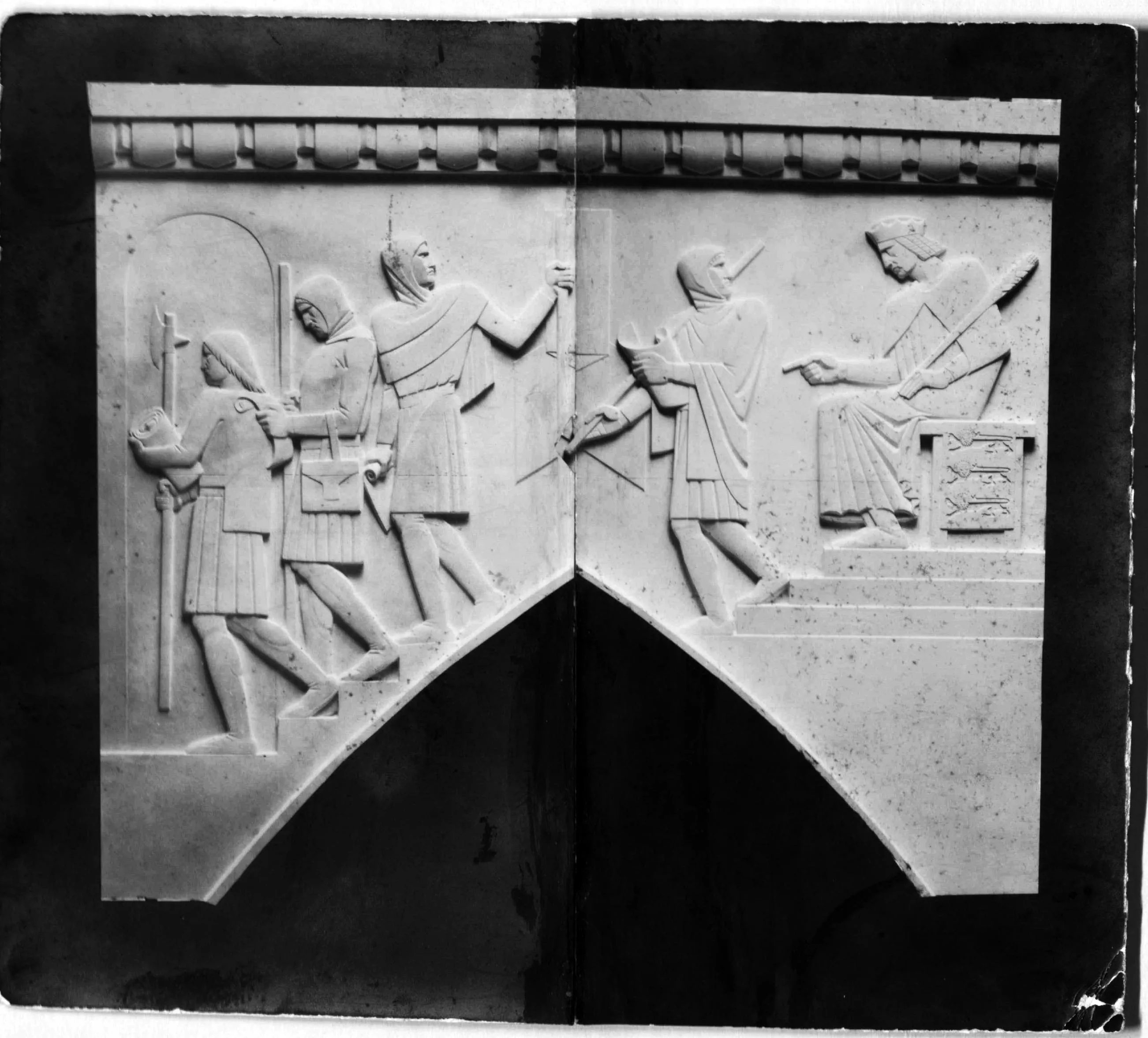
This is where the archive offers a useful companion to painting. Lee Lawrie was a sculptor, not a painter, but his work shows how images gain force from their public setting. The Library of Congress finding aid for his papers explains that Lawrie and architect Bertram Goodhue saw sculpture as integral to architecture, rather than an added flourish. The archive’s Legendary Scribes page makes that idea visible at the threshold of the John Adams Building, where figures connected to writing and knowledge turn an entrance into an introduction.
Once you see that relationship, the divide between painting and sculpture becomes less important than the shared question: what does this image ask a person to notice about the place they are entering? A mural, a bronze door, and a carved relief can all guide attention, frame an idea, and make an institution feel specific rather than anonymous.
Pay attention to surfaces and materials
Art Deco painting often feels polished, but that effect comes from decisions about surface rather than a single recipe. Smooth passages can make skin or metal seem cool and controlled. A sharp highlight can establish a hard edge. Repeated areas of color can hold a room together from across the floor. In a decorative interior, painting may also work with gilded glass, stone, bronze, lacquer, or carved wood, each changing the way light moves through the space.
Jean Dupas’s glass panels for the Normandie are a useful reminder that painting can become architectural material. The Met’s Art Deco Paris exhibition places those panels among the rich materials and refined techniques that defined the liner’s interiors. Looking at Art Deco this way helps avoid a common mistake: treating every vivid pattern as a style label. Instead, ask how a particular surface changes the image and the room around it.
Light is part of that answer. A flat, even illumination lets a mural read as a unified field, while angled light can pull a metallic line or a glossy painted passage forward. This is why museum photographs are valuable but incomplete. They record a work, yet they cannot fully reproduce the changing scale, reflection, and movement of a visitor in the original setting. When possible, compare the image with photographs of the room or building that contains it. The setting tells you whether the work was meant to command a lobby, accompany a staircase, crown a doorway, or reward a slower pause.
That attention to setting also keeps the history honest. Art Deco included luxurious private rooms and commercial interiors, but it also appeared in libraries, schools, government buildings, and transportation spaces. The style could signal aspiration without being merely lavish. Its visual confidence was useful wherever an institution wanted to make an idea, service, or public role clear.
Compare the private portrait with the public wall
A portrait and a mural demand different kinds of attention, yet Art Deco can give both a remarkable firmness. In a portrait, a face, glove, coat, or car can carry the whole composition. In a mural, a procession of figures may need to remain legible across a room. The scale changes, but the artist still relies on silhouette, rhythm, and a disciplined use of detail.
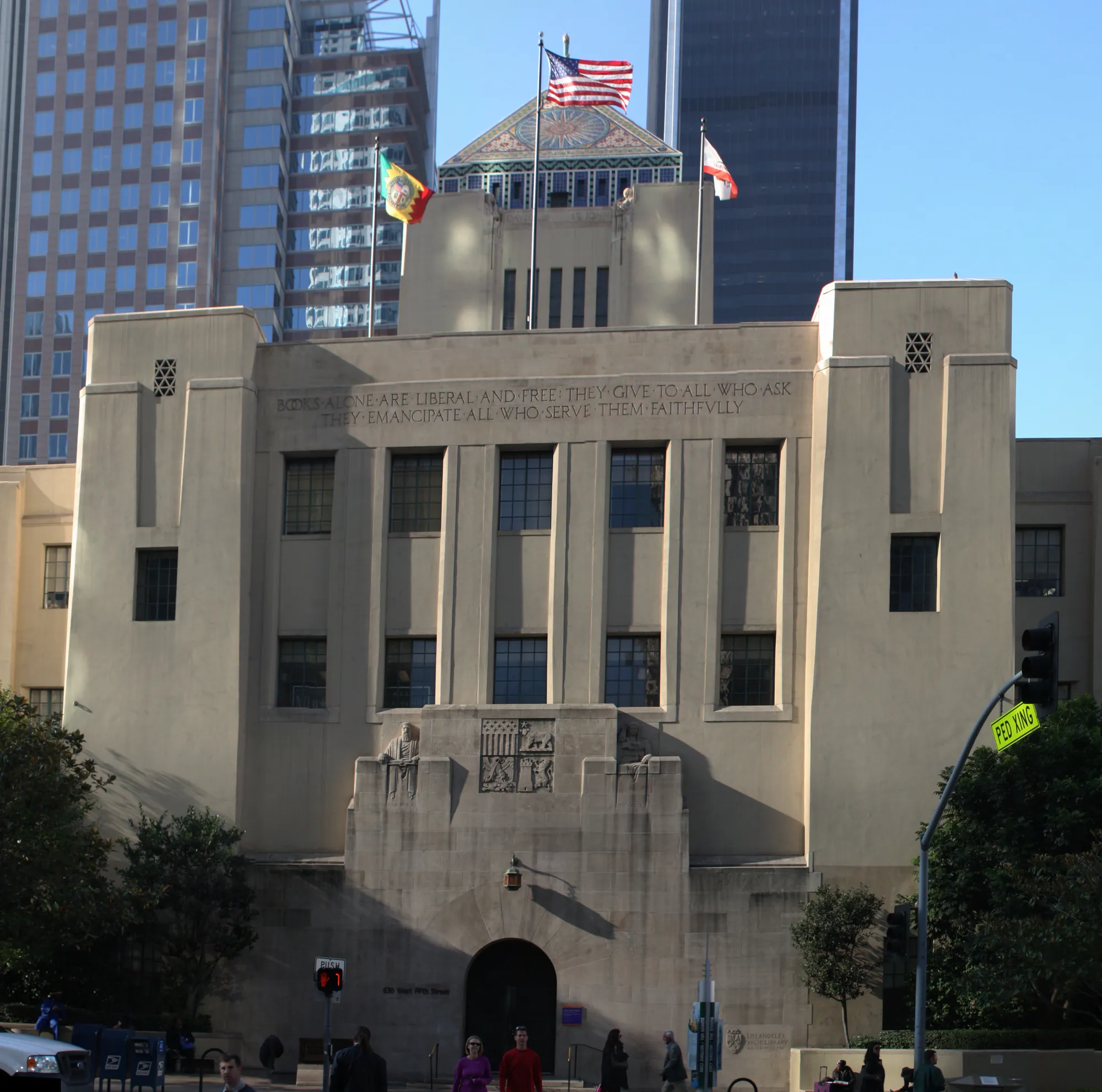
That comparison is useful when looking at the archive’s civic sites. At the Los Angeles Central Public Library, large forms establish the building’s presence while smaller figures and ornament reward a closer look. At the Nebraska State Capitol, art works across the tower, entrances, and interior spaces to build a long sequence of discovery. A painting or mural can do something similar in its own medium: give a viewer one strong idea at a distance, then provide more to find when they stay.

A five-step way to look at Art Deco painting
- Find the large design first. Notice the silhouette, figure, diagonal, or repeated shape that organizes the first impression.
- Follow the eye’s route. Trace where the composition takes you after that first glance, from a face to a hand, a word to a vehicle, or a figure to its setting.
- Read the surface. Look for smoothness, highlights, edges, and patterns, then ask how they make the work feel modern, dramatic, or controlled.
- Place the work. Consider whether it was made for a private room, a ship, a lobby, a library, or a civic building. Its setting changes what the image needs to do.
- Connect image to purpose. Ask what the subject helps a viewer understand, remember, admire, or anticipate about the people and place around it.
This approach gives a reader more than a list of names. It makes the paintings themselves legible while leaving room for the fact that Art Deco was broad, international, and full of overlapping careers. It also makes clear why public examples are so rewarding. They still let us test a work against the setting it was designed to transform.
Why Lee Lawrie’s archive is a useful next step
The Lee Lawrie Archive is strongest where the subject moves from a general style question to a real building and a real body of work. Lawrie’s sculpture at Rockefeller Center, the Nebraska State Capitol, and the Library of Congress shows how image, architecture, symbol, and material can become one public experience. Readers can continue with the Lee Lawrie profile, the full works collection, or the archive’s guide to Art Deco sculpture.
For the fullest single study of that integrated approach, Prairie Deco follows the Nebraska State Capitol from its great public forms to its close interior detail. The lasting pleasure of Art Deco painting is not just recognizing a period look. It is seeing how artists used a confident visual language to make modern life, public places, and human ambition feel present.
Frequently asked questions
Who were important Art Deco painters?
Tamara de Lempicka is the painter most closely associated with Art Deco portraiture. Jean Dupas made major decorative panels and murals, while Robert Lee Eskridge brought a bright, stylized Art Deco language to murals, watercolors, and oil paintings. Their work shows that Art Deco painting ranged from private portraits to public interiors.
What makes a painting Art Deco?
Art Deco painting often uses simplified forms, crisp contours, controlled geometry, dramatic light, and a deliberately designed surface. The label is most useful when those choices serve the work’s setting or purpose, whether that is a portrait, poster, mural, or interior.
Was Art Deco mainly a style of painting?
No. Art Deco spread across architecture, interiors, posters, fashion, jewelry, glass, furniture, painting, and sculpture. Painting was one part of a wider visual language, which is why a mural or portrait often makes more sense when considered alongside its room, building, or public audience.
How do murals relate to Art Deco architecture?
A mural can give an interior a subject, rhythm, and focal point while working with its walls, lighting, doors, and circulation. In the strongest Art Deco settings, painted and sculpted imagery helps visitors understand the character of the place rather than acting as separate decoration.
Related posts
 Art Deco
What Is an Art Deco Sculpture? How to Read It on a Building
Learn what makes a sculpture Art Deco, then use five clear ways to read figures, reliefs, doors, and details on a building.
Art DecoArt Deco Buildings: How to See What Makes Them Work
A practical guide to reading Art Deco buildings through their silhouettes, entrances, materials, and sculpture.
 Art Deco
Art Deco Artists: 6 Ways to See the Style
Meet the artists who shaped Art Deco, then learn how painting, posters, design, and architectural sculpture made the style visible.
 Art Deco
Art Deco Sculptors: How to Read Their Work
Learn how Art Deco sculptors used figure, material, symbol, and setting to make public buildings and everyday spaces speak.