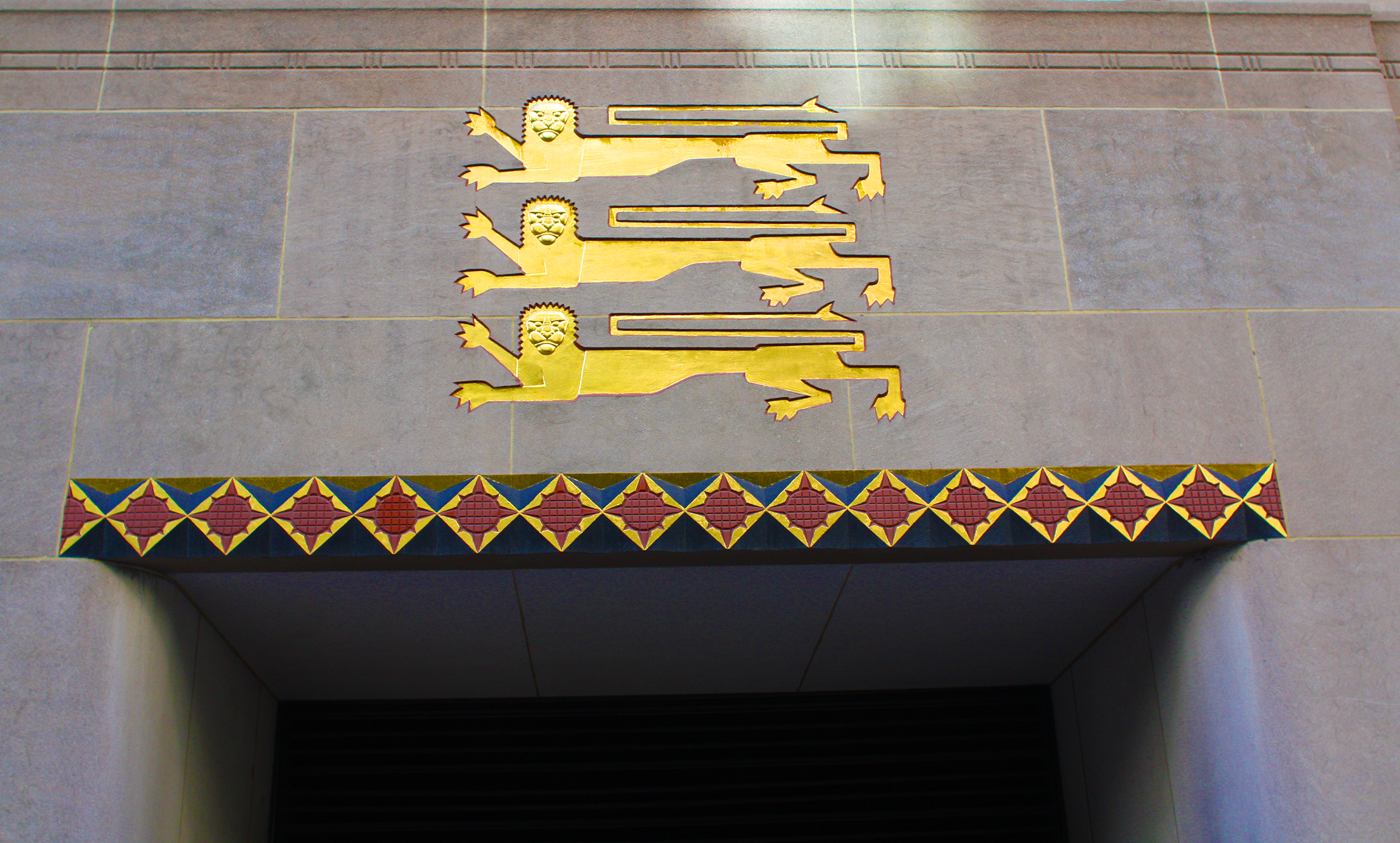
Rockefeller Center is full of sculpture, but it does not ask to be seen as an outdoor museum with a single route and a fixed set of highlights. Its figures, reliefs, lettering, and facades are built into the experience of arriving, crossing a street, entering a tower, or looking down toward the Lower Plaza. A good visit begins with three landmarks, then slows down enough to notice how each work changes the place around it.
Begin with the setting, not a checklist
The easiest mistake is to treat the Center’s art as a handful of famous objects disconnected from the buildings. Atlas, Prometheus, and Wisdom are memorable because each occupies a different kind of public space. One faces a major avenue, one holds the center of a plaza, and one gives a principal entrance its character. Their meanings matter, but their locations matter just as much.
Rockefeller Center’s own art and history guide describes the collection as a mix of murals, reliefs, carvings, and sculpture. That variety is the useful thing to carry into a visit. The works do not all demand the same attention. Some announce themselves from blocks away. Others become visible only when you stop at a doorway or look along a wall.
For readers interested in the artist behind several of these defining works, the archive’s introduction to Lee Lawrie provides the wider picture. His work at Rockefeller Center belongs to a career spent making sculpture answer to the scale, purpose, and movement of a building. The archive’s catalog of works traces that habit through libraries, memorials, churches, and civic landmarks across the country.
Atlas gives Fifth Avenue a monumental threshold
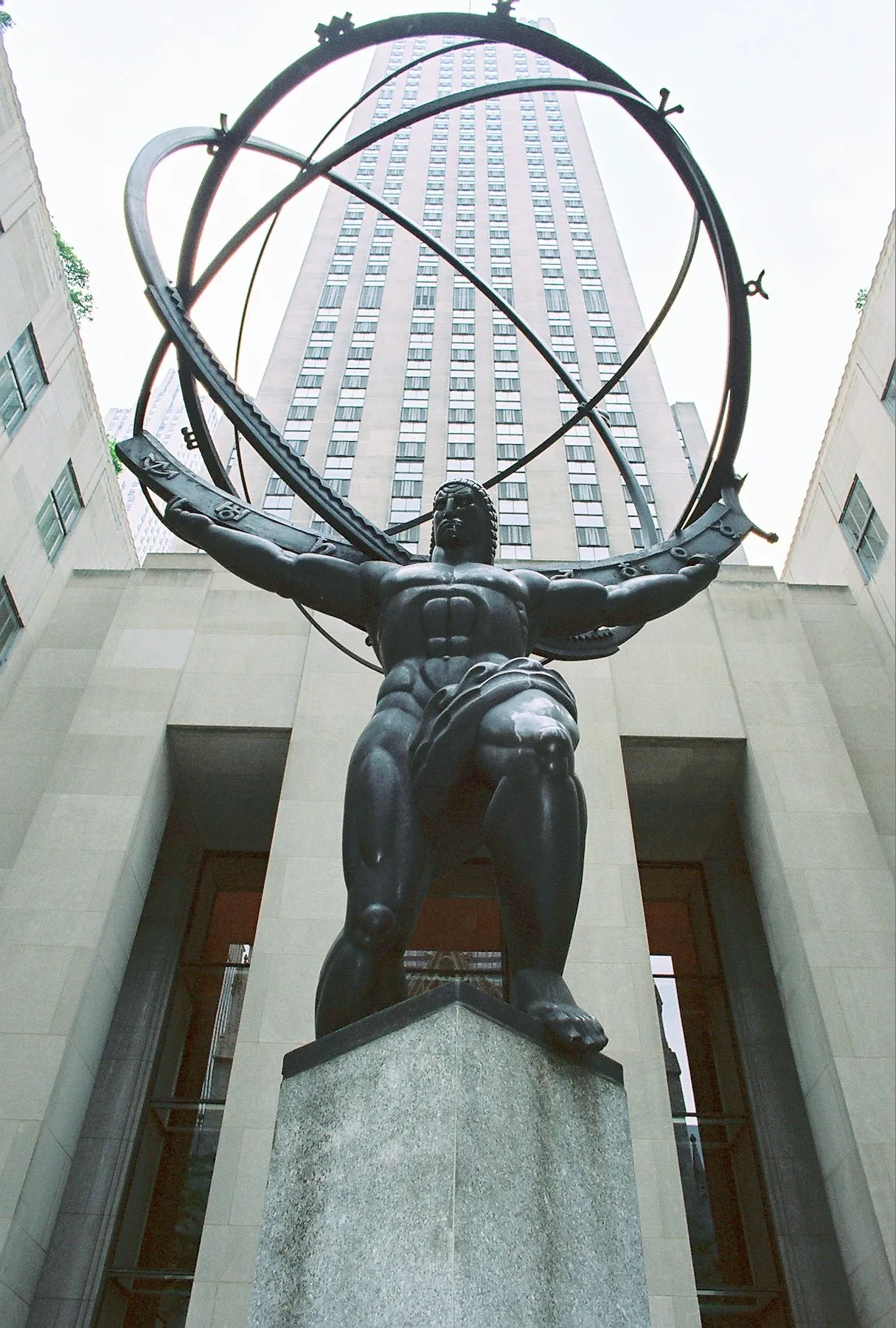
Start at 630 Fifth Avenue, at the main entrance forecourt of the International Building. Atlas is the work that turns this corner of Rockefeller Center into a landmark even for people who have never planned a sculpture walk. The bronze Titan stands between the building and the avenue, holding an armillary sphere overhead. From across Fifth Avenue, the figure, rings, and facade read as one strong silhouette.
Atlas is often casually described as holding the world, but the distinction is worth noticing. Rockefeller Center’s official Atlas record explains that he carries an armillary sphere because the mythological punishment was to hold the heavens, not the Earth. It also identifies the work as a collaboration between Lee Lawrie, who conceived the figure, and Rene Paul Chambellan, who modeled the full-sized statue from Lawrie’s sketch.
That celestial frame gives the sculpture an intellectual charge, but it never loses its architectural job. Atlas makes the entrance feel larger, more purposeful, and easier to recognize at street speed. Step back toward the opposite sidewalk first, then move closer. From a distance, the composition is about mass and balance. From the forecourt, the relationship between the bronze, the stone, and the building’s vertical lines becomes much clearer.
The archive’s Atlas guide takes a closer look at the figure, the sphere, and the collaboration behind it. Afterward, use the Rockefeller Center collection to see Atlas in relation to the other Lawrie works nearby. This is the right moment to ask a useful question for the whole walk: what is the sculpture doing for the building, beyond giving visitors a photograph?
Wisdom changes the experience of entering 30 Rockefeller Plaza
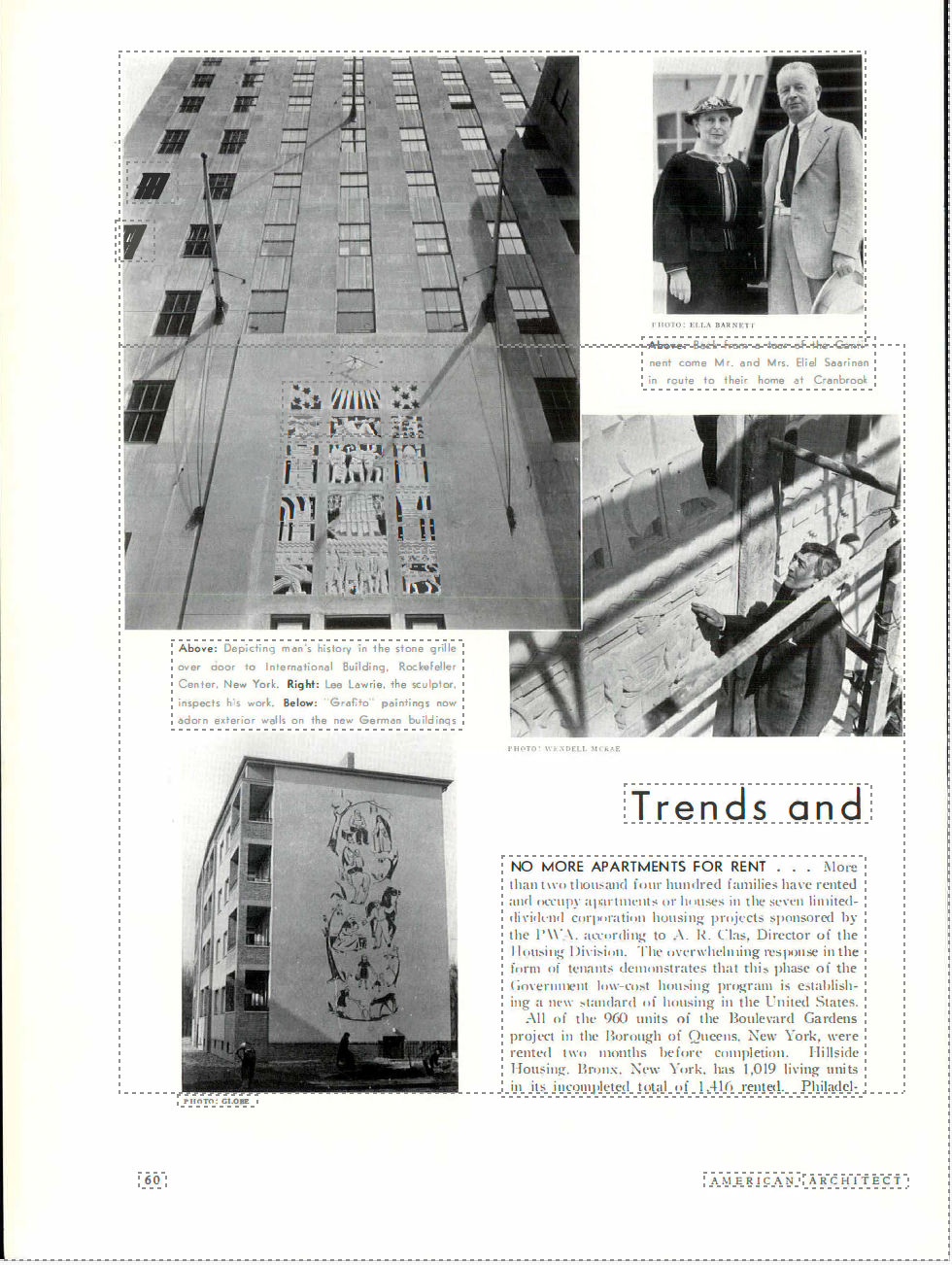
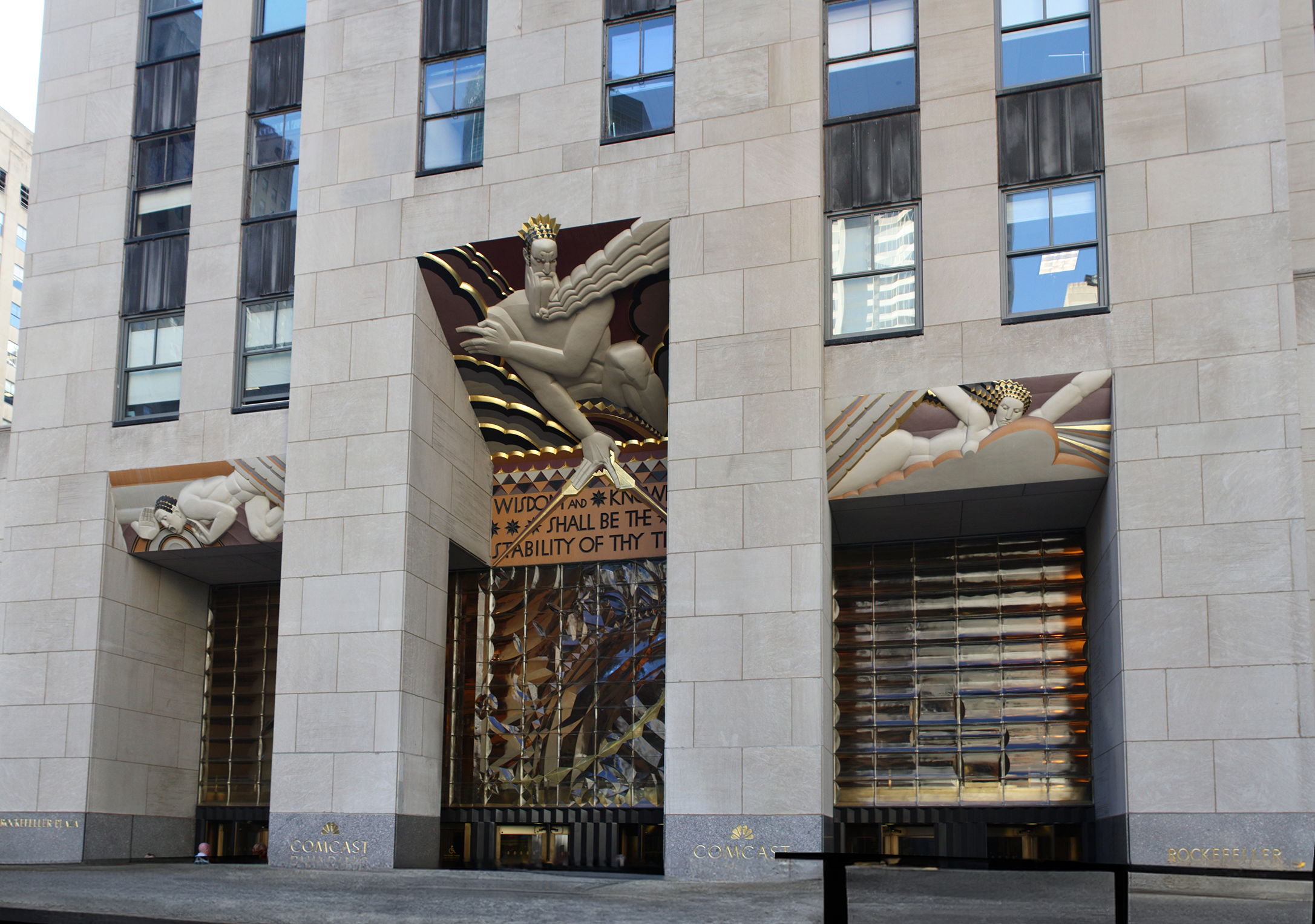
From Atlas, walk west to the main entrance of 30 Rockefeller Plaza. The next essential work is not a freestanding statue but a vast relief above the doors. Wisdom is easy to miss when the eye is fixed on the lobby, the traffic, or the height of the tower. The right first move is simply to step back before going inside.
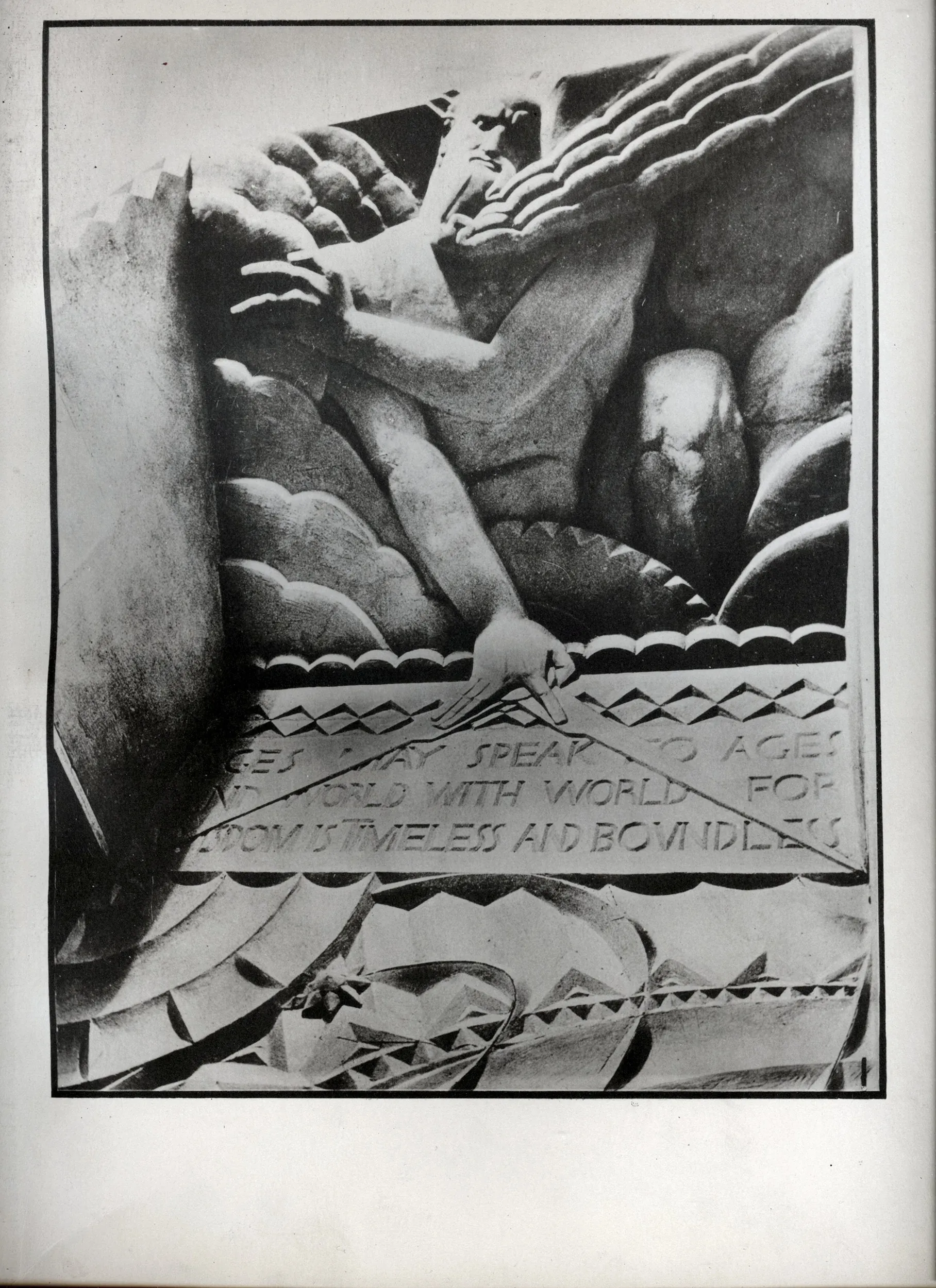
Rockefeller Center identifies Wisdom as a work by Lee Lawrie with colorist Leon V. Solon. The figure is positioned above the building’s main entrance and flanked by Lawrie’s Sound and Light. Together they turn an ordinary approach into a formal arrival. The famous inscription beneath Wisdom, the doorway, and the relief work as one composition rather than as separate things to notice.
Wisdom has a different task from Atlas. Atlas faces the city and creates a landmark at the edge of the complex. Wisdom prepares a visitor to enter a particular building. Its scale is monumental, yet it is tightly bound to the facade. Looking up from close to the doors reveals the relief as surface and material. Looking from the forecourt makes it read as a public image, steadying a tower that might otherwise feel overwhelmingly tall.
The archive preserves an unusual part of this story: a 1933 letter that records an alternate inscription considered for the entrance. The Wisdom guide uses that document, archive photography, and a close reading of the relief to show how much thought can sit behind a few carefully chosen words and a single commanding figure.
Prometheus makes the Lower Plaza a shared public room
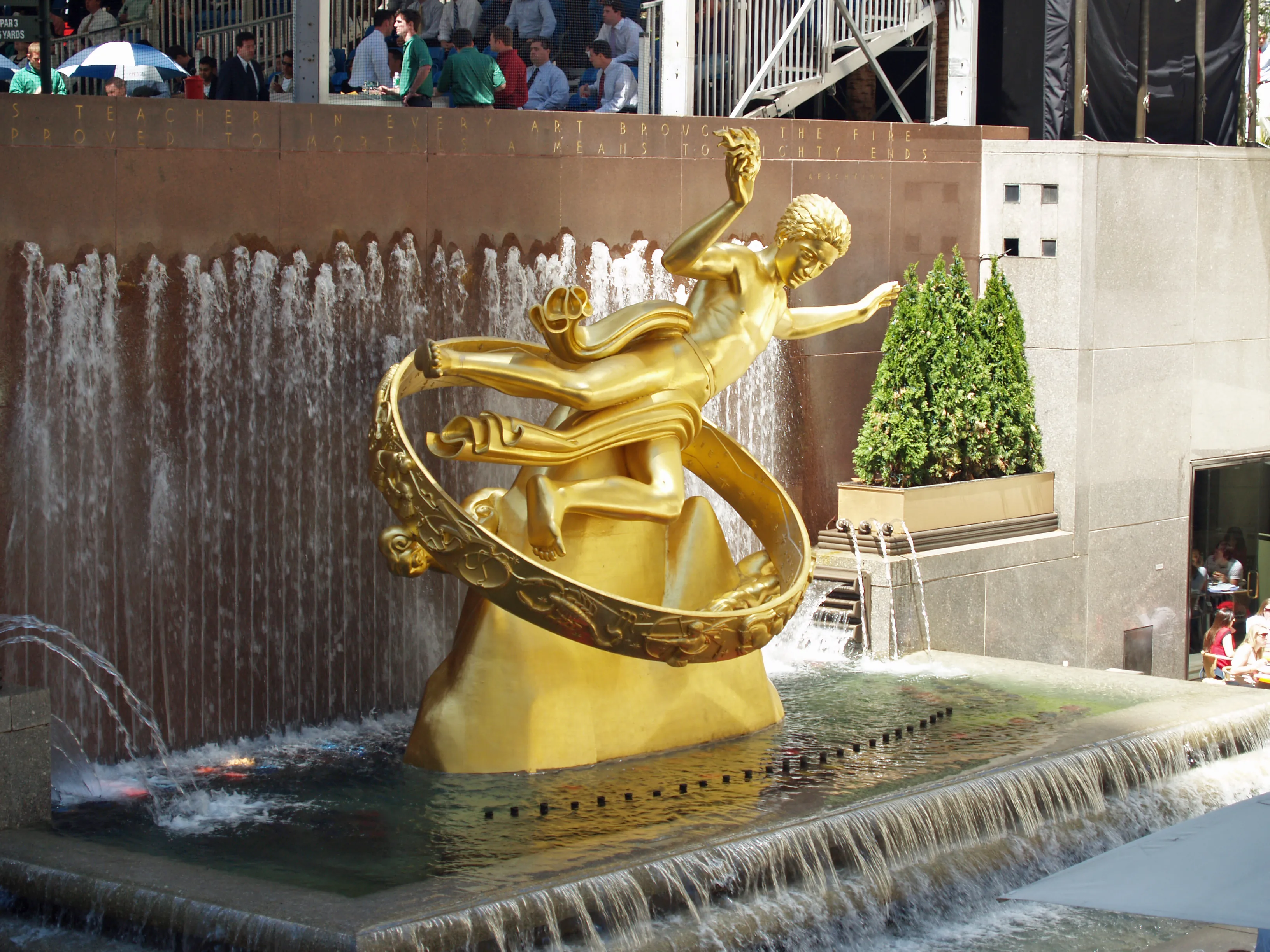
Continue through the Center toward the Lower Plaza. Prometheus is the sculpture most visitors already expect to find, and it works differently from the two Lawrie landmarks. It is not an entrance figure or a street-facing threshold. It sits above the Lower Plaza and gathers the rink, restaurant terraces, seasonal activity, and views toward the tower into one public scene.
Rockefeller Center’s official Prometheus record identifies Paul Manship as its creator and places the work above the Lower Plaza. Its inscription describes Prometheus as a bringer of fire and the arts, which suits a work that has become a visual center for so much activity around it. The gilded figure is dramatic, but the plaza gives the drama its scale.
Prometheus is often confused with Atlas because both draw from Greek myth, but the comparison is more interesting than the confusion. Atlas is upright, dark bronze, and pressed against the edge of Fifth Avenue. Prometheus is horizontal, gilded, and set within a descending public space. The archive’s Prometheus visitor’s guide explains the contrast in detail, including how the sculpture belongs to the Lower Plaza rather than to the International Building.
Take a few minutes to view Prometheus from the upper promenade and then from the plaza itself. From above, the figure organizes a bigger pattern of stairs, water, planting, and people. From below, the ring, granite wall, and changing activity around the rink make the work feel less like an isolated object and more like the visual center of a room open to the sky.
A one-hour route that makes the differences clear
- Begin at Atlas on Fifth Avenue. See the sculpture from across the street, then move into the International Building forecourt. Notice how the sphere, figure, and facade hold together at two very different distances.
- Walk to the entrance of 30 Rockefeller Plaza. Pause in the forecourt before going through the doors. Let Wisdom, its inscription, and the building’s height come into view as one composition.
- Continue toward the Lower Plaza. As the route descends, pay attention to how the Center changes from street frontage and building entrances to a more enclosed shared space.
- View Prometheus from above and below. The upper view explains its place in the plaza. The lower view reveals why the figure, ring, granite wall, and water feel inseparable.
- Choose one work for a second look. Architectural sculpture rewards a return. Once you understand the work’s location, details that seemed decorative begin to explain the building’s character.
This walk does not need a perfect route, a guided tour, or a long list of facts to be rewarding. The important shift is in pace. A fast pass gives you three famous images. A slower pass shows three different ways sculpture can shape movement through a city: a landmark that meets an avenue, a relief that gives an entrance meaning, and a figure that gathers a plaza around itself.
Use the archive to look beyond the three landmarks
Atlas, Wisdom, and Prometheus make an excellent first visit, but they are not the full Rockefeller Center story. The archive’s Lee Lawrie Rockefeller Center guide connects the major landmarks with the wider sculptural program. Its notes on Lawrie and his collaborators add historical context for the people who shaped the Center’s visual language.
For anyone drawn to Lawrie’s approach, Rockefeller Center is a beginning rather than an endpoint. The same attention to entrances, civic meaning, and human scale appears in the Nebraska State Capitol, the John Adams Building of the Library of Congress, and the Los Angeles Central Public Library. The works differ in style and setting, but each shows sculpture doing more than decorating a wall.
That comparison is useful because it keeps Rockefeller Center from becoming a detached Art Deco postcard. Lawrie’s work there is vivid, but the larger accomplishment is architectural: a sculptor learning how people approach a building, where they pause, what they can see from a sidewalk, and what will still matter when they come close. The same concern gives the Library of Congress doors their intellectual force and allows the Nebraska Capitol to move from a skyline figure to finely considered interior ornament without losing its central ideas.
For a visitor, the archive offers a way to continue the walk after leaving Midtown. Browse the Rockefeller Center photographs for a closer view of the individual works, then compare them with the archive’s images from Washington, Lincoln, Los Angeles, and Yale. The broader record makes one thing clear: Lawrie’s most lasting sculptures were never meant to be experienced only as isolated objects. They were made to give buildings a public face and to reward the people who return to look again.
That is the enduring value of a Rockefeller Center sculpture walk. It starts with familiar landmarks, then gives you a sharper way to see the architecture around them. Once you begin noticing how a figure meets a street, frames an entrance, or gives a plaza its center, the city becomes more legible.
Frequently asked questions
What are the most famous sculptures at Rockefeller Center?
The best-known sculptures are Atlas at the International Building on Fifth Avenue, Prometheus above the Lower Plaza, and Wisdom above the main entrance to 30 Rockefeller Plaza. They are close enough to see in one walk, but each has a different artist, setting, and purpose.
Did Lee Lawrie create all the sculptures at Rockefeller Center?
No. Lee Lawrie made many important works at Rockefeller Center, including Atlas and Wisdom, but the complex brought together several artists. Prometheus, for example, was created by Paul Manship.
Where should I start a Rockefeller Center sculpture walk?
Start at Atlas on Fifth Avenue, then walk west to the main entrance of 30 Rockefeller Plaza to see Wisdom. Continue through Channel Gardens to the Lower Plaza and Prometheus. This order makes the change from street landmark to entrance relief to plaza centerpiece easy to see.
Are Rockefeller Center sculptures free to see?
Yes. Atlas, Wisdom, and Prometheus are visible from Rockefeller Center’s public outdoor spaces. The experience is strongest when you take time to view each work from a distance and then at close range.
Related posts
Rockefeller Center ArtRockefeller Center Art Deco: A Guide to Lee Lawrie
A practical guide to finding Atlas, Wisdom and the larger sculptural program that Lee Lawrie helped shape at Rockefeller Center.
Rockefeller Center ArtAtlas Statue at Rockefeller Center
Find Atlas at Rockefeller Center, learn who made the bronze statue, what its armillary sphere means, and how to see it on Fifth Avenue.
 Rockefeller Center Art
Prometheus Statue at Rockefeller Center
Find the gilded Prometheus statue at Rockefeller Center, learn its meaning and artist, and see how it shapes the Lower Plaza.
Rockefeller Center ArtWisdom at Rockefeller Center: A Closer Look
A guide to Lee Lawrie’s great entrance relief at 30 Rockefeller Plaza, its famous inscription, and the details that reward a slower visit.