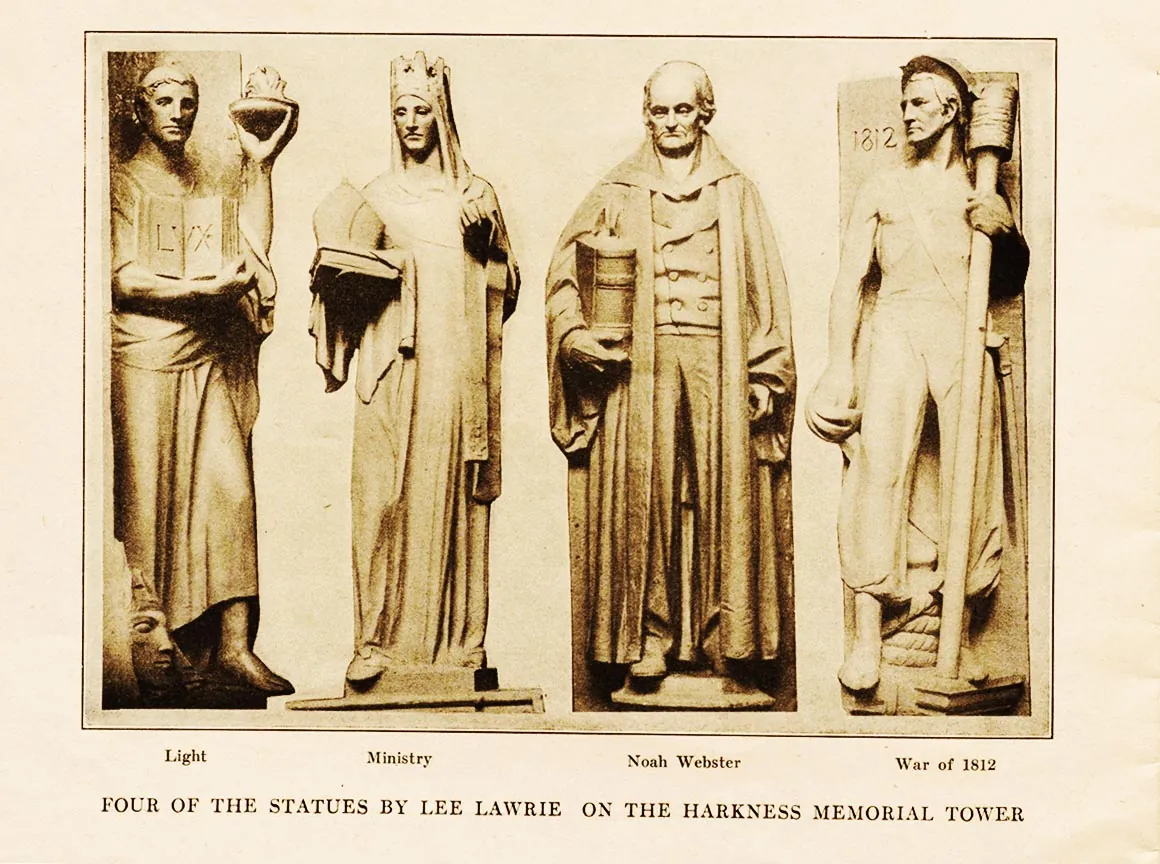
Architectural sculpture is easy to walk past because it is doing its work where a building needs it most: above a door, around a corner, at the top of a tower, or along the route into a public room. It is not simply a statue placed near architecture. It is sculpture that helps a building announce its purpose, set a mood, and direct the eye. Once you learn where to look, a familiar building can become much more legible.
Start with the building, not the object
The Getty Art & Architecture Thesaurus defines architectural sculpture as sculpture carved from or applied to the surfaces of architectural members, usually on an exterior. That definition is useful because it keeps attention on the relationship. A work may be beautiful on its own, but its first job is to belong to a structure: to a wall, entrance, roofline, column, stair, or room.
That makes the question “What does it represent?” only the beginning. Ask instead: why is it here? A figure above an entrance can prepare a visitor for what happens inside. A relief can make a blank wall feel like a sequence of events. A sculptural door can turn the act of entering into a moment of reading. At a distance, the work has to register as a shape. Up close, it has to reward attention with detail, material, and meaning.
Architectural sculpture also works with conditions that a gallery object does not control. Light changes it. Traffic changes the length of a viewer’s glance. A work high on a facade may need a simpler silhouette than one at hand level. A relief may be deliberately shallow so it can be read across a broad wall without disrupting the building’s surface. The point is not to make every feature loud. It is to give different parts of a building different kinds of emphasis.
Notice the route before the detail
Begin from the approach. Where does the building first catch your eye? Does sculpture mark the roofline, frame the entrance, or wait until you are already inside? This sequence matters. Architecture moves people through space, and sculpture can pace that movement by giving the eye a series of destinations.
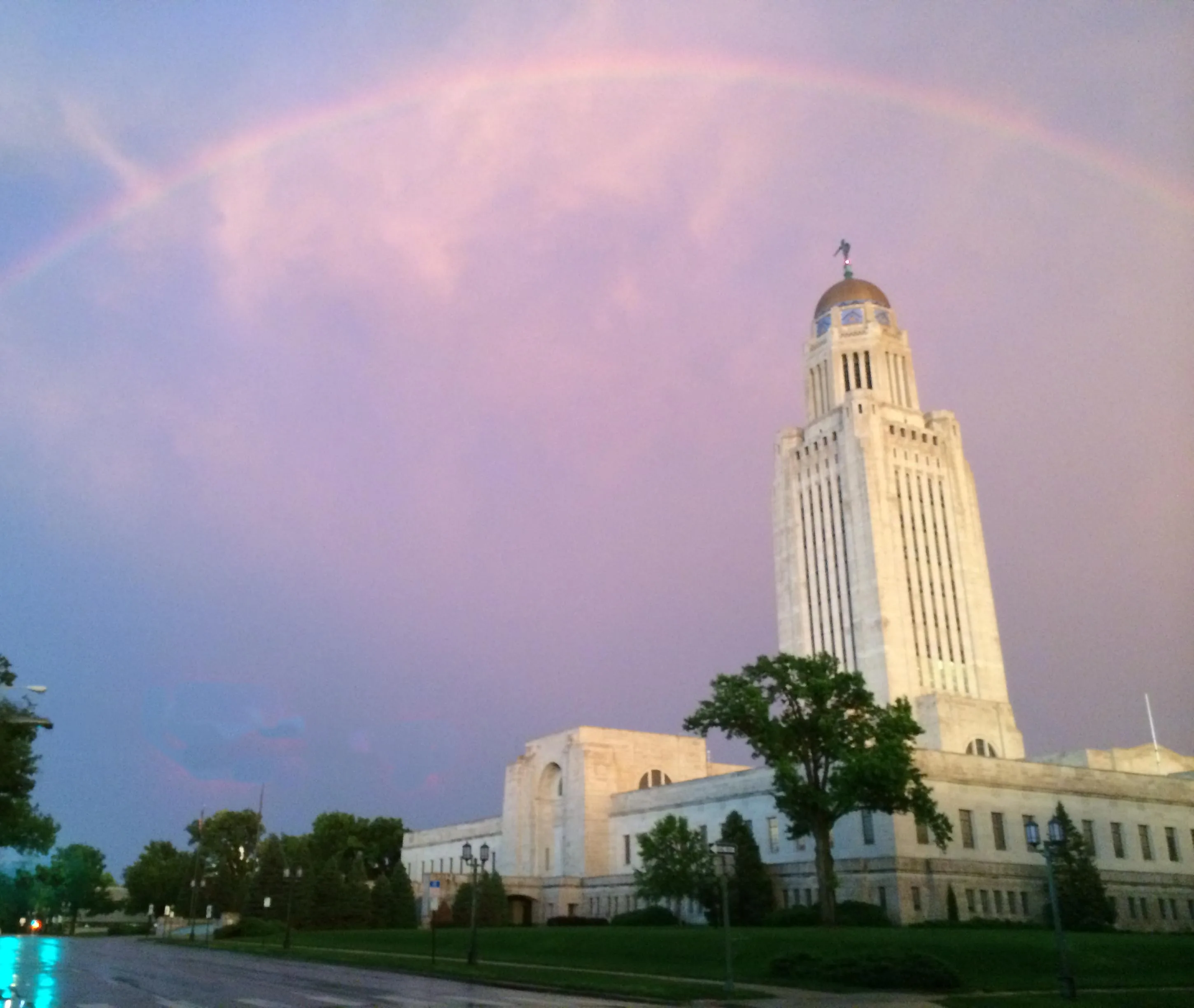
At the Nebraska State Capitol, the sculptural program works at several distances. The tower and The Sower make a landmark on the horizon. At the north entrance, figures and reliefs identify the building’s civic purpose. Inside, smaller reliefs and ornament continue the themes through rooms where people work, deliberate, and gather. The official Capitol account of its panels and sculptures explains how Lawrie’s exterior and interior work carries themes of government, agriculture, law, and civic life across the building rather than isolating them in one monument.
Learn the main forms
There is no need to memorize a long architectural vocabulary before looking closely. A few forms will help you notice what a building is asking its sculpture to do.
- Relief projects from a flat background. It can carry figures, stories, symbols, or inscriptions while remaining part of a wall.
- Freestanding figures often establish a landmark or give an entrance a human, symbolic presence.
- Friezes run horizontally, making a sequence around a facade or room.
- Sculptural doors and metalwork turn useful building parts into surfaces that can be read, touched, and remembered.
- Ornament repeats a plant, animal, tool, or geometric form so that a theme reaches places a large figure cannot.
These forms overlap. A door may be both functional and sculptural. A relief may be narrative at close range but read as a single field of shadow from across a street. The practical test is not the label. It is whether the work changes the experience of the architecture around it.
Read scale, material, and light together
Scale is one of the clearest clues. A figure high above a street is rarely asking for an intimate reading. It may need a strong outline, large gesture, and deep enough shadows to remain visible from below. A bronze door or carved panel at eye level can hold more intricate detail because visitors can stand near it. The material carries meaning, too. Stone can feel permanent and structural. Bronze can invite close looking through its color, touch, and changing surface. Glass can make light part of the image.
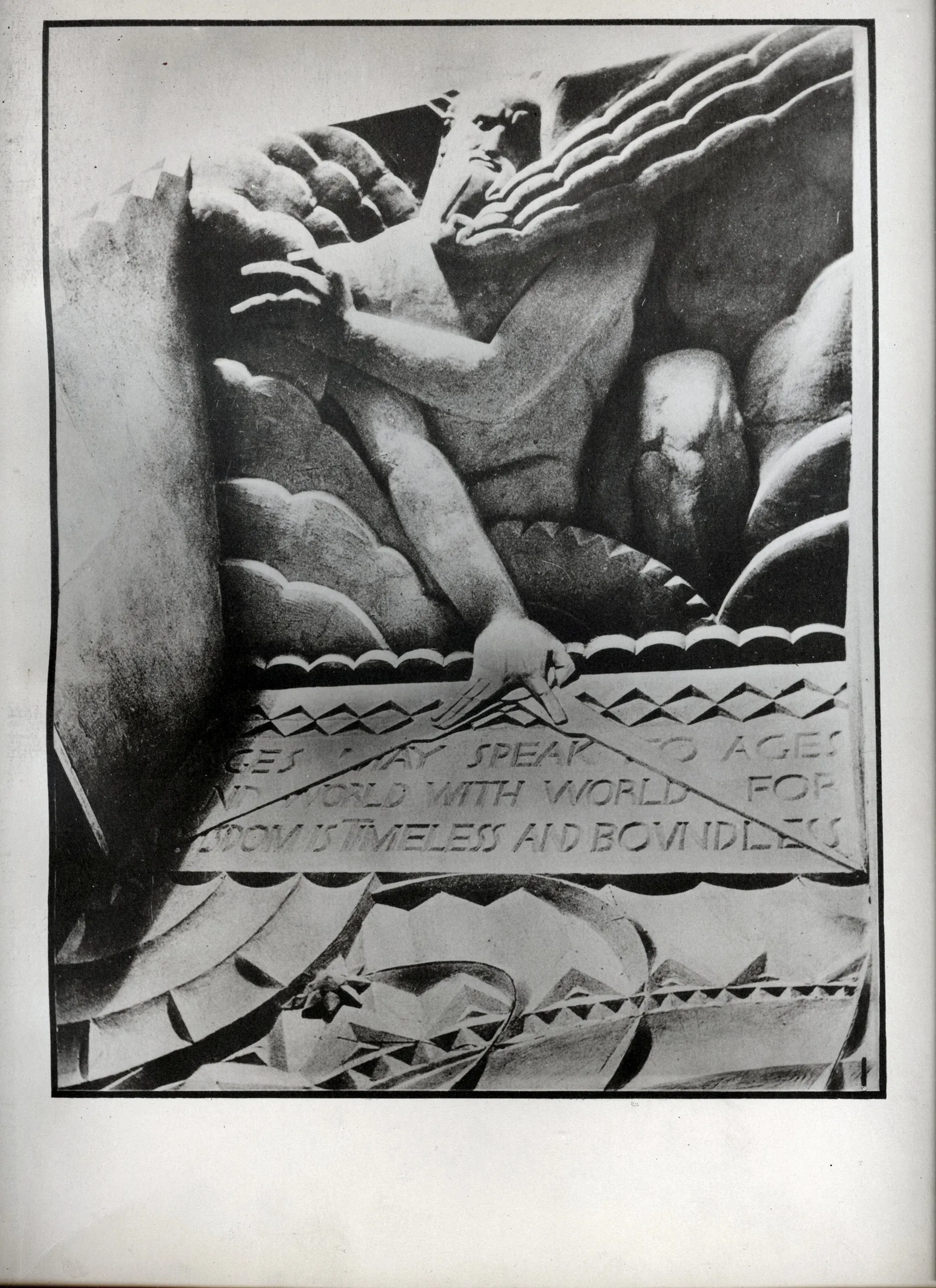
Lawrie’s Wisdom above the entrance to 30 Rockefeller Plaza brings those decisions together. Rockefeller Center identifies the work as a focal point above the main entrance, with Lawrie’s figure, color, and inscription giving the facade a public presence visible from Fifth Avenue. The sculpture is not there to compete with the tower. Its angle, scale, and position make the entrance feel like a threshold to a place concerned with knowledge and power.
When you encounter a work like this, look once from a distance and once from directly below. Notice which parts survive the long view, then which details only appear when you stop. That double reading is often the difference between a building with decoration and a building with a coherent sculptural program.
Ask what the sculpture helps the building say
Public buildings often need to communicate before anyone reads a sign. A courthouse may use figures associated with justice. A library may invoke learning, language, or memory. A capitol may refer to law, citizenship, and the people a government serves. Architectural sculpture gives those ideas a visible form, but it can do so without reducing a building to an illustrated slogan.
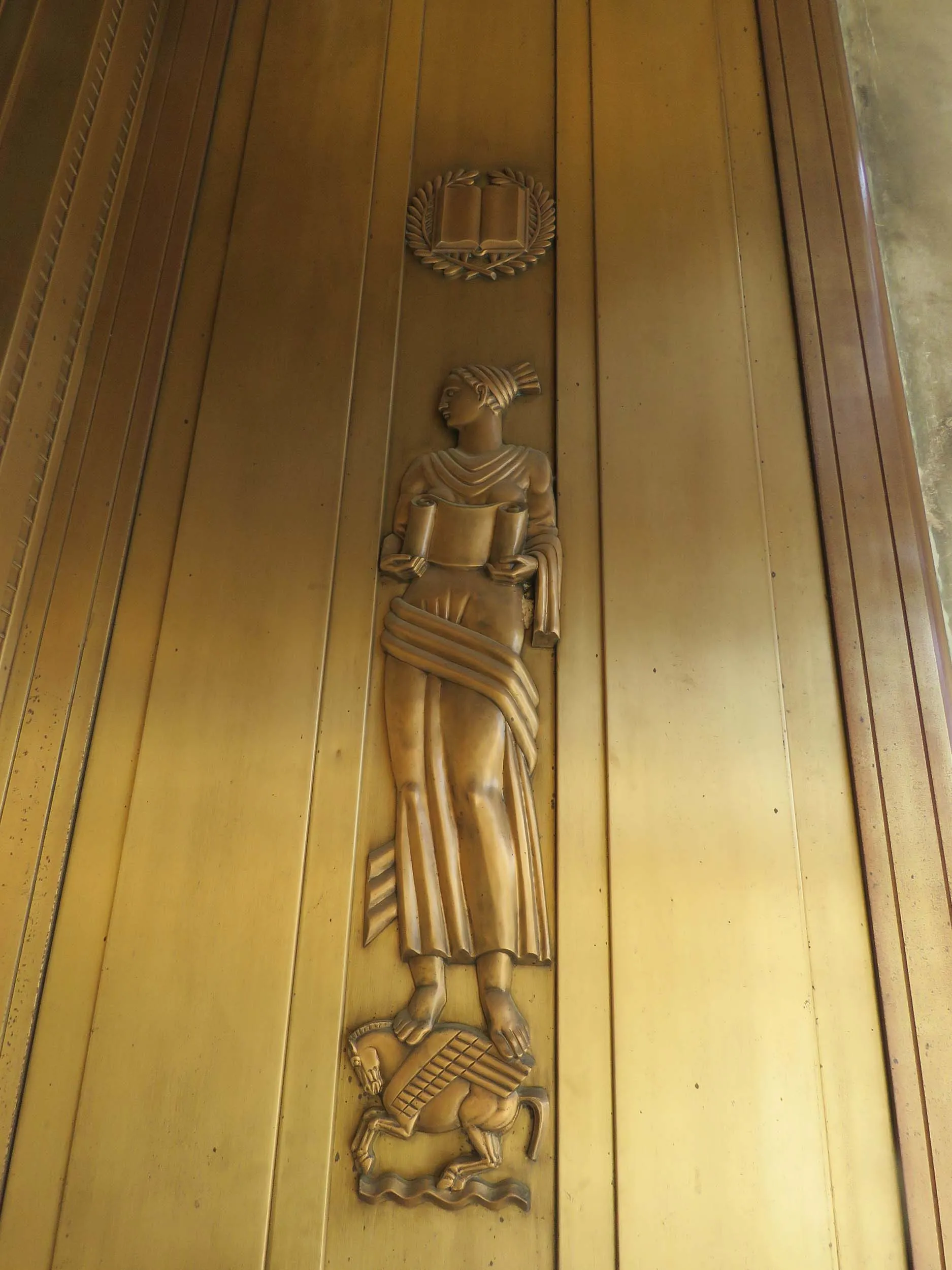
The John Adams Building of the Library of Congress is a useful example. The Library of Congress describes its bronze doors as high-relief figures designed by Lawrie around the history of the written word. On the Legendary Scribes page, the archive follows that program through figures associated with writing and learning. The doors are not separate artworks pasted onto a library. They make the act of crossing the threshold part of the building’s subject.
This is why context matters. A figure may look stern, heroic, or decorative in a photograph, but its role becomes clearer when you know whether it faces a street, guards an entrance, frames a reading room, or leads into a civic chamber. Architectural sculpture turns meaning into a sequence of encounters, not a caption beneath an object.
Avoid the usual shortcuts
The first shortcut is treating architectural sculpture as a list of decorations. A building may have carvings, figures, metalwork, and inscriptions, but they do not all carry the same weight. Some establish the whole public image of a place. Others quietly connect rooms or repeat a theme. Looking for a single “main sculpture” can make the smaller works disappear, even when they are the pieces that make an interior feel complete.
The second shortcut is looking only at a photograph. Images are valuable records, especially when a work is hard to reach, but they flatten scale and route. A close photograph can make a small door relief look monumental. A wide photograph can make a large facade seem like a pattern. When possible, compare a full view with a close detail, then look for a map, floor plan, or historic view that shows where the work sits. The archive’s work pages make that kind of comparison possible across Lawrie’s commissions.
The third shortcut is assuming every symbol has one fixed answer. Architectural programs often combine a general theme with local history, religious tradition, literature, civic ideals, or the building’s daily purpose. A viewer can begin productively without decoding every reference. Ask what is repeated, what gets the best position, and what changes as you move through the building. Those observations are more reliable than a quick guess based on a single attribute or gesture.
Finally, do not separate craft from meaning. A carved figure, bronze door, or stone relief has been made to handle weather, height, joints, shadows, and use. The way it is attached, framed, patinated, or repeated is part of how it communicates. The best architectural sculpture is not an illustration added after the fact. Its subject and material feel necessary to the place.
Use a five-step looking method
- Find the setting. Name the building part first: tower, entrance, facade, door, room, or stair.
- Change your distance. Look from the route of approach, then move close enough to see material and detail.
- Identify the form. Is it relief, a figure, a frieze, a door, or repeating ornament?
- Follow the visual emphasis. Notice what catches the eye first and what appears only after a pause.
- Connect subject to purpose. Ask how the figure, symbol, or pattern relates to the building’s use and audience.
This method keeps the experience grounded. You do not need to guess every allegory or know every historical reference. Start with visible evidence: place, scale, material, sequence, and repeated motifs. Then let those clues lead to the larger story.
See the whole building as a conversation
A strong sculptural program does not ask every part of a building to make the same statement. A tower can serve as a distant sign. An entrance can make an institution’s purpose immediate. A door can slow a visitor down. A relief in a chamber can reward the person who spends time there. Repeated motifs can make those moments feel connected without becoming repetitive.
This is especially clear in twentieth-century civic architecture, where architects and artists often worked with a thematic consultant or patron to build meaning into the project from the start. The Nebraska State Capitol names Bertram Goodhue as architect, Hartley Burr Alexander as thematic consultant, Lee Lawrie as sculptor, and Hildreth Meiere as muralist and mosaic designer. Seeing that collaboration helps explain why the building’s sculpture, inscriptions, floors, ceilings, and rooms feel related while doing different jobs.
It also gives today’s visitor a better way to spend time in a historic building. Instead of racing to the most famous image, follow a theme across scales. If a building introduces law at an entrance, look for it again in reliefs, inscriptions, and room decoration. If it introduces learning at a door, look for how lettering, figures, and materials continue that idea inside. The experience becomes less like spotting a landmark and more like reading a place.
Why Lee Lawrie is a rewarding guide
Lee Lawrie’s career gives this subject unusual range. The Smithsonian American Art Museum notes that he taught at the Yale School of Fine Arts and Harvard School of Architecture, while his commissions placed sculpture in civic buildings, libraries, memorials, and commercial settings. His work moves from the monumental to the intimate without losing its relationship to architecture.
The archive is especially useful because it preserves those relationships. Explore Rockefeller Center for large public symbols, the Nebraska State Capitol for a sustained civic program, and the John Adams Building doors for sculpture at the threshold. The guide to Art Deco sculpture offers a companion way to read figures and reliefs, while Prairie Deco follows Lawrie’s Nebraska work in greater depth.
Architectural sculpture is worth slowing down for because it changes the terms of looking. Instead of asking whether a building has art on it, you begin to see how art helps a building speak, welcome, instruct, and endure.
Frequently asked questions
What is architectural sculpture?
Architectural sculpture is sculpture made as part of a building or specifically for its setting. It can be a relief, figure, door, frieze, inscription, or ornamental detail. Its meaning depends on where it is placed and how people encounter the building.
How is architectural sculpture different from a freestanding statue?
A freestanding statue can usually be moved without changing its basic subject. Architectural sculpture is designed around an entrance, wall, tower, door, room, or route through a building. Moving it would change much of what it does.
What are common kinds of architectural sculpture?
Common kinds include reliefs set into walls, figures above entrances, carved capitals, friezes, sculptural doors, and ornamental metalwork. A single building can use several of these forms to organize attention at different distances.
Why is Lee Lawrie important to architectural sculpture?
Lee Lawrie made sculpture for civic buildings, libraries, churches, memorials, and Rockefeller Center. His work shows how figures, materials, symbols, and inscriptions can make a building readable without separating art from architecture.
Related posts
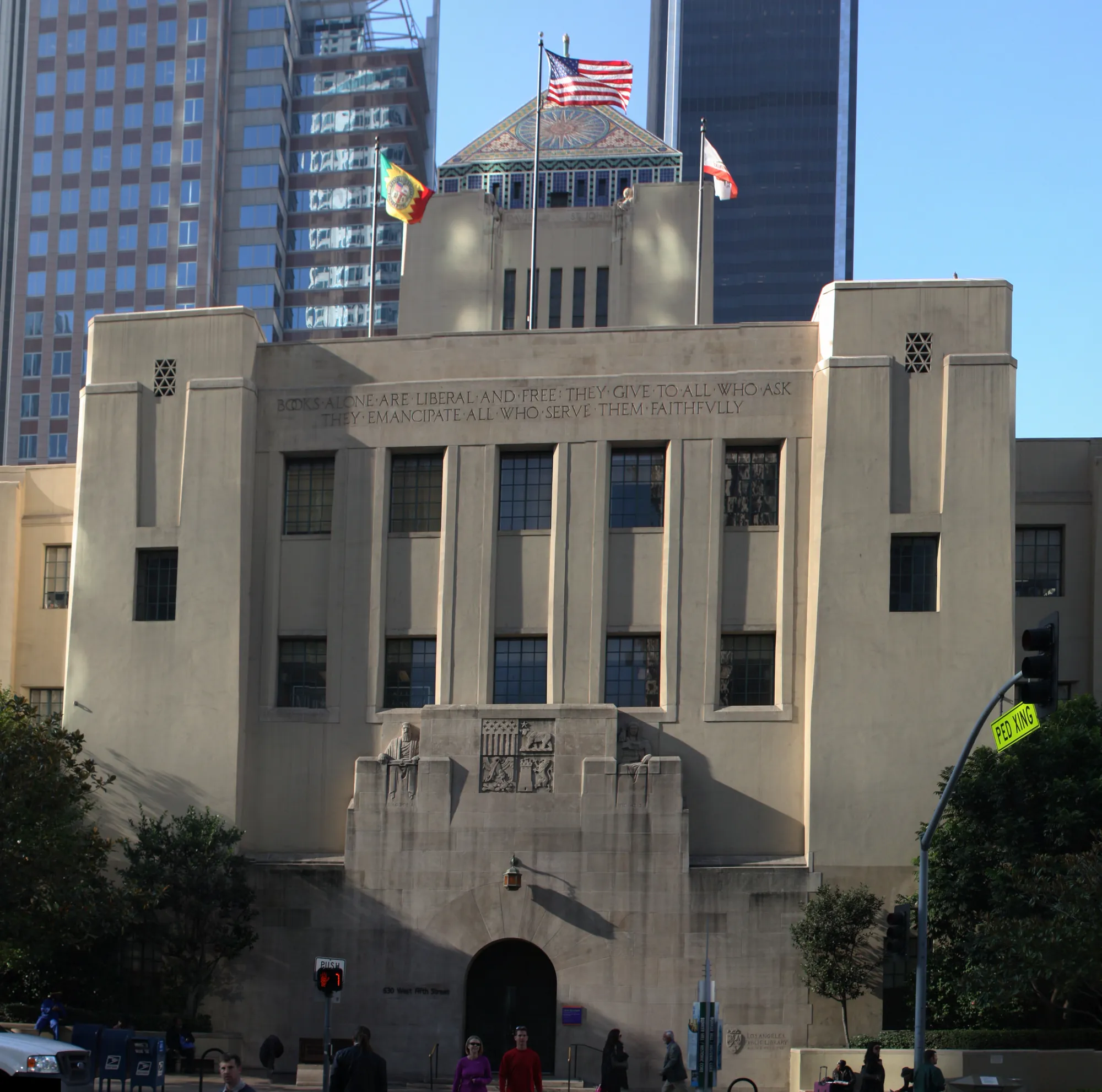 Art Deco
What Is Art Deco Sculpture? Definition, Features, and Examples
Art Deco sculpture uses simplified forms, strong geometry, and symbolic detail. See how figures, reliefs, doors, and ornament give a building its character.
Art DecoArt Deco Buildings: 5 Features to Look For
Learn the five features that make Art Deco buildings distinctive, from stepped skylines and grand entrances to materials, sculpture, and civic symbols.
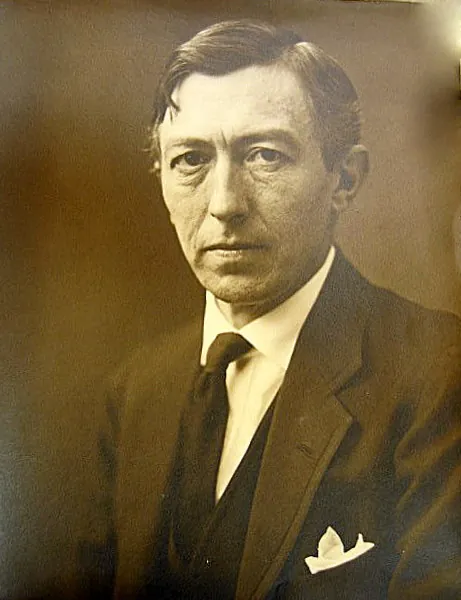 Art Deco
Famous Art Deco Artists: 6 Ways to See the Style
Meet famous Art Deco artists, including Tamara de Lempicka, A. M. Cassandre, Erté, René Lalique, and Lee Lawrie.
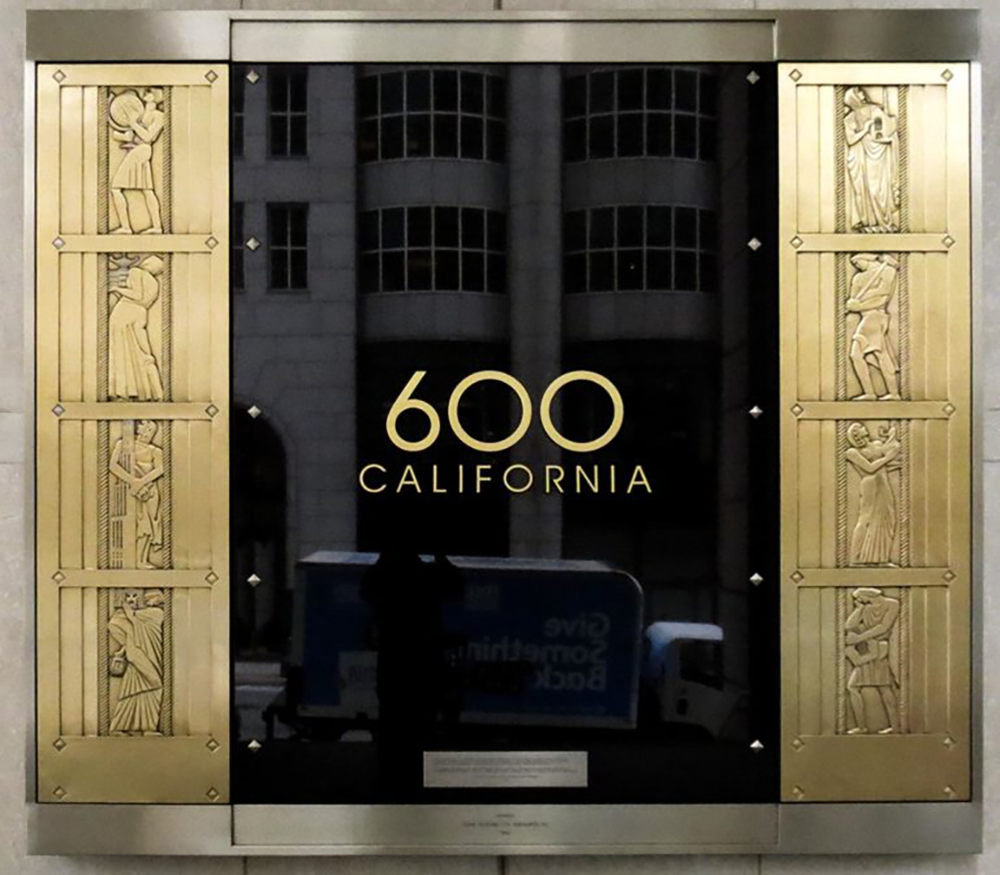 Art Deco
 Sculptors: How to Read Their Work
Learn how Art Deco sculptors used figure, material, symbol, and setting to make public buildings and everyday spaces speak.