Monumental figures
Meet the large-scale works that give the Capitol its presence from across Lincoln and from the grounds below.
Art Deco and architectural sculpture
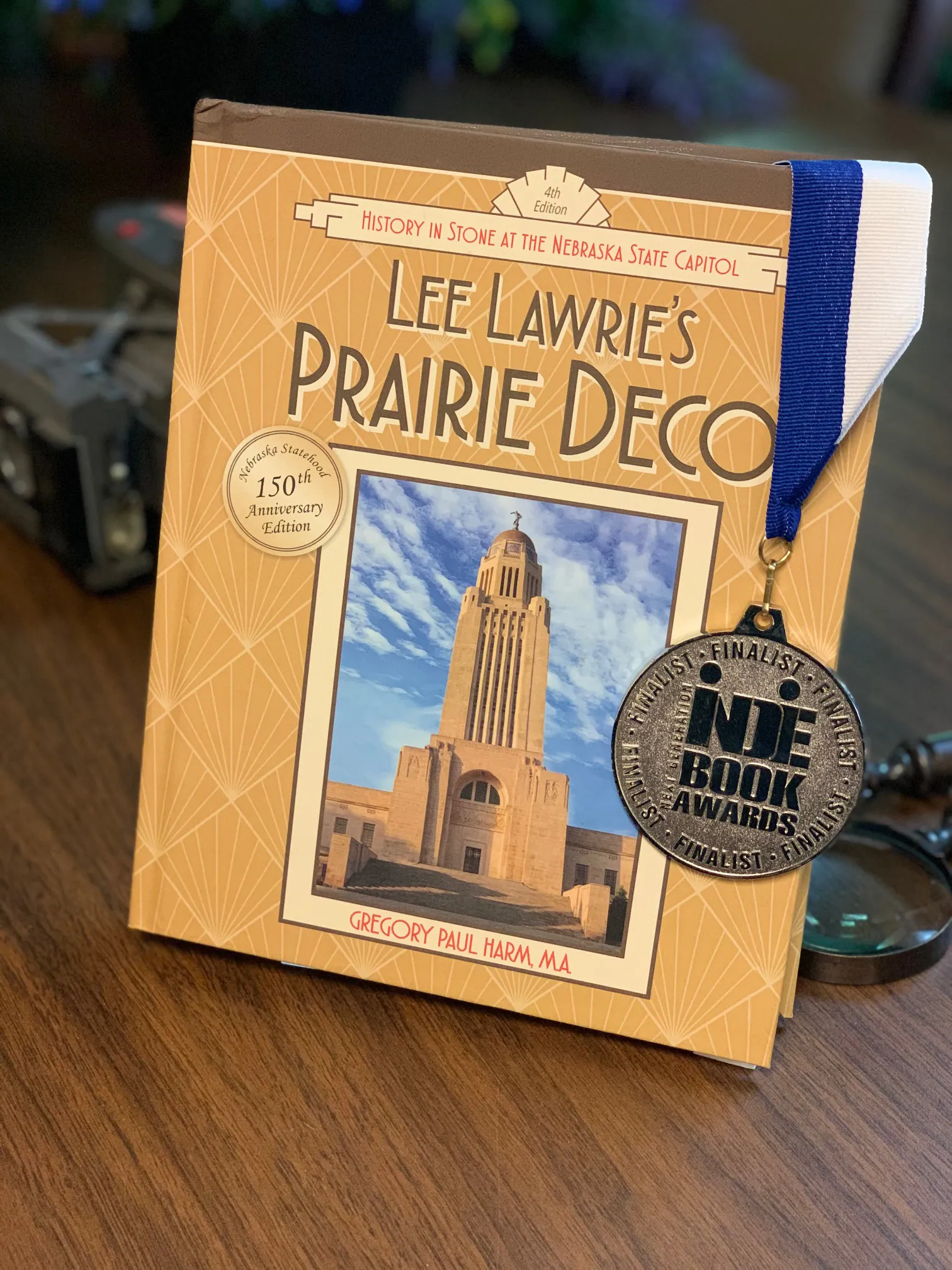
A richly illustrated Art Deco sculpture book that brings Lee Lawrie’s work at the Nebraska State Capitol into lasting view.
Sculpture made for a public landmark
Prairie Deco is an Art Deco sculpture book about work that was never meant to sit apart from daily life. It follows Lee Lawrie’s art at the Nebraska State Capitol, where figures, reliefs, doors, animals, and ornament meet people as they approach, enter, and move through a major American landmark.
That setting gives the sculpture a special kind of force. A figure high on the tower has a role in the skyline. A carved panel beside a doorway changes the experience of arrival. A small creature near a terrace or a detail in an interior can reward the reader who slows down. The book makes room for each scale of encounter.
Gregory Paul Harm’s photographs and research keep the work close to its architectural setting. Rather than lifting individual objects out of context, Prairie Deco shows why placement matters. The images reveal how Lawrie’s sculpture works with stone, color, light, and movement to give the Capitol its distinctive character.
For readers who care about Art Deco, public art, or the pleasure of noticing what a building has to say, the result is a visual journey through one of America’s most ambitious sculptural environments.
An artist at every scale
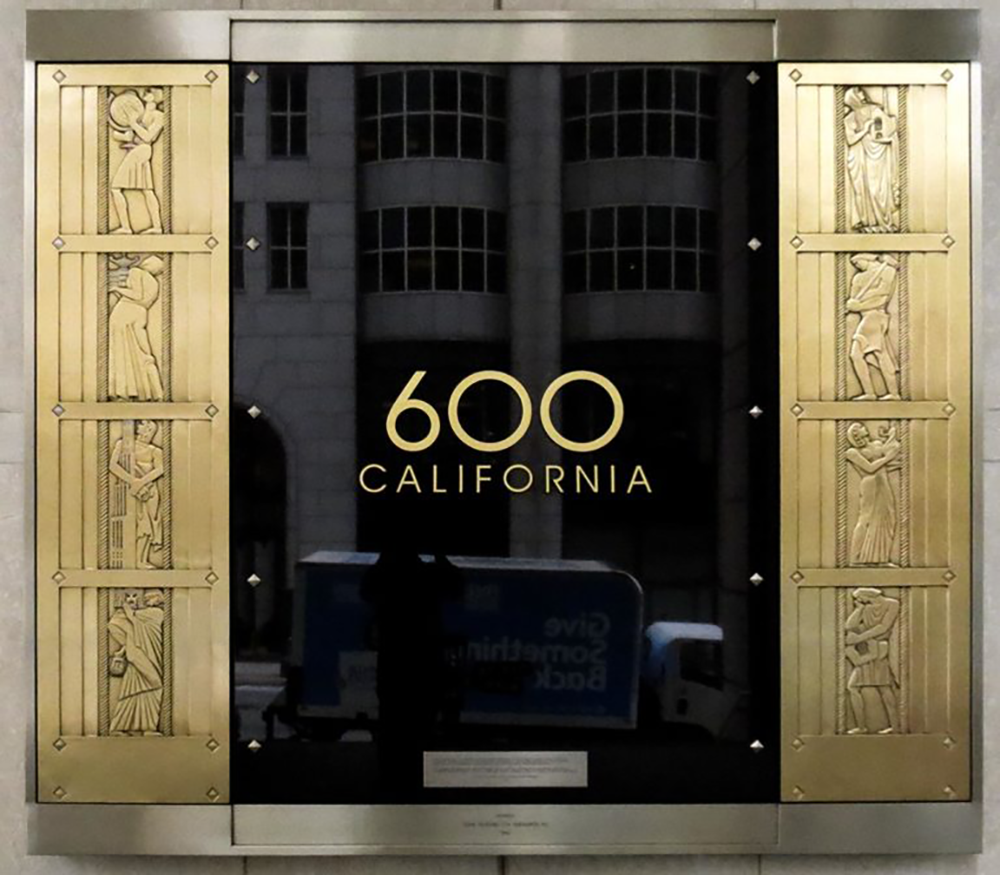
Lee Lawrie understood that sculpture can guide a visitor through a building. At the Nebraska State Capitol, it appears in sweeping exterior forms, ceremonial thresholds, quiet interior spaces, and carefully composed details. Prairie Deco traces those shifts in scale so the reader can see how a complete artistic program is built over time.
The Capitol gave Lawrie the chance to work across an extraordinary range of forms. Monumental figures establish the building’s public presence. Reliefs, doors, and decorative elements bring its ideas closer to the body. Together they create a place that feels considered from the first distant view to the smallest passage through its rooms and grounds.
That range is central to the book. A sculpture can be imposing without being remote, and a small detail can carry the spirit of a whole building. By moving between the grand and the intimate, Prairie Deco makes the connections visible without losing the pleasure of the individual works.
Explore the Capitol in the archiveArt Deco, seen in context
Art Deco is often recognized through bold geometry, polished surfaces, and dramatic silhouettes. Prairie Deco takes those qualities seriously, then looks deeper. At the Nebraska State Capitol, Art Deco sculpture carries ideas about agriculture, law, learning, work, and the landscape of the Great Plains. It gives a modern building a symbolic language that remains vivid at every distance.
Lawrie’s work is especially rewarding because it changes with the reader’s point of view. A wide photograph can establish the rhythm of an exterior. A closer image can reveal the gesture of a hand, a profile, a modeled surface, or the relationship between a carved figure and the material around it. The book lets those shifts in attention become part of the experience.
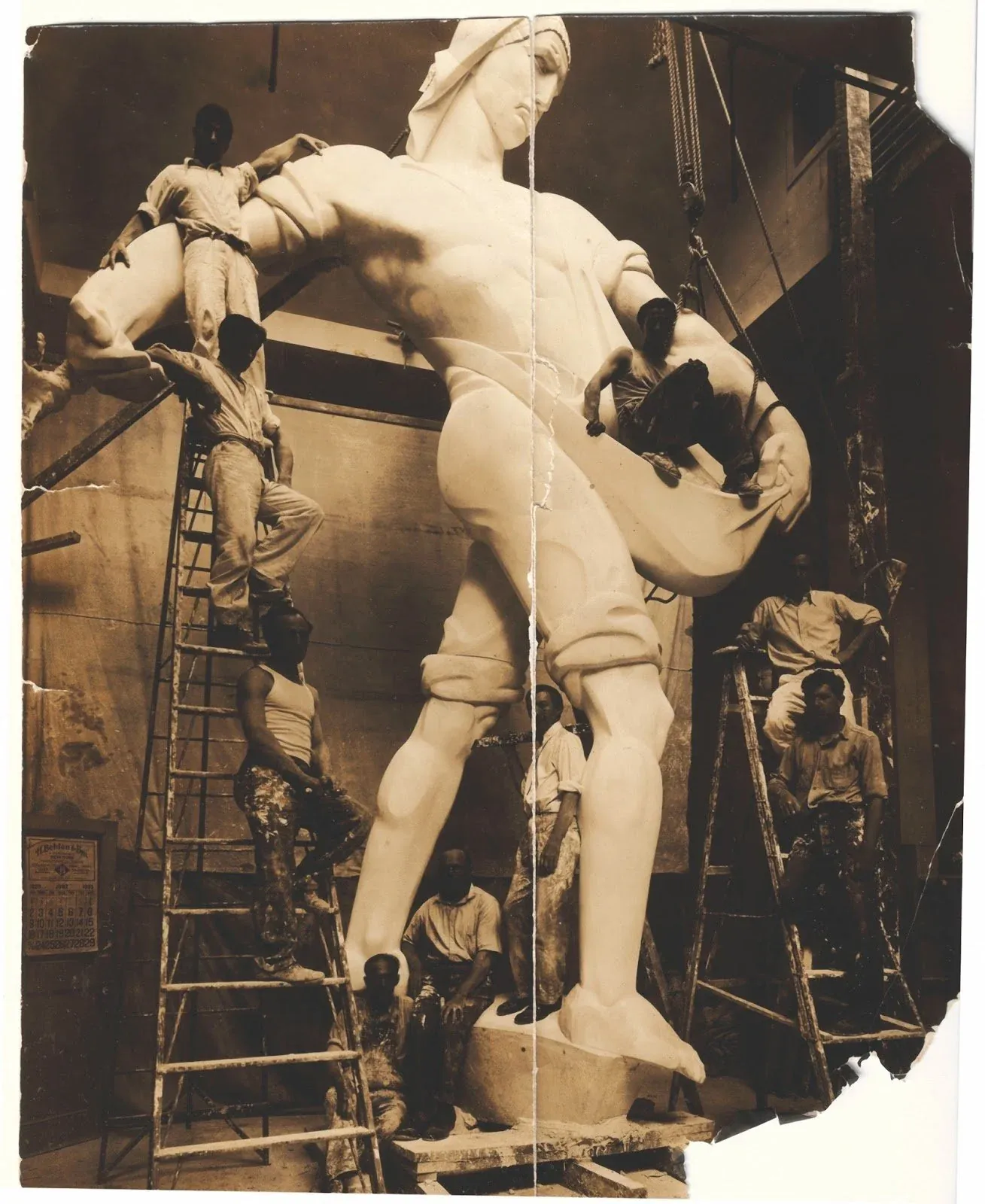
It also brings the artist’s process closer. Models, drawings, studio work, and finished stone show that architectural sculpture does not arrive as an afterthought. It begins with an idea, passes through the hands of artists and craftspeople, and takes its final meaning from the place where it is installed.
For a broader view of the book’s Art Deco setting, explore Prairie Deco as an Art Deco art book.
Inside Prairie Deco
Meet the large-scale works that give the Capitol its presence from across Lincoln and from the grounds below.
See how sculpture works at eye level, shaping thresholds and everyday movement through the building.
Follow the visual language that connects the Capitol’s art to civic life, the Plains, and the state’s ideals.
Spend time with the studio work and details that reveal the hand and thought behind the finished sculpture.
For readers who notice the details
Architectural sculpture is easy to overlook because it often asks the viewer to move. It may be above an entrance, at the far edge of a plaza, or part of a passage that people use without stopping. Prairie Deco gives that work time. It lets a reader linger with a figure, a relief, or a set of doors, then understand how each part belongs to the whole.
That makes the book useful beyond a single visit or a single image. It offers a way to see how sculpture changes an approach to a public building, how a small element can carry a larger idea, and how an artist can shape the emotional character of architecture without separating art from use.
Prairie Deco also gives Lee Lawrie the sustained attention his work deserves. Atlas at Rockefeller Center is rightly famous, but the Nebraska State Capitol reveals the wider reach of his imagination. Here, sculpture is not an accent. It is essential to the building’s public presence and lasting power.
Readers drawn to the landmark’s larger architectural story can also explore Prairie Deco as an Art Deco architecture book.
A good fit for
Explore an important sculptural program that broadens the familiar story of Art Deco beyond its best-known city monuments.
See how scale, material, placement, and symbolism turn individual works into a complete artistic environment.
Choose an illustrated book with a singular subject, generous visual detail, and a strong reason to return after the first reading.
Reader response
“A rich, beautifully illustrated historical account for art lovers and prairie deco devotees.”
Kirkus Reviews
Choose your edition
Choose hardbound for a lasting art or architecture library, or choose softbound for a richly illustrated way into Lee Lawrie’s work and the Nebraska State Capitol.
Frequently asked questions
Prairie Deco follows Lee Lawrie’s work at the Nebraska State Capitol, including monumental figures, reliefs, doors, models, animal forms, and smaller details made for the building.
No. The Sower is an important part of the Capitol, but the book looks across the building, from its exterior sculpture and public entrances to its interiors, ornament, and symbolic details.
It is made for readers interested in Art Deco, public sculpture, architecture, American art, historic buildings, photography, and the work that turns a building into a complete artistic environment.
Yes. The archive shares the preface and introduction, along with extensive photographs of the Nebraska State Capitol, so readers can see the book’s approach before choosing an edition.