A complete Art Deco environment
See how architecture, sculpture, color, and ornament work together across one major public building.
Art Deco and architectural art
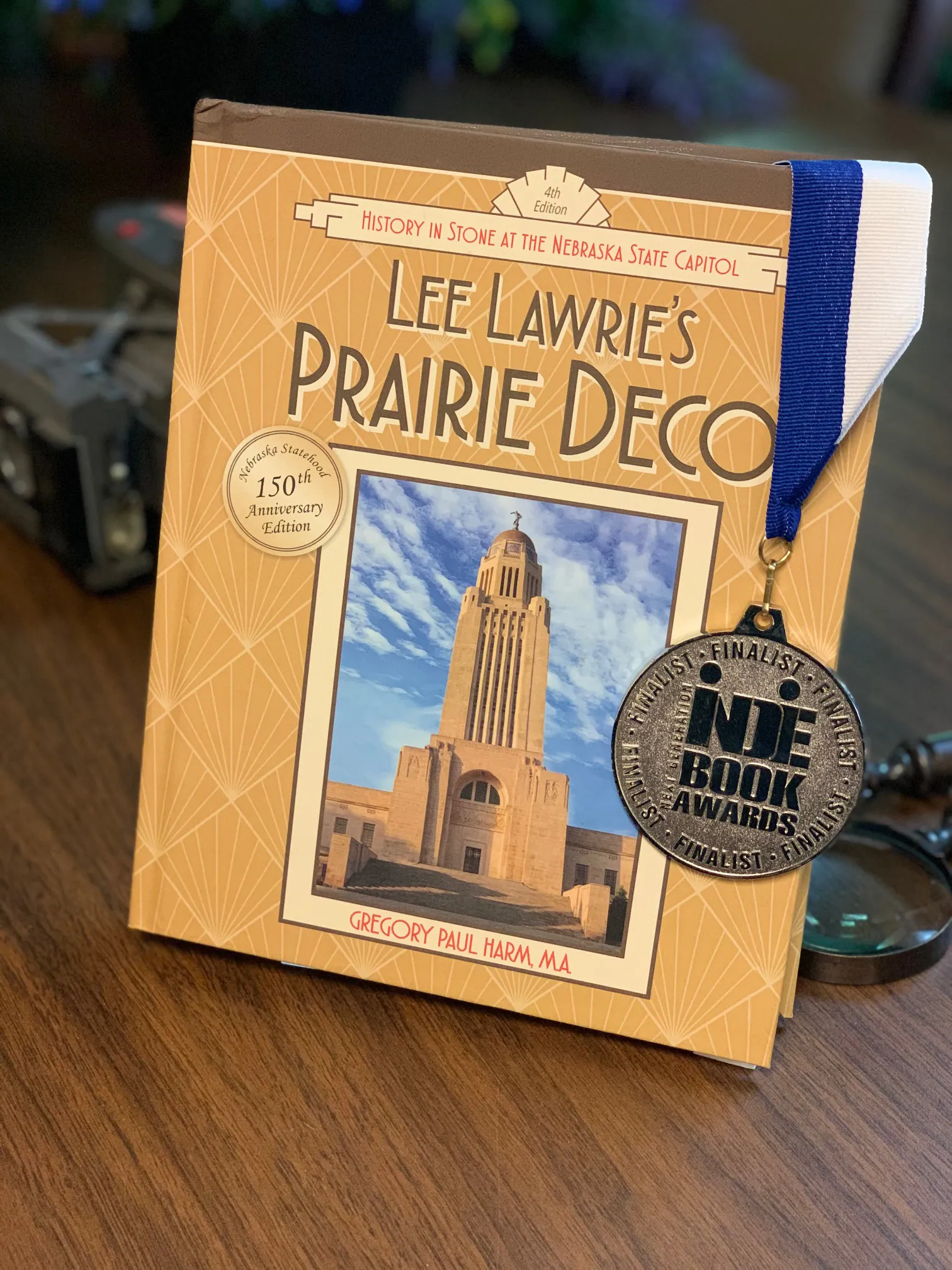
A richly illustrated Art Deco book that brings Lee Lawrie’s sculpture, the Nebraska State Capitol, and a defining American landmark into view.
An Art Deco story with depth
Many Art Deco books begin with the familiar image of the modern city: a tower, a marquee, a glowing lobby, a polished metal detail. Prairie Deco starts somewhere different. It takes one extraordinary public building in the Great Plains and shows how the style could carry history, landscape, labor, learning, and civic ambition all at once.
At the Nebraska State Capitol, Art Deco is not a surface applied after the building is finished. It lives in the relationship between tower and horizon, in the rhythm of stone and bronze, and in the figures and animals that Lee Lawrie created for nearly every scale of the building. The result is a world with more to notice than a single dramatic view.
Gregory Paul Harm’s book follows that world through photographs and clear, patient interpretation. It gives readers room to enjoy the Capitol’s visual force while learning how its sculpture, color, architecture, and symbolic program belong together.
For readers who already enjoy Art Deco, Prairie Deco opens a less familiar chapter of the period. For readers meeting the style for the first time, it offers a memorable place to begin: a landmark where modern design and public purpose were made inseparable.
Its strength is that the book never asks the reader to choose between beauty and understanding. The photographs make the building immediately inviting, while the surrounding history gives each image more weight. A dramatic figure on the tower is not simply a striking silhouette. It becomes part of a larger story about the building, the state, and the artist who helped make its ideas visible.
It is a book made for rereading, whether the reader is tracing the Capitol’s details at home or returning to a favorite photograph with a new question in mind.
The Capitol as a work of art
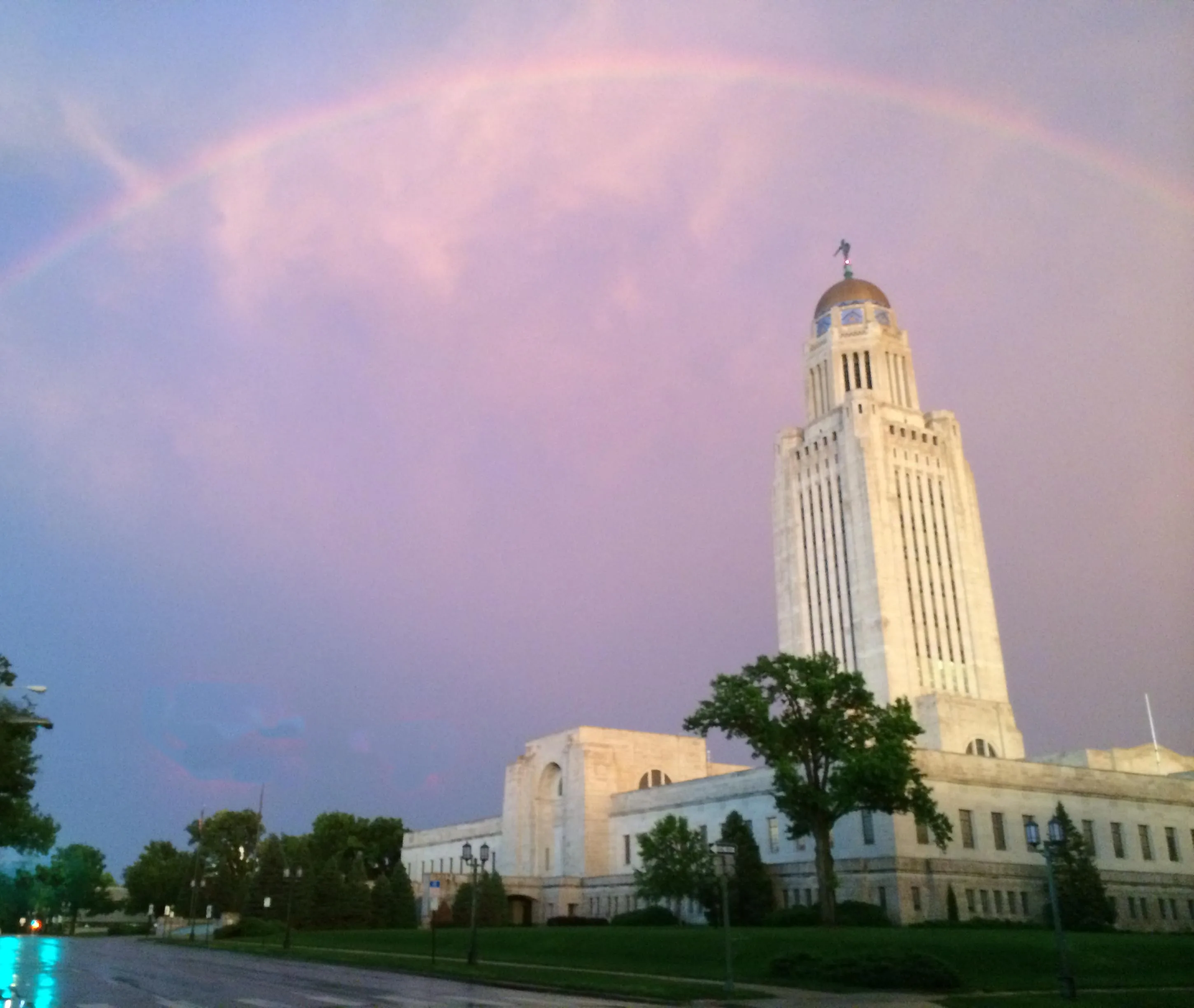
Prairie Deco is centered on the Nebraska State Capitol because it gave Lawrie his largest commission and one of his most complete opportunities to shape the character of a public building. The book moves from the tower and its Sower to the doors, reliefs, interiors, and small encounters that a hurried visitor might pass without seeing.
That close attention makes the building feel alive. A carved animal can point toward the region around it. A bronze figure can gather an idea about work or knowledge into one gesture. A wall, a stair, or a doorway can become part of a larger visual argument about what a statehouse should stand for.
The story also places Lawrie among the collaborators who made the Capitol possible, including architect Bertram Goodhue and the artists and thinkers whose work gave its spaces a shared direction. It is an account of Art Deco, but also of the serious coordination behind a landmark that still feels singular.
For a reader, that connection between idea and object is what separates a real architectural art book from a collection of attractive images. Prairie Deco lets the Capitol’s individual works stand on their own, then brings them back into the larger composition that gives them purpose.
Explore the Capitol in the archiveFor the reader who notices detail
Prairie Deco is full of photographs, but it does not treat them as detached illustrations. Each image helps locate a sculpture in the building and connect a detail to the larger design around it. A reader can take in a sweeping view, then turn to a model, a relief, or a close passage in stone and understand why it matters.
That is especially rewarding with Lawrie’s work. His sculpture asks to be seen in motion, from a street, a terrace, a doorway, or a room. The book keeps those changes in viewpoint in play, showing how the experience of a building shifts when art is woven into its structure instead of placed beside it.
The Capitol also expands the usual Art Deco shelf. It is grand without being anonymous, modern without abandoning local character, and richly ornamented without losing its architectural order. Its imagery carries the natural world of the Plains into a thoroughly modern civic setting.
For a broader look at the book as an architecture title, explore Prairie Deco as an Art Deco architecture book.
What readers will find
See how architecture, sculpture, color, and ornament work together across one major public building.
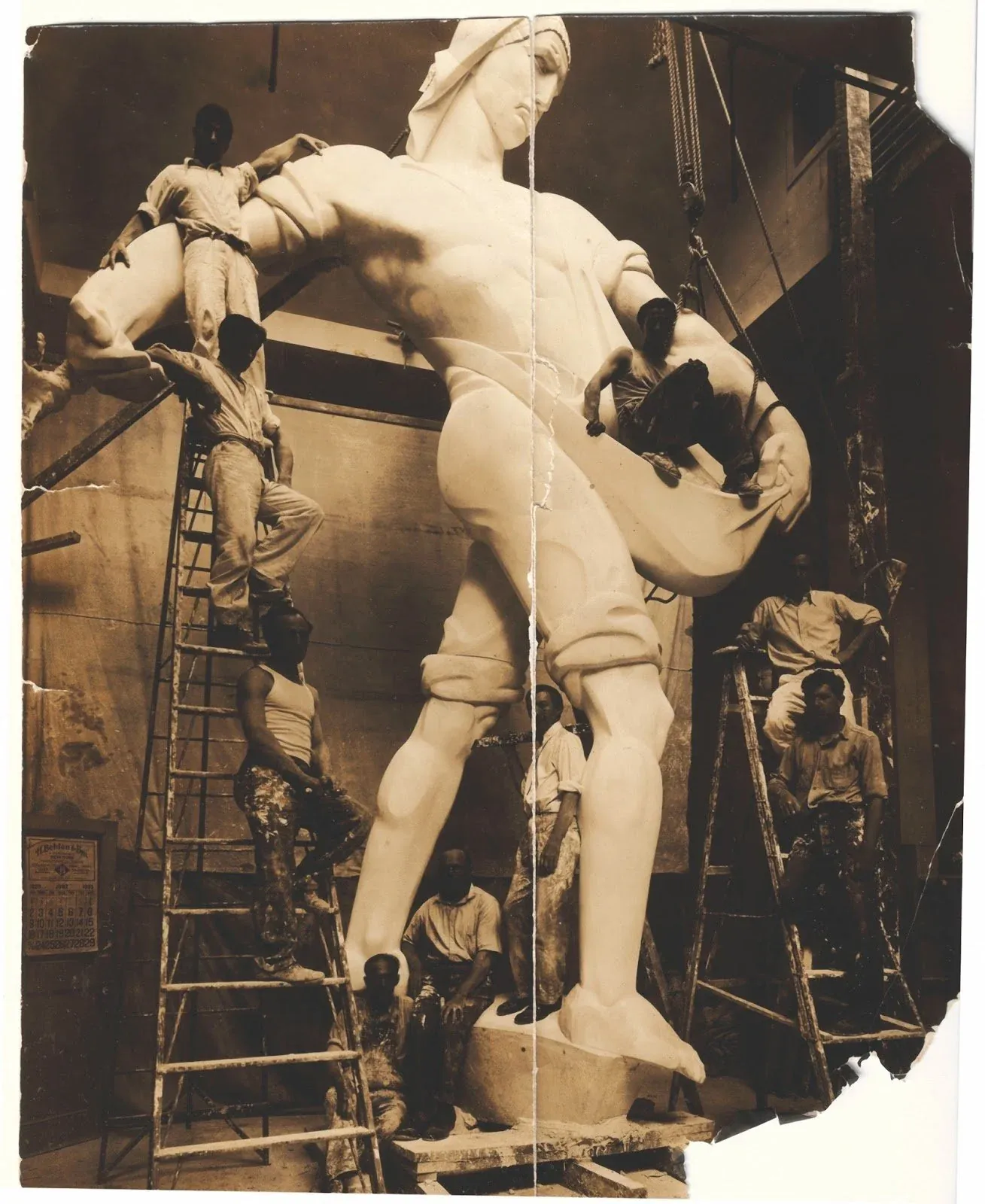
Meet the artist behind Atlas at Rockefeller Center and a much larger body of architectural sculpture.
Follow the ideas about work, knowledge, agriculture, law, and the natural world built into the Capitol.
Spend time with models, carvings, figures, and details that reveal more with every return.
A book for an Art Deco library
An Art Deco book earns its place when it gives a reader both a strong visual experience and a reason to stay with the subject. Prairie Deco does that through one building with enough range to keep revealing new paths: monumental public sculpture, intimate architectural details, regional imagery, and the working relationship between an artist and an architect.
The book is useful for someone who wants to understand the period beyond a familiar collection of skyscrapers and movie-palace interiors. The Capitol makes a case for Art Deco as a flexible public language, one that could be monumental, symbolic, regional, and deeply tied to the life of a community.
It is also a book that can be entered at different speeds. Open it for the photographs, follow a chapter closely, prepare for a Lincoln visit, or use it as a companion to the archive’s wider record of Lawrie’s work. The more time it receives, the more connections it offers.
That range makes it a satisfying choice for a personal collection and a thoughtful one for a reader who already has familiar Art Deco titles on the shelf. Rather than repeat the usual visual shorthand of the era, Prairie Deco gives the reader a landmark with its own voice and an artist whose work continues well beyond its most famous New York commission.
A good fit for
Discover a major work that broadens the story of the period beyond its most familiar urban settings.
Add a richly illustrated study of a landmark where sculpture is central to the building’s meaning.
Choose a substantial visual book with a specific subject and enough story to remain rewarding after the first look.
Reader response
“A rich, beautifully illustrated historical account for art lovers and prairie deco devotees.”
Kirkus Reviews
Choose your edition
Choose hardbound for a lasting Art Deco or architecture library, or choose softbound for a richly illustrated companion to the Capitol and the archive.
Frequently asked questions
Prairie Deco follows the Art Deco character of the Nebraska State Capitol through Lee Lawrie’s sculpture, its geometric order, its materials, and its unusually rich symbolic program.
The Nebraska State Capitol is the book’s central subject, but the story reaches through Lee Lawrie’s career, Art Deco, architectural sculpture, public art, and the people who brought a major civic building into being.
Choose hardbound for a substantial addition to an Art Deco or architecture library. Choose softbound for an accessible, richly illustrated edition to read, share, and bring on a Capitol visit.
Yes. The archive offers the preface and introduction, along with extensive photographs of the Capitol, so you can get a sense of the book’s approach before choosing an edition.