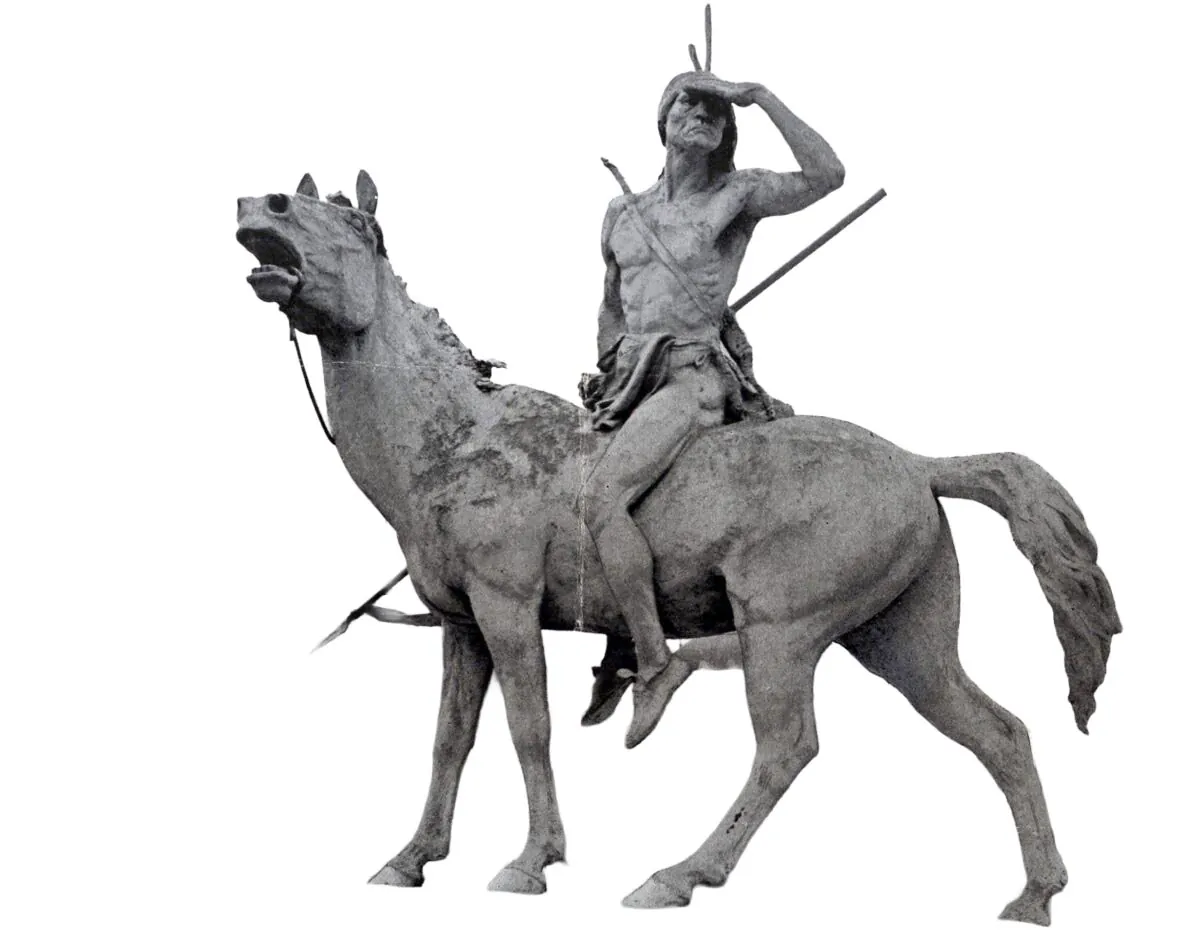
A. Phimister Proctor created these equestrian figures for the 1893 World’s Columbian Exposition. Lee Lawrie worked in Proctor’s studio as an assistant, an early experience that placed the young sculptor inside the demanding world of monumental work.
Proctor later recalled the arrangement in A. Phimister Proctor: Sculptor in Buckskin, an Autobiography. On page 114, he wrote: “After securing clay and other materials, I hired two associates, Lee Lowrie and John Jack. Lowrie was young and very talented, though inexperienced.” Lawrie independently remembered working for Proctor on the equestrian figures for the Transportation Building.
The Cowboy at the Exposition was made of staff, a mixture of plaster and hemp fibres. The Metropolitan Museum of Art identifies its bronze Cowboy, made around 1911, as a reproduction of that Columbian Exposition sculpture. Seen together, the lighter historical photograph and the later bronze show how the same subject moved from a temporary fair monument into a durable sculptural object.
Texas Exes may recognise Proctor’s Mustangs on the University of Texas at Austin campus. In this 2017 photograph, the author stands before the bronze group, a later reminder of Proctor’s lifelong command of equestrian sculpture.
Copyright status: Because The Cowboy was created, exhibited and published before 1929, the original design and historical photographs of the 1893 plaster monument are in the public domain.